Altar (2014)

You might as well toss a coin. Heads we watch, tails we skip.

Based on the well-worn premise that shit can always get worse if there’s a ghost on the loose, Altar is haunted house hijinks with a decent cast. At its best, the British production, written and directed by Nick Willing, serves up The Shining Lite for viewers satisfied with pedestrian paranormal thrills.

Renovation specialist Meg Hamilton (Olivia Williams) packs up her family and moves from London to the shadowy and desolate Yorkshire Moors, to restore a shadowy and desolate mansion once owned by a sorcerous couple back in Victorian times.

Husband Alec (Matthew Modine), a frustrated artist, immediately falls under the house’s malign influence after cutting his thumb and thoughtfully bleeding all over the goddamn place. He then retreats to his artist studio to brood and bleed some more.

With the parents absorbed in their respective career dramas, daughter Penny (Antonia Clarke) starts seeing spooks, while younger brother Harper (Adam Thomas Wright), is repeatedly told to go to his room by an increasingly frazzled Mum.

The story offers nothing new, as Alec eventually goes full-on Jack Torrance, and Meg is left to defend herself and the kids from Psycho Dad and his newfound enthusiasm for occult rituals.

Olivia Williams gives it a spirited go, but the spectral events in Altar are pretty routine, save for the ending itself, which is delightfully grim.

Whether an inspired conclusion is worth sitting through a mostly tepid setup, is something I can’t speak to at the moment.

Heads or tails, it’s your call.


Would You Rather? (2012)

I knew the state of health care in America was bad, but having to submit to torture?

Actually, nothing is a surprise anymore. It’s just entropy in action.

Seeking a specialist for her dying brother, Iris (Brittany Snow) accepts an invitation to a VIP dinner thrown by philanthropist weirdo Shepherd Lambrick (Jeffrey Combs) in the hopes that she can wangle some dough out of him.

Lambrick and his “foundation” are known for lending a hand to folks down on their luck, and all Iris has to do to secure funding is win a game of Would You Rather? with seven other cash-strapped saps, while enjoying dinner and drinks.

It starts out with relatively low stakes. Iris, a vegetarian, chows down on a filet mignon for $10,000. Conway (John Heard), a reformed alcoholic, collects $50,000 for guzzling a decanter of whiskey.

After the preliminaries, the guests begin tormenting each other with a whipping stick, an ice pick, and a car battery.

Then it’s on to Let’s Make A Deal.

One by one, the contestants “drop” out of the competition until Iris is left with a moral dilemma; a seemingly lose-lose situation.

As I’ve previously stated, Torture Porn is one of my least favorite tropes. I honestly don’t care how ingenious the trap, or how hellish the torment—I need a good reason for these poor bastards to suffer.

If you can establish that, then by all means have at it.

In this case, as Lambrick points out, the dinner guests are requesting a great deal of money for their own reasons. Therefore, it’s only reasonable to give the prize to the one who proves they need it most. The financial straits that put them in Lambrick’s clutches are unimportant.

What matters are the principles they’re willing to sacrifice to improve their situation.

Would You Rather? is not a wholly original concept. I’m reminded of The Hunger Games, or The Simpsons episode where Homer humiliates himself for the amusement of Mr. Burns, who gives him cash for each dangerous stunt.

Yet it serves as an effective metaphor for a reality that is not fiction to millions of us. You know those death panels? They’re real.


Pandemic (2016)

Nothing like a little light entertainment to help shake those quarantine blues.

Can we interest you in a first-person, point-and-shoot craptacular, with a side of zombie dressing?

Sporting a tagline of “You are humanity’s last stand,” Pandemic puts the viewer squarely behind rotating POV cameras in a breakneck race to save uninfected survivors in post-plague Los Angeles.

Nutshell: A virulent contagion has swept the nation, transforming average citizens into berserk cannibals. After the fall of New York, survivor Lauren (Rachel Nichols), heads to LA where doctors are in short supply.

Assigned to a four-person rescue team tasked with rounding up survivors and testing them for infection, Lauren, Gunner (Mekhi Phifer), Wheels (Alfie Allen), and Denise (Missi Pyle), cruise the streets in a retrofitted school bus, dodging and dispatching meat-seeking freaks and armed gangs of plunderers.

Although the team has been specifically ordered not to go in search of family members, this directive somehow gets lost in all the excitement, and personal agendas threaten to derail the mission.

My wife commented that Pandemic is more of a sketch than a movie, and there is truth to that. With only minimal time given to character exposition, it’s the seat-of-the-pants mayhem that’s designed to carry the story, and indeed, there’s no shortage of high-speed splatter.

Unfortunately, director John Suits doesn’t generate much actual adrenaline, and the action seldom rises above (old) video game quality. When the POV perspective shifts rapidly to different characters, it becomes disorienting trying to follow the identities amidst a barrage of choppy, spastic editing.

Instead of freely reveling in post-apocalyptic/undead shenanigans, it took Dustin Benson’s screenplay shifting its focus to Lauren’s private mission, to keep me involved on a basic level.

Rachel Nichols brings surprising depth to a role that could have been adequately filled by a CGI sock puppet, and her supporting cast, particularly Phifer and Pyle, more than pulls its own weight.

Pandemic does not break new ground or offer much in the way of spectacle, but time passes quickly, allowing us to put our own viral anxieties on the back burner.

That’s gotta be worth something, right?

The Witch In The Window (2018)

Heartwarming horror for the whole family?

Sure, why not? No one’s going anywhere in this pestilence.

Even without gushing gore or a massive body count, The Witch In The Window successfully induces chills the old-fashioned way, with well-written characters that find themselves in over their heads.

Simon (Alex Draper) is a dutiful part-time parent to Finn (Charlie Tacker), an articulate 12-year-old suffering from abandonment issues and existential dread. In an effort to bond with the moody kid, Simon invites Finn along to help him restore and flip an old house in rural Vermont.

It’s a realistically awkward trip, with plenty of failed conversations. The estranged duo eventually form an alliance when they realize the former tenant was an evil witch (Carol Stanzione) who’s trying to make a comeback.

Like that Spielberg dude, writer-director Andy Mitton strategically places the father-son dynamic squarely in the middle of the action, as Simon, a perpetual underachiever, decides that what he wants most is “a good house” for his family.

You have to admire that kind of commitment.

As an avid peruser of unattainable real estate, I could have told Simon that a good house in the country is hard to find. There’s always unforeseen issues with the wiring or the foundation or whatever, and it pays to be a flexible negotiator.

To Simon’s credit, he gets a killer deal. This place has acreage, a pond, and functional outbuildings.

On the downside, there’s a live-in caretaker whether you want one or not.


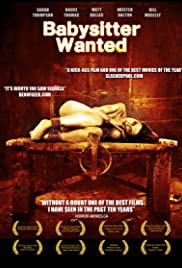
Babysitter Wanted (2008)

The subject is babysitters. Talk about a thankless job. Minimum wage, shitty snacks, bratty kids, and knife-wielding maniacs? Hard pass.

But what can you do when you have no bed to sleep in? Get a job, slacker.

Angie (Sarah Thompson) is a new student at a Northern California community college, with a dorm room that includes a sullen stoner roommate, but sadly, no bed. Beneath a bunch of Missing Person fliers on the community bulletin board, she finds a number for a babysitting job.

Once employment is secured, Angie looks forward to eventually getting a good night’s sleep.

Complications abound. The job is way out in the boonies and Angie’s shitbox car won’t make it. Also, there seems to be a horribly scarred bald dude following her.

At this point, Angie could probably write off her anxiety as a bad case of freshman jitters, since Jim Stanton (Bruce Thomas) and his wife Violet (Kristen Dalton) appear to be honest, hardworking farmers who just need someone to watch their little boy, Sam (Kai Caster).

What could possibly go wrong? Let’s put it this way: the scary scarred dude is the least of her worries.

In my estimation, writer and co-director Jonas Barnes utilizes the babysitter premise far more effectively than Ti West did in the similarly themed House of the Devil, which came out the following year in 2009.

While West is undoubtedly a gifted visual stylist, HotD comes across as a painfully self-aware exercise in genre clothes. The onscreen shocks were distant and removed, as though filmed through a dispassionate filter.

Babysitter Wanted is savage and satisfyingly visceral, with a cast that plays it to the hilt, including the always-dependable Bill Moseley in a rare non-maniac role.

Sarah Thompson, who looks a bit like Jennifer Garner, imbues Final Girl Angie with fire and fortitude, which comes in mighty handy when the kid she’s being paid to watch wakes up hungry as hell.

Wouldn’t you know it? He’s got dietary restrictions.


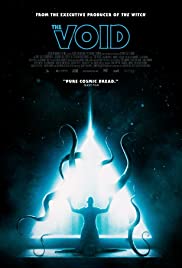
The Void (2016)

Have a hankering for some top-notch cosmic horror? Then come and get it, Lovecraft Lovers! The Void is a veritable smorgasbord of guts, gory rituals, and tentacled abominations from beyond time and space.

Writer/directors Jeremy Gillespie and Steven Kostanski are clearly captivated by the works of John Carpenter (particularly The Thing and Assault On Precinct 13), Stuart Gordon, and the body horror of David Cronenberg. Their approach is to dole out generous portions of oozing carnage that saturates the landscape like blood gravy on hell-baked biscuits.

Daniel Carter (Aaron Poole) is a small-town deputy getting ready to call it a night when he encounters a stumbling, bloody stranger (Evan Stern) in need of assistance. You can tell it’s a small town, because the nearest hospital is on the verge of closing and only staffed by a skeleton crew, including Carter’s soon-to-be ex-wife Allison (Kathleen Munroe) and kindly old Dr. Powell (Kenneth Welsh).

Things go from bad to nightmare bad as the hospital inhabitants discover they’ve been cut off from civilization by a squad of whacked-out cultists in white robes awaiting a cosmic event. To make matters worse, patient and doctor alike begin changing—and not for the better.

There are no slow parts to The Void; it opens with a woman being set on fire and never pauses for breath. The requisite character development is handled swiftly and cleanly, coming to light as needed when Carter, Allison, and Doc Powell take extreme measures to fill their own personal voids.

The results are cataclysmic. Turns out when the stars are right, you can change the world. And not for the better.


One Cut of the Dead (2017)

If you made a Christmas wish for an undead version of Truffaut’s Day For Night, I have some wonderful news. Writer-director Shinichiro Ueda pulls off multilevel moves on a micro budget in One Cut of the Dead, a riotous ride about the joy and terror of no-frills filmmaking, and the question every horror director asks themselves during a production: Do we have enough fake blood?

A small Japanese film crew sets up in an abandoned munitions factory as a location for a slap-dash feature for cable channel Zombie TV. The tyrannical director (Takayuki Hamatsu) wants real fear from his star-crossed leads, Chinatsu (Yuzuki Akiyama) and teen heartthrob Ko (Kazuaki Nagaya). This motivational tactic comes to fruition when the little troop faces an undead ambush.

Unfortunately for the young actors, the director has apparently joined the other side in his pursuit of cinematic excellence, and the director’s wife (Harumi Shahama), who serves as company den mother, no longer trusts anyone—and she’s got an axe.

While the single-cut, running hand-held camera splatterfest is the main course in One Cut of the Dead, the backstory of how the plucky crew successfully pulls off a nearly impossible realtime shoot is funny and frantically paced, and gives one a deep appreciation of frugal artists on a deadline.

During filming, the one-shot restriction requires actors to nervously ad-lib entire scenes and take inexplicable pauses in the action to await the arrival of makeup and effects people to throw more blood and body parts on the scene. But the show must (and does) go on. Somehow.

Lovers of quality cheese will be pleased and gore hounds will howl.

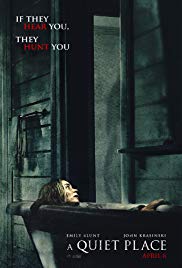
A Quiet Place (2018)

Count me among those who thought A Quiet Place was an adaptation of the excellent Tim Lebbon novel, The Silence. The similarities are many, but chief among them is that both stories take place after the world has been decimated by blind, winged predators that attack sounds.

Furthermore, in each case the plot revolves around a family with a hearing impaired daughter, who have managed to stay alive due to their mastery of sign language. Coincidence? I hope Lebbon got paid for his trouble.

Real-life couple John Krasinski (who also directs and co-wrote the script) and Emily Blunt, star as Lee and Evelyn Abbott, the parents of three, whoops, make that two kids, who live the quiet life on several rural acres.

Perhaps not thinking far enough ahead, Lee and Evelyn conceive another baby, which, as we all know, never make any noise. If you can get passed this rather obvious lapse in logic, then you should remain emotionally invested enough to make it through the entire movie, as Mom and Dad heroically protect their offspring from flying terrors that look like gargoyles imagined by H.P. Lovecraft.

The Abbott clan’s desperate need to remain stone silent under any circumstances (including childbirth and stepping on a goddamn nail) keeps the stress level near the tipping point. And then it spills over into the audience where it belongs.

As the title suggests, the biggest change of pace happening here horror-wise, is the lack of not only dialogue, but sounds in general. A Quiet Place exists in an enviably noise-free environment, where children are encouraged to play the Quiet Game on a full-time basis, lest they become lunch.


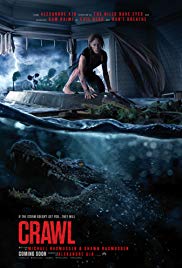
Crawl (2019)

Treated myself to a new movie from Amazon, and settled on Crawl, the turbid tale of Haley, a dutiful daughter (Kaya Scodelario), who drives into the heart of a Florida hurricane to rescue her injured dad (Barry Pepper).

Complication One: Dad’s trapped in the cellar of their family home and it’s rapidly filling up with water.

Complication Two: The rising floodwaters are teeming with bloodthirsty alligators.

This is not an intricate narrative, and director Alexandre Aja (High Tension, Piranha 3D, The Hills Have Eyes) wisely keeps the focus on what’s going to pop out of the water next. There is some obligatory backstory about the bond between father and daughter, forged while the the latter trained to be a competitive swimming champion, but it’s just enough to make the audience understand that Haley has a fighting chance against the gators.

As the waters rise, Aja tightens the screws to the point where one can’t help shouting out words of encouragement to Haley and her pop, such as, “Get out of there, dummy!” or “Stop thinking about old swim meets and haul ass!”

There’s not much dialogue in Crawl. Seriously, the script is probably like 10 pages long, and both Scodelario and Pepper play their parts to the hilt while submerged in bloody water. Ultimately, the movie succeeds because Aja never allows us the leisure time to get bored with their plight.

It’s one crisis after another, and they’re usually hungry.

Bad Moon (1996)

Werewolves, like mummies, have been relegated to second-tier movie monsters, no question. Just ask Benicio Del Toro.

On the other hand, there are fantastic werewolf movies, that any cinephile worth their silver bullets should pay rapt attention to this Halloween season. Joe Dante’s The Howling and John Landis’ American Werewolf In London (both released in 1981) are two crucial examples. If you haven’t had the hair-raising pleasure, get on them before the wolfsbane blooms. Chop, chop!

Since lycanthropes get little love from the critics, I’m going to point you in the direction of something rare and valuable: a very watchable werewolf fable with a hero dog, called Bad Moon.

Written and directed by legendary weirdo Eric Red (screenwriter of The Hitcher and Near Dark, among others), the movie stars deadpan tough guy Michael Paré, who, once upon a time, was a somewhat bankable actor (Eddie and the Cruisers, 1983, Streets of Fire, 1984).

Here, Paré sinks his teeth into a meaty role as a cursed photojournalist visiting his widowed sister Janet (Mariel Hemingway) in the wooded wilds of the Pacific Northwest.

Unbeknownst to Janet and her son Brett (lovable towhead Mason Gamble), beloved Uncle Ted recently emerged from the jungle after a nasty scrape with a vicious lupine predator, and everyone around him is looking more like Today’s Special with each passing hour.

Fortunately, Thor (Primo), the family German Shepherd, isn’t fooled by this man who looks familiar but smells all wrong. I mean, come on, who goes jogging in the woods all night long?

And thus begins a very real pissing match between guardian and invader.

Other than one sex scene and a few moments of grisly flesh shredding, Bad Moon could be an old Disney film. There’s an inquisitive child, a virtuous mom, a sinister uncle, and a really brave dog.

I’m as surprised as anyone that I got so wrapped up in a boy-and-his-dog movie that I was legit cheering for the fearless canine to save Mom from the Big Bad Werewolf.

Michael Paré and Mariel Hemingway get top billing, but the dog steals the show, plain and simple.

Good boy, Thor.