Haunter (2013)

MV5BMjEwNDc1MTI3Ml5BMl5BanBnXkFtZTgwNjI5ODU0MDE@._V1_SY317_CR0,0,214,317_AL_

Can a plucky ghost solve a mystery and prevent a murder? A thoughtfully askew haunted house tale, Haunter tells the story of a fiendish serial killer (Stephen McHattie) through the eyes of one of his victims, a teenage ghost named Lisa (Abigail Breslin, who is excellent). She and the rest of her deceased family are tragically housebound in a time loop on the day that her father Bruce (Peter Outerbridge) succumbs to the influence of the murderer’s evil spirit and kills his kinfolk. Needless to say, all attempts to escape the house result in failure.

Lisa has “woken up” to the fact that she and her loved ones are doomed to relive the same day over and over, and she rightfully sees no future in it. Sensing another presence in the house, Lisa does her best Nancy Drew impression to figure out what’s going on and discovers that a different family (in the present day) is dwelling in the house and are in danger of repeating her family’s fate, as the killer’s ghostly presence is on the verge of causing another dad to turn homicidal.

Director Vincenzo Natali and writer Brian King bring a number of fresh elements to Haunter, particularly the idea that a lost soul can redeem itself by trying to save another. Breslin, nattily attired in her Siouxsie and the Banshees sweatshirt and Chuck Taylors, is winningly courageous as a sullen teen (spirit) who decides to quit wallowing in her own misery to battle the malignant entity that caused her untimely demise. Haunter is both compelling and reasonably horrifying without being accompanied by buckets of blood or resorting to tired tropes. It flows like a cracking good YA novel—one that’s dandy entertainment for the whole ghost family.

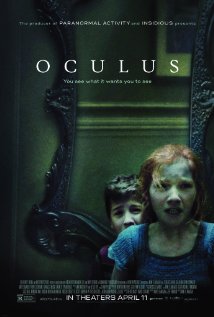
Oculus (2013)

MV5BMzE1NzM4MjEyNV5BMl5BanBnXkFtZTgwMjYzMjMzMTE@._V1_SX214_AL_

Speaking as a somewhat jaded horror buff, there are definitely times when the surfeit of unmitigated crap available on Fear.com, Netflix, Amazon and Hulu can weigh heavy on the soul. To make matters worse, it’s often the same unmitigated crap wherever you look! Sure, I enjoy revisiting familiar tropes as much as the next pinhead (A camping trip? What a lovely idea! I’ll bring my videocamera so we can capture each magic murder… I mean, moment!), but there are times when the self-imposed limitations placed on the genre can shred one’s patience. If boredom and burnout levels are approaching critical, I suggest spending an evening with Oculus, director/cowriter Mike Flanagan’s deceptively devastating homage to a haunted mirror.

Eleven years ago, Kaylie Russell and her younger brother Tim watched in horror as their father Alan (Rory Cochrane, from Dazed and Confused!) murdered their mother Marie (Katee Sackhoff, from Battlestar Galactica!). Young Tim (Brenton Thwaites) grows up in a mental institution while Kaylie (Karen Gillan) reaches adulthood with a burning desire to banish the evil spirit that haunts the mirror in her father’s study that she believes to be responsible for his descent into murder and madness.

Tim and Kaylie are reunited when the former is released from the booby hatch on his 21st birthday, and she wastes no time in collaring her kid brother to help her destroy the cursed object. Much to her dismay, Tim has learned his mental health lessons well, and is currently convinced that his sister is cut from the same crazy cloth as Daddy.

Oculus works for the very reason that so many fright flicks don’t: the characters. Flanagan takes his time with the telling details that go into the construction of the doomed Russell family. Alan is a hardworking and caring father, but he’s a control freak and prone to rages. Marie adores her children, but doesn’t have the tightest grip on reality. Kaylie is the dominant child who simultaneously protects her brother and encourages him to take increasingly desperate measures fueled by her obsession with the evil looking glass.

The actual onscreen horror is judiciously portioned out; the movie is neither swimming in blood nor dry as a bone. The vast and vivid array of outré details are seamlessly stitched into the action—and the reason they will scare the soup out of you is because director Flanagan expertly mixes illusion, fantasy and reality to the point where we can’t trust the information that our eyes are transmitting. When that happens, it’s all over, baby. Enjoy! I know I did.


The Eye (2008)

MV5BMTMyNjg3OTQyM15BMl5BanBnXkFtZTcwMjkyMzU1MQ@@._V1_SY317_CR0,0,214,317_

Though it pales in comparison to the Pang Brothers’ original from 2002, the American remake of The Eye with Jessica Alba is better than I thought it would be.

I’d even declare it passable entertainment.

But be warned, it’s another one of those movies that depicts ghosts as peripheral static; a blurry strobe image that flickers in and out of the material plane in annoyingly herky jerky fashion.

Who decided that this is the way that ghosts manifest themselves? It’s become another tiresome horror movie cliche and it’s really starting to annoy the shit out of me.

The lovely Sydney Wells (the lovely Ms. Alba) is a blind concert violinist who regains her sight after a cornea transplant. Sadly, her field of vision now includes the spiritual world, so she spies recently deceased dudes all over the place; trapped fearful souls that are having trouble moving on to the Happy Haunting Grounds.

With the help of a handsome eye specialist with the world’s worst bedside manner (Allesandro Nivelo), she figures out her new peepers came from a young Mexican woman with the power to see into the future.

And now Sydney, like Johnny Smith in The Dead Zone, is seeing impending disasters at every turn.

Some scenes are lifted practically verbatim from the original, like the pants-wettingly scary elevator sequence, but the frights are diluted here since we know Sydney will never succumb to the malign forces around her.

1. She’s Jessica Alba, the star of the movie.

2. Her character is practically a saint.

The ghosts simply don’t pack the eerie punch that characterized the earlier film.

My biggest complaint with The Eye co-directors David Moreau and Xavier Palud is their insistence on casting the always watchable Parker Posey as Sydney’s concerned sister Helen, a totally nothing part.

Helen isn’t funny, smart, or interesting. Why would you want an actress of Posey’s caliber to play such a one-dimensional character?

Smarten up, you guys.

The Attic (2007)

MV5BMjExODI2OTg1NF5BMl5BanBnXkFtZTcwNjEzOTEzMg@@._V1_SY317_CR0,0,214,317_

I haven’t really watched Mad Men, so actress Elisabeth Moss is kind of a revelation to me. If you haven’t seen her in the miniseries Top of the Lake, directed by Jane Campion, I suggest you do so, because it’s totally brilliant, and so is she.

In The Attic, a younger Moss portrays Emma, the increasingly delusional protagonist in a rural-goth take on Polanski’s Repulsion. Wait, did I say delusional? Perhaps she’s just a curious insect that’s wandered into the wrong fly trap.

Emma lives in a house near the woods. Her father (John Savage) and mother (Catherine Mary Stewart; who could ever forget the classic Night of the Comet?) are hopeful that she’ll finally want to go to college, but Emma prefers traipsing around the house in her nightie or exploring the creepy attic with her developmentally disabled brother Frankie (Tom Malloy, who also wrote the script).

A psychiatrist (Thomas Jay Ryan) is called in by the parents, but Emma proves to be a patient with more layers than a blooming onion.

Moss is riveting as Emma, an unmoored girl in the wrong place at the wrong time. Is she going insane? Has she been possessed by a malevolent house spirit? Are Mom and Dad conspiring against her?

Like Rover with a new soup bone, you’ll be chewing on the possibilities for a while. That said, The Attic is by no means perfect: Director Mary Lambert (Pet Semetary, lots of Madonna videos) definitely built this one to be a slow burner—rich in atmospheric dread but with the action (and bloodletting) more strategically rationed.

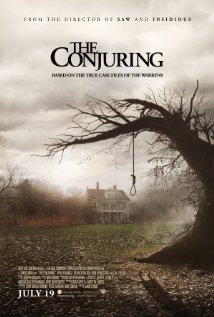
The Conjuring (2013)

MV5BMTM3NjA1NDMyMV5BMl5BanBnXkFtZTcwMDQzNDMzOQ@@._V1_SX214_

The most recent production from Saw-teur James Wan reaped over $130 million at the box office—and with good reason.

The Conjuring is a ripping ghost yarn that is subtle and suggestive in its creepiness and, when necessary, opens the taps into a full-tilt Good vs Evil battle royal (in the Judeo-Christian tradition) culminating in a no-holds-barred exorcism showdown.

It also re-introduces fright fans to Ed and Lorraine Warren, a formidable tag-team of real-life ghost-busters, played here by Patrick Wilson and Vera Farmiga.

This particular haunted house party takes place in 1971, in the 19th century Rhode Island home of Roger and Carolyn Perron (Ron Livingstone and Lili Taylor).

The Perrons and their five daughters get tossed around by sinister forces, necessitating the intervention of the Warrens, who set up cameras, tape recorders, and other vintage ghost-hunting paraphernalia.

Lorraine deduces that the central spook is a witch that tried to sacrifice her baby to Satan before hanging herself some 150 years prior, and whose modus operandi is to possess the mother and compel her to kill her child. In this case, Carolyn Perron has five to choose from!

The Conjuring doesn’t break new ground, but it serves up all your favorite ghost tropes piping hot, with top-notch special effects, a great cast, and expert escalation of terror. Here, the haunting is like a vicious tar baby, ensnaring any poor fool that comes along.

Even the Warrens, who are professionals and should know better, get swept up in a Satanic tsunami that poses a direct threat to their own daughter, who the couple left at home in the care of Grandma.

Speaking of which, the Warrens’ story is worth investigating. They’re the founders of the New England Society for Psychic Research, and claim to have been involved in “10,000” haunting adventures.

Old Sharky says check ’em out!

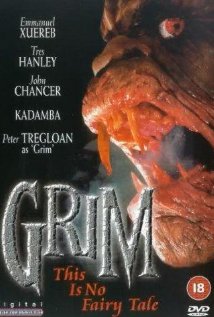
Grim (1995)

MV5BODUzMDk5NjUyOF5BMl5BanBnXkFtZTcwMjkzODQyMQ@@._V1_SY317_CR5,0,214,317_

Since when does a movie made in the 90s look like a movie made in the 70s? When it’s made in England, pretending to be Virginia! It certainly helps explain the abundance of denim jackets in this thing, that’s for sure.

Nutshell: Rob (Emmanuel Xuereb—he’s good in anything!) is a mining expert inspecting a series of tunnels and caves under a housing in development in “Virginia” (actually, Coleford, Gloucestershire) where folks have been disappearing. He and a bunch of concerned homeowners go spelunking into the bowels of the earth and are set upon by a magic troll-like being who can walk through walls.

The creature (Peter Tregloan) is the best thing about this SPoS—a toothy brute who bites and kills some of his victims, while others are imprisoned, presumably to be scarfed at a future date. By the way, the monster is initially summoned by some bored New Age suburbanites playing with a homemade Ouija board.

Grim is an idiotic film, but it’s the right kind of idiotic, as writer-director Paul Matthews leaves plenty of lengthy silences in the script so viewers can hurl snarky comments with impunity (a perfect movie for MST3K-style riffing). The story also gets increasingly (and I would argue “winningly”) bizarre, contains a decent amount of bloodletting, and leads to a WTF finale, with a minor character helplessly snared in a completely FUBAR situation. Grim is an amusing time-waster with an OK monster—nothing more, nothing less.

Shallow Ground (2004)

MV5BMTQ3MTc3NDk4M15BMl5BanBnXkFtZTcwNjUyMDgyMQ@@._V1_SY317_CR15,0,214,317_

A screwy mish-mash of elements somehow makes for a modestly entertaining melange of mayhem.

Even though the overall execution is just slightly north of made-for-TV and the performances indicate that the actors were given perhaps an hour to familiarize themselves with the script, Shallow Ground managed to keep me engaged. Never underestimate the value of abundant gore and the occasional unclothed actress, I suppose.

The story reveals itself in very haphazard, what-the-hell fashion, as if a team of lemurs was busily typing out new scenes even as the cameras commenced rolling.

In a middle-of-nowhere rural community called Shallow Valley, a tiny police department is in the midst of disbanding when a naked young man (Rocky Marquette) covered in blood makes an unwelcome appearance.

Apparently, the townspeople are packing up after the completion of a nearby dam (don’t ask why, they just are), and Sheriff Jack Shepherd (a gaunt, haunted, and inexplicably Irish Timothy V. Murphy), still tormented by an unsolved murder from a year before, has to deal with a new string of deaths that are somehow connected to the presence of the mysterious blood-splattered adolescent.

The conclusion of Shallow Ground is clumsy and confused as writer-director Sheldon Wilson, another enthusiastic Sam Raimi acolyte, requests that the viewer obligingly stitch together several disparate story lines: the accidental death of a local man and his daughter during the dam’s construction, the subsequent disappearances of several people connected with the dam project, a crooked deputy (Stan Kirsch) who murders a drug dealer in a nearby large city (huh?), and a vengeful hausfrau (Patty McCormack from The Bad Seed!) with an axe to grind.

It doesn’t coalesce in any meaningful way, but in this case the sum of Shallow Ground‘s grisly parts are (barely) enough to sustain us to the hastily constructed finale.

You will have questions. For me, it was why is the incidental tension music so shitty and stupidly applied?

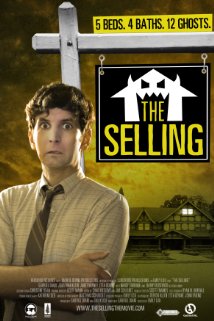
The Selling (2011)

MV5BMjI0ODYwNzY0MV5BMl5BanBnXkFtZTcwNTUyMTkxOA@@._V1_SX214_-1

M’lady did not care for The Selling, at all. She thought it was corny and childish. Total amateur hour. Long pointless scenes. An unfunny comedy. For the most part, I agreed with her, and still do—yet I quite liked it. Apparently, girls not only mature faster than boys, they mature far longer. Does that make sense?

The truth is, The Selling is nothing more than an old-fashioned spook-house comedy, a genre that peaked somewhere around the time of The Ghost and Mr. Chicken. And my inner 12-year-old (which greatly resembles my outer 50-year-old), was delighted. I giggled like a mental patient all the way through it. M’lady thinks me deranged, or at least a case for arrested development. Maybe deranged development is most accurate.

Screenwriter and star Gabriel Diani is dweeby Los Angeles real estate agent Richard Scarry—you know, like the children’s author—who needs to make a pile of dough in a hurry to pay for his mother’s cancer treatment, which, unsurprisingly, is ungodly expensive.

Richard and his dopey pal Dave (Jonathan Klein) get talked into buying a murder house by hot/conniving Realtor Mary Best (Janet Varney) and are then forced to somehow fix-up and flip a house that’s haunted by the 12 victims of a serial killer known as the Sleep Stalker.

The Selling is at its best in the world of real estate chicanery, as our knucklehead protagonists attempt to get an extremely haunted house ready for a “showing.” Meek little Richard attempts to reason with the ghosts, telling them that he is, in fact, in a rather tight spot, and has no choice but to try and sell the house. The ghosts respond with a volley of plagues that would have driven saner, smarter men to head for the hills.

Richard and Dave are not Ghostbusters or even especially competent; they’re just a pair of goofy schnooks that get in over their heads. At least Richard is rewarded with a romantic interest, the extremely bubbly paranormal blogger Ginger Sparks (Etta Divine) who helps them make contact with the spirit world. Comedian Simon Helberg has a small part, and veteran scene chewer Barry Bostwick shows up as a bumbling exorcist.

From all accounts, this was a shoe-string operation, financed the friend-and-family way. So I have to give it up for Diani and director Emily Lou. Here they have cinematic evidence of sufficient wit and inventive moxie to handle a bigger budget. The Selling never tries to be anything more than a sweet, amusing and somewhat corny contemporary haunted house flick. And it more than meets that modest goal.

Devil (2010)

I missed the memo on why exactly M. Night Shyamalan is now considered such a lame-o. I didn’t see Lady in the Water and I started to watch The Happening but bailed out for some mundane reason unrelated to the quality of the film.

So what happened? Did these two movies suck so unbelievably badly that they reduced the Shyamalan brand to a punch line? And now I’ve built up such a load of anxiety that I can’t bring myself to watch them.

I didn’t realize Devil was co-written and produced by Shyamalan or I might have steered clear, but I’m reasonably glad that I didn’t. Sure, it’s rife with his trademark glib spirituality (or Old Testament as folklore) with a side dish of “you just gotta believe sometimes.”

Even so, it’s a modestly effective thriller about five people trapped in an elevator—one of whom might be Lucifer.

Taking place in a thoroughly modern skyscraper in a thoroughly modern metropolis, five seemingly unrelated people get into an elevator car and become trapped between floors. A dramatic storm sent by obviously sinister forces moves into the area and messes with the electrical system, so getting them out proves complicated.

Detective Bowden (Chris Messina) is the cop on the scene who attempts to organize their rescue, with some help from Ramirez (Jacob Vargas), a particularly devout building security guard who doesn’t like what he’s seeing on the video monitor from the stranded elevator.

Devil offers legitimately frightening scenes as the trapped characters begin freaking out from the steadily increasing paranoia, claustrophobia, and growing suspicion that one among them is not what he/she seems.

More than just a morality play (although there are similarities), the story hangs on a basic Twilight Zone premise that Satan is real, and that from time to time he likes to go out amongst the people in the guise of a particularly unpleasant collections agent.

Seriously, if you’re on this list, you have very few options.

The Woman in Black (2012)

Also known as Harry Potter and the Angry Mother’s Ghost.

OK, I made that up, but The Woman in Black is noteworthy for reasons other than the presence of Daniel Radcliffe.

The movie marks the return of the Hammer Films imprint. As a lineal descendant of stately Brit-horror celluloid like The Brides of Dracula and Night Creatures, The Woman in Black is a worthy addition, with an expansive sense of dread invoked by proper gothic storytelling.

True, it comes rattling with haunted house tropes that are as well worn as Jacob Marley’s chains, but my admiration for its almost-gentlemanly ability to coax scares remains undiminished.

Radcliffe plays Arthur Kipps, a morose young attorney with a broken heart, who apparently has been slacking on the job after the death of his wife. Kipps is told by a less-than-sympathetic boss to get his lawyer ass to a remote village to sort out the paperwork of a recently deceased client.

Problem 1: The villagers remove the welcome mat upon his arrival.

Problem 2: The paperwork resides at Eelmarsh House, a decaying mansion that appears to be sinking into a swamp.

Problem 3: The house is fiercely haunted by the ghost of a woman who lost her son due to the negligence of the house’s previous occupants.

Problem 4: Whenever the ghost gets restless, village children start dying.

Problem 5: The ghost is restless now, so Kipps takes it into his head to play ghostbuster and lay the spirit to rest, perhaps in an effort to come to terms with his own tragic past.

The storyline advances in predictable fashion, but even so, it’s a reliable yarn that crackles like a fresh log on the fire. Rather than recalling vintage Hammer stock, I was reminded of The Changeling with George C. Scott; a familial tragedy with a supernatural revenge motif that’s told earnestly, but with skill and vigor.

However, I must point out one incredible scene that makes me wonder what director James Watkins and writer Susan Hill (based on her novel) were smoking at lunch break.

Kipps hits upon the outré idea of recovering the body of the young boy who drowned in the marsh, in an attempt to appease the pissed-off apparition.

So he and his friend Mr. Daily (Ciarán Hinds) go gamely splashing around underwater near the boy’s grave marker until they find and retrieve the muddy little bugger from his aquatic resting place.

For some reason, this sequence reminds me of poor Bela Lugosi in Bride of the Monster, forced to wrestle with an inanimate octopus in a cold tank of water.

I would just like to ask Watkins and Hill, who in the hell would ever entertain such an outlandish scheme for even a moment? Nobody, that’s who, and certainly not a clever young wizard.