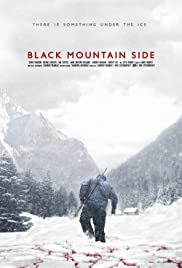
Black Mountain Side (2014)

Perhaps writer-director Nick Szostakiwskyj should have titled his movie And Another Thing, because it follows the structure of John Carpenter’s 1982 frosty classic to the letter.

Of course, there’s one crucial difference, but we’ll discuss that later.

An archaeology team on a long-term dig in the frozen north of Canada unearths a monolith and a few artifacts. Next thing you know, the darn radio gives up the ghost and communication with the outside world is shut off.

Shortly thereafter, the camp comes under the malign influence of one or all of the following:

  • The Deer God. (Dear God, no!)
  • A parasitic virus that causes insanity.
  • Just plain insanity, aka, Cabin Fever.

Suffice to say, these gooses are cooked. Paranoia rears its ugly head, and, much like Kurt Russell and his comrades, the team turns on itself.

Francis (Carl Toftfelt) starts hearing voices. Olsen (Michael Dickson) has a conversation with a corpse. Giles (Marc Anthony Williams) loads his gun and stops trusting anyone.

And nobody can sleep.

The key difference between Black Mountain Side and its predecessor (aside from budget and acting talent) is the uncertainty of the threat.

Is it alien? Pagan? Bacterial? Mental? Who knows?

All I can say for certain is that scientists and their subordinates working in Arctic environments have the life expectancy of a clumsy mine sweeper.

Pyewacket (2017)

The nerve of these kids today!

Once upon a time, you bring a delightful baby girl into the world. Next thing you know, the ungrateful brat is summoning an evil spirit to cap your ass!

Sullen teen Leah (Nicole Muñoz) butts heads with her flaky mom (Laurie Holden) following the death of their father/husband. Rebellious, angry, and smarting from Mom’s new whip-cracking parenting style, Leah sensibly turns to sorcery to remove the old hag from the picture, so that she’s free to spend more time with her loser friends.

We’re not talking voodoo dolls here. Leah goes full-tilt boogie in raising up the titular malevolent entity, including slicing open her own arm during a frenzied ceremony in the deep, dark words.

Much to her chagrin, all signs point to a successful ritual, and right around the same time Mom starts cutting her some slack, evidence of a demonic presence becomes impossible to ignore.

Canadian writer-director Adam McDonald (Backcountry) gets the most out of his raw materials in Pyewacket, including a tough, multifaceted performance from actress Nicole Muñoz.

It’s a rather stark, unvarnished production that relies on slow-drip tension, spooky woods, and agile cameras to keep us glued to our chairs.

Without gore or a body count, McDonald boldly doubles down on mood and atmosphere till the whole thing blows up—including a mother-daughter relationship that literally goes to hell.


Banshee Chapter (2014)

Given the present political situation, it should come as absolutely no surprise to anyone that government representatives frequently don’t have our best interests at heart.

Investigative reporter Anne Roland (Katia Winter) goes in search of a missing friend and uncovers a possible story about CIA mind-control experiments gone awry.

A breadcrumb trail of video evidence leads Anne to counterculture author Thomas Blackburn (Ted Levine, ol’ Buffalo Bill himself), a stand-in for Hunter S. Thompson, with whom she “trips” on a formula that was used on unsuspecting civilians in the 60s and 70s.

The drug, derived from the human pineal gland, gives the recipient heightened awareness of other dimensions—and the curious creatures who inhabit them.

The tension level climbs steadily throughout Banshee Chapter, but it’s the footage of old experiments that prove the most gripping. Clueless test subjects are strapped to a chair, injected with the dreadful drug, and plunged into darkness, attracting the attention of extra-dimensional entities who want to use the humans as surfboards into this world.

While intentions are never stated, I think we can safely assume the beings transforming human hosts into hideous mutations, are doing so for nefarious reasons.

Based on H.P. Lovecraft’s From Beyond, but bearing little resemblance to Stuart Gordon’s splashy adaptation from 1986, Banshee Chapter is a formidable debut for writer-director Blair Erickson, who shades his conspiracy theory mockumentary with splashes of cosmic horror (and humor) that blend perfectly in a paranoid landscape that greatly resembles our own.

In times such as these, we need eerie entertainment to keep us on our toes, and Banshee Chapter should have no trouble troubling an already troubled sleep.

Final Prayer (2013)

Let sleeping gods lie. They wake up cranky.

In writer-director Elliott Goldner’s found-footage frightmare Final Prayer (original title: The Borderlands), a team of investigators from the Vatican gets swallowed up by a powerful pocket of pagan worship in rural England.

As we all know from The Da Vinci Code, the Catholic Church has its fingers in dozens of occult pies, and always stands ready to dispatch expert emissaries should the need arise.

A report of supernatural hijinks at a remote country church is reason enough for the Pope to assign hard-drinking clergyman, Deacon (Gordon Kennedy), Gray (Robin Hill), a novice film and audio tech, and officious Vatican rep Mark (Aidan McArdle), to confirm or debunk the phenomenon.

The tiny congregation is headed by Father Crellick (Luke Neal), who fervently believes that the sounds of babies crying and objects moving by themselves in his church are proof of a miracle.

The team has different ideas. Mark thinks it’s a hoax; Gray is perplexed and frightened, while Deacon sees parallels with an older case that didn’t end well.

Fortunately for us, the protagonists get so used to wearing their headset cameras and mics during the course of the investigation, that we get the inside scoop before All Hell Breaks Loose, which happens in spectacular fashion during the final scene.

I advise patience during the first 45 minutes or so. Final Prayer takes a while to get rolling, but the slow burn pays off with a finale that is outré in the extreme.

By then, you’ll be on the hook with the rest of us.

Highly recommended.


Dead & Buried (1981)

Dead & Buried is a 40-year-old fright flick that has remained available on cable since the Reagan Administration. Now that’s staying power!

We open on the quaint seaport town of Potter’s Bluff, where friendly townsfolk frequently gather to savagely murder unlucky tourists, all caught on camera for those special vacation memories.

Sheriff Gillis (James Farentino) is inevitably handed the case, but he’s distracted at home by his wife’s (Melody Anderson) increasingly strange behavior, which includes teaching her fourth-grade class about voodoo.

Gillis consults with dapper Dr. Dobbs (Jack Albertson) the jazz-loving town coroner, who complains that closed casket funerals are a drag, because no one can fully appreciate the artistry it takes to make a comely corpse—especially ones that have been burned alive or had their throats sliced.

The murders continue unabated, while the sheriff dutifully gathers clues that point to pretty much everybody.

The ending is Rod Serling-meets-Angel Heart, as Gillis realizes he has more in common with his neighbors than he’d care to admit.

Most of Dead & Buried‘s notoriety comes from being the followup to Alien for screenwriters Ronald Shusset and Dan O’Bannon, as well as makeup mastermind Stan Winston, whose gore effects are brutally efficient here.

In some ways, this is a dated artifact that looks downright hokey at times. Compared to Alien, it’s all the way down to earth and mundane in appearance.

That said, Dead & Buried is creepy as hell and full of small-town weirdness, like Norman Rockwell taking a stab at Dorian Gray.

It’s also the final live-action appearance of veteran actor Jack Albertson, best known as Charlie’s bedridden gramps in Willy Wonka & The Chocolate Factory.

In Dead & Buried, Albertson goes out in grand fashion, as a hepcat mad doctor with delusions of grandeur and visions of immortality.

We should all be so lucky.


The Blackout: Invasion Earth (2019)

No need to overthink it. The Blackout is a slam-bang, sci-fi, action blockbuster from Russia that’s certain to hold your attention long after the Milk Duds harden.

Borrowing from well-sourced material like Starship Troopers, Alien, and War of the Worlds, directors Egor Baranov and Nathalia Hencker have dropped a fairly epic slab of space spectacle on our heads, featuring a cast of brave comrades from the former Soviet Union battling an unearthly menace.

Nutshell: The Earth has gone dark except for one small circle of civilization in Eastern Europe. Russian troops are deployed, but prove mostly useless against an unseen enemy that sends wave after wave of brainwashed bears and people at their shrinking defenses.

All seems lost until the arrival of Id (Atryom Tkachenko), an alien with godlike powers (but no mouth), who offers the beleaguered survivors a possible solution to the impending invasion.

“But at what cost?” as the saying goes.

Seen mostly from the grunt’s-eye view of two soldiers, Oleg (Aleksey Chadov) and Grubov (Pyotr Fyodorov), The Blackout serves up balls-to-the-wall military gear excitement and plenty of narrow escapes, while bodies pile up to the heavens.

Having the aliens enslave millions of human subjects and making them fight against the Russian holdouts is a brilliant strategy that also saves tons of money on the special effects budget.

No need for Godzilla to stomp Tokyo when there’s plenty of domestic cannon fodder at hand.

Thankfully, even at 2-hours plus, there’s no lag time in The Blackout, and that’s worth plenty in my book, especially since it’s light on CGI.

Turns out there’s nothing wrong with old-fashioned blood and guts.


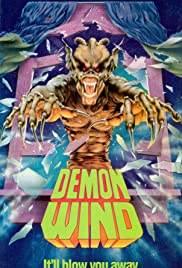
Demon Wind (1990)

Sam Raimi and The Evil Dead = The Velvet Underground.

I accept that it’s not a perfect analogy, but you get where I’m coming from. It’s an undeniable influence.

Nearly 10 years after Raimi and Bruce Campbell caught lightning in a bottle, Charles Phillip Moore and his crew unveiled a delightfully unfettered homage, Demon Wind, about another bunch of old teenagers assailed by occult forces in a rural location.

Corey (Eric Larson) and his girlfriend Elaine (Francine Lapensée) meet up with a group of friends and stereotypes to solve the mystery of Corey’s grandparents, who perished under mysterious circumstances during the Great Depression.

Turns out the family farm (more of a tattered theater set, really) is on land originally claimed by a devil-loving preacher and his followers who were set ablaze by townsfolk with no taste for human sacrifice.

Once Corey and his comrades reach the farm, all hell breaks loose, and suddenly, we’re at a Dead show, with ghouls coming out of the woodwork.

I’m not recommending Demon Wind because it’s a brilliantly conceived film that was nurtured to life by the artistic vision of writer-director Charles Phillip Moore.

Rather, it’s the sort of slap-dash amateurism (it was filmed in seven days) that drove Ed Wood to create flying saucers out of paper plates and a cockpit from a shower curtain.

Necessity is indeed the mother of invention, and the makeup and practical effects on Demon Wind, though plentiful, range from barely adequate to comically half-assed.

Moore employs a similarly scattergun approach to the narrative, seizing and abandoning ideas with random enthusiasm.

One of the doomed kids, Chuck (Stephen Quadros), is a magician with a black belt. His friend Stacy (Jack Forcinito) has a shotgun with unlimited ammunition.

Chuck still carries a torch for Terri (Lynn Clark) who now belongs to homophobic meathead Dell (Bobby Johnston).

Poor Bonnie (Sherrie Bendorf) gets turned into a doll, and no one seems to care.

Magic spells are cast. You can tell because that’s when the bloopy, hand-drawn animation appears.

The entire cast looks as though it just stepped out of a Huey Lewis video. Feel free to hit pause and ridicule the myriad lame looks available to pre-grunge adolescents.

And don’t worry about Corey’s friends dying. When the pack gets thin, Amazon thoughtfully sends more.

Stinky cheese makes the tastiest snack, no?

Hell House LLC (2016)

In which the haunters become the haunted.

Five friends form a professional haunt company, staging elaborate Halloween tours in creepy locations. The opening of their latest attraction is not entirely successful, as most of the staff ends up deceased in gruesome fashion.

The police and civic authorities shut down subsequent investigations, but five years after the Halloween Holocaust, a documentary crew attempts to solve the mystery by tracking down and interviewing the lone survivor.

For fans of the found-footage genre, Hell House LLC doesn’t disappoint. Writer-director Stephen Cognetti peppers the premises with ghosts, demons, a Satanic cult, a big scary clown, and enough paranormal pageantry to make up for any quandaries about who’s supposed to be running the camera in this scene.

I cheerfully recommend the movie, and may go so far as to check out the two sequels it inspired.

Note to filmmakers on a budget: Behold the beauty of a found-footage film; the iPhone cinematography actually enhances the dreadful atmosphere, forcing the trembling viewer to strain for every grainy terror captured.

The very existence of sequels to Hell House LLC proves that someone made their money back—and that’s enough to keep the iPhones rolling.


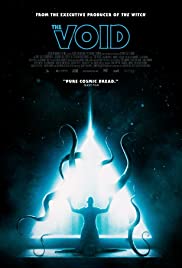
The Void (2016)

Have a hankering for some top-notch cosmic horror? Then come and get it, Lovecraft Lovers! The Void is a veritable smorgasbord of guts, gory rituals, and tentacled abominations from beyond time and space.

Writer/directors Jeremy Gillespie and Steven Kostanski are clearly captivated by the works of John Carpenter (particularly The Thing and Assault On Precinct 13), Stuart Gordon, and the body horror of David Cronenberg. Their approach is to dole out generous portions of oozing carnage that saturates the landscape like blood gravy on hell-baked biscuits.

Daniel Carter (Aaron Poole) is a small-town deputy getting ready to call it a night when he encounters a stumbling, bloody stranger (Evan Stern) in need of assistance. You can tell it’s a small town, because the nearest hospital is on the verge of closing and only staffed by a skeleton crew, including Carter’s soon-to-be ex-wife Allison (Kathleen Munroe) and kindly old Dr. Powell (Kenneth Welsh).

Things go from bad to nightmare bad as the hospital inhabitants discover they’ve been cut off from civilization by a squad of whacked-out cultists in white robes awaiting a cosmic event. To make matters worse, patient and doctor alike begin changing—and not for the better.

There are no slow parts to The Void; it opens with a woman being set on fire and never pauses for breath. The requisite character development is handled swiftly and cleanly, coming to light as needed when Carter, Allison, and Doc Powell take extreme measures to fill their own personal voids.

The results are cataclysmic. Turns out when the stars are right, you can change the world. And not for the better.


Dead Birds (2004)

Just a quick note to would-be bank robbers: Make sure you have a safe hideout after the job.

It’s part of your due diligence. I mean, how hard is it to send over a priest or gypsy to check the place out for evil spirits and whatnot?

A band of confederate renegades rip off a gold shipment from an Alabama bank during the War Between the States. They shoot lots of folks in the attempt and once their financial goals are met, the bandits beat a hasty retreat to wait out a storm at an abandoned plantation.

Natch, there’s friction within the organization. William (Henry Thomas) is in charge, but subordinates Clyde (Michael Shannon) and Joseph (Mark Boone, Jr) have designs on moving up by stealing the loot before they rendezvous in Mexico.

William’s younger brother Sam (Patrick Fugit) took a bullet during the robbery, and seems to be fading fast. Todd (Isaiah Washington), a runaway slave, gets creeped out by an occult grimoire he discovers in the barn, and Annabelle (Nicki Aycox) wants the hell out of there, ASAP.

Director Alex Turner and writer Simon Barrett meticulously wrap the action in a constricting shroud of understated, slow-burn dread, and the production is better for it. Tensions mount incrementally as the thunderstorm roars to a crescendo over the evil house, awakening the former tenants.

At this point, Turner and Barrett wisely turn the taps on full, and let the pinot flow. Dead Birds is a curious film and definitely worth watching as an intriguing stylistic anomaly. It’s not every day you find a Lovecraftian Western with a decent body count.