Twixt (2011)

MV5BMTQ1MjAwODg5MV5BMl5BanBnXkFtZTcwNTkwNDA5OQ@@._V1_SY317_CR9,0,214,317_


Distinguished filmmaker (and winemaker) Francis Ford Coppola returns to his horror roots!

As we all know, one of his first films was the 1963 gothic thriller Dementia 13 for Roger Corman’s American International Pictures.

And like his earlier film, Twixt is an eerie, dreamlike story with revolving color/black and white scenery, and a narrative that shifts gears between reality, dream world, and the mind of a desperate writer trying to get in touch with his long-lost muse.

Hall Baltimore (Val Kilmer), described by one fan as “a bargain-basement Stephen King,” is out on an aimless book tour for his latest hack-job horror novel.

He rolls into Swann Valley, a sleepy little California community, and is immediately pounced upon by wannabe writer and town sheriff Bobby LaGrange (Bruce Dern), who wants to collaborate on a new book. “The whole town is haunted!” he tells the writer with glee.

Baltimore is an alcoholic, an indifferent husband, and a grieving father who’s clearly at the end of his rope, so he agrees to let the loony lawman show him the town.

And soon a new story is born, featuring a corpse with a stake through its heart, the ghost of Edgar Allen Poe, a dangerously pale girl with braces, a haunted hotel, and a clock tower that’s inhabited by “the devil himself.”

Obviously, Twixt is not on a par (or scale) with Coppola masterworks like The Godfather or Apocalypse Now. Plot points come and go, some resolved, some disappearing like lint in a stiff breeze.

But it’s a consistently intriguing little flick that’s both a horror whodunit and a tale about a tapped-out artist who needs to reconnect with his talent in order to survive.

For rabid cinephiles, the movie includes appearances by the likes of David Paymer, Joanne Whalley (Kilmer’s wife), Don Novello (a.k.a. Father Guido Sarducci!) and Elle Fanning, not to mention an introduction read by Tom Waits.

Ultimately, though, it’s Coppola who makes all the right moves, perhaps signaling a return to more creative endeavors than stomping on grapes.

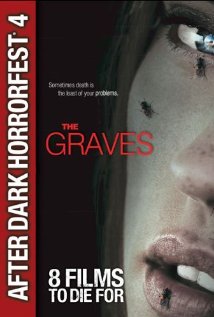
The Graves (2009)

MV5BMTk3NTA1MTY5MF5BMl5BanBnXkFtZTcwMzI1MjQxMw@@._V1_SY317_CR4,0,214,317_

Ah, beware of roadside attractions, because as we all know, they’re just fronts for bloodthirsty cults in search of sacrificial offerings.

The Graves is a dirt-cheap, low-budget fright feature that nonetheless delivers a bit of gore and sinister atmosphere. It also boasts a pair of hot, snarky rocker chicks getting chased all over the Arizona landscape by some horror film veterans, including Bill Moseley (Texas Chainsaw Massacre II, The Devil’s Rejects) and Tony Todd (Candyman, Hatchet II).

Megan Graves (Clare Grant) and her little sister Abby (Jillian Murray) are comely aficionados of comic books, heavy metal, and schlock culture. In search of a good time they happen upon Skull City, a ghost town tourist trap that turns out to be a death trap.

Under the direction of Reverend Stockton (Todd), sightseers are routinely captured and sacrificed to a disappointingly unseen demon that provides for the townsfolk of nearby Unity, Arizona.

Megan and Abby are pursued, grabbed, escape, and then pursued some more by a bunch of desert-dwelling wackos, many of whom are killed by the surprisingly resourceful sisters.

The Graves isn’t a great movie; it isn’t even a pretty good movie. But once again we have a writer/director, in this case Brian Pulido, who shows promise.

And if he had more than a few hundred bucks in his bank account he could probably make a heckuva film. Kickstarter?

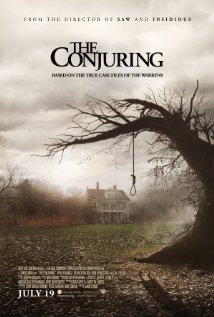
The Conjuring (2013)

MV5BMTM3NjA1NDMyMV5BMl5BanBnXkFtZTcwMDQzNDMzOQ@@._V1_SX214_

The most recent production from Saw-teur James Wan reaped over $130 million at the box office—and with good reason.

The Conjuring is a ripping ghost yarn that is subtle and suggestive in its creepiness and, when necessary, opens the taps into a full-tilt Good vs Evil battle royal (in the Judeo-Christian tradition) culminating in a no-holds-barred exorcism showdown.

It also re-introduces fright fans to Ed and Lorraine Warren, a formidable tag-team of real-life ghost-busters, played here by Patrick Wilson and Vera Farmiga.

This particular haunted house party takes place in 1971, in the 19th century Rhode Island home of Roger and Carolyn Perron (Ron Livingstone and Lili Taylor).

The Perrons and their five daughters get tossed around by sinister forces, necessitating the intervention of the Warrens, who set up cameras, tape recorders, and other vintage ghost-hunting paraphernalia.

Lorraine deduces that the central spook is a witch that tried to sacrifice her baby to Satan before hanging herself some 150 years prior, and whose modus operandi is to possess the mother and compel her to kill her child. In this case, Carolyn Perron has five to choose from!

The Conjuring doesn’t break new ground, but it serves up all your favorite ghost tropes piping hot, with top-notch special effects, a great cast, and expert escalation of terror. Here, the haunting is like a vicious tar baby, ensnaring any poor fool that comes along.

Even the Warrens, who are professionals and should know better, get swept up in a Satanic tsunami that poses a direct threat to their own daughter, who the couple left at home in the care of Grandma.

Speaking of which, the Warrens’ story is worth investigating. They’re the founders of the New England Society for Psychic Research, and claim to have been involved in “10,000” haunting adventures.

Old Sharky says check ’em out!

Jug Face (2013)

MV5BMjI2ODI0Nzg2Nl5BMl5BanBnXkFtZTcwNzM4MzU2OQ@@._V1_SY317_CR3,0,214,317_

“There’s some weird shit going on in the woods out there.”

I’m quite impressed with Jug Face, an absorbing and shockingly original jolt of indie-horror from writer-director Chad Crawford Kinkle.

I would almost venture to call it “magical realism” but that term fails to capture the profound depths of despair plumbed by teen protagonist Ada (Lauren Ashley Carter) as she tries to avoid getting tossed into a pit as a sacrificial offering to the nameless creature that serves as deity and protector to her ignorant hillbilly kinsfolk.

Jug Face is  mighty grim stuff. Somewhere in the Appalachians, a degenerate community of yokels lives off the grid, dependent on sales of white lightning and dutifully tending the thing in the pit to maintain their squalid existence.

Ada, who has an arranged marriage to a doughy village boy in her future, is in love with her sullen brother Jessaby (Daniel Manche) who knocks up the unlucky lass whilst they’re cavorting in the woods.

Meanwhile, the thing in the pit is unhappy and Dwai (Sean Bridgers), the village idiot savant/high priest can’t figure out what’s wrong. Normally, when the god is restless, Dwai is compelled to bake a jug that looks like one of the villagers, who is then thrown to the deity.

So not only is Ada facing a loveless marriage while carrying her brother’s baby, but it appears she’s next on the pit parade.

The filth and blind ignorance in this hick settlement is so thick you’d need a weed whacker to get through it. It’s the act of “committing a sin” in such a terrible, unforgiving environment that accounts for the real horror in Jug Face, more so than the angry Lovecraftian entity in their midst.

Poor Ada tries everything she can think of to avoid the pit, but the superstitious ties that bind (and strangle) these slack-jawed citizens are simply too strong.

Reminiscent of Winter’s Bone, another film about an isolated community with its own strict code of behavior, Jug Face is like an anthropological field trip—or a bad dream induced by leftover Indian food.

In either case, you’ll be very grateful to wake up safe and sound in your own bed.

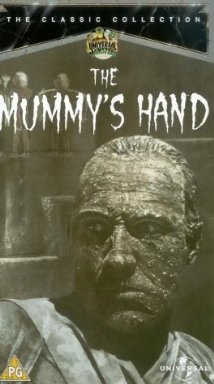
The Mummy’s Hand (1940)

MV5BMTI2Mjk0MTM5NV5BMl5BanBnXkFtZTcwMTIwNTEyMQ@@._V1_SX214_

Haven’t sat down with a good ol’ Universal monster movie in quite a while, and that’s a shame since they were the primary catalyst for making me the horror fan I am today.

Imagine your humble narrator as a wide-eyed moppet in footy pajamas staring in wonder at another episode of some regional spook show like Creature Features or House of Fear, my shaky hand seeking the comfort of the popcorn bowl in a profound darkness lighted only by a small black-and-white TV set.

Or better yet, don’t.

Yes, the Mummy is a slow-moving, clumsy bugger usually manipulated by some dude in a fez to deliver him hot chicks in nightgowns, but not many monsters have such a formidable (and underutilized) mythology behind them. You know, Egypt, hieroglyphics, sarcophagi, curses, tombs, and the like?

It’s a wealth of sinister and exotic pageantry, and I for one will never tire of an ambulatory roll of bandages hunting down a bunch of foolhardy archaeologists.

The Mummy’s Hand isn’t the first entry in the series (that would be 1932 version of The Mummy with Boris Karloff) but it’s a fine jumping-off point to get acquainted with the whole premise.

Brawny archaeologist Steve Banning (Dick Foran—not much of an actor, I’m afraid) and his comedy sidekick Babe Jensen (Wallace Ford) launch an expedition to find the tomb of Princess Ananka, and instead stumble upon Kharis (Tom Tyler) a 3,000-year-old living mummy who serves the latest in a long line of high priests (George Zucco, who would return to the role two more times in The Mummy’s Tomb and The Mummy’s Ghost).

Interlopers are strangled, a tasty dame (Peggy Moran) is carried away by the lovesick Kharis, and the high priest gets gunned down by the comedy sidekick. It’s a lot of movie packed into a short running time, and even with some unlikely set dressing decisions (I spied a dragon motif affixed to the temple of Amon-Ra. Were Egyptians into dragons?) and elastic mood swings (e.g., Babe Jensen sits around the campfire with his magician pal, the Great Solvani, trying to learn a corny parlor trick about 10 minutes after they discover a murdered comrade in the forbidden tomb), but it’s fast-paced entertainment with an eerie menace that stands the test of time.

Do yourself a favor. Visit your mummy more often.

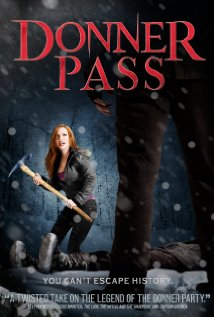
Donner Pass (2012)

MV5BNDI1MzU0MTc4Ml5BMl5BanBnXkFtZTcwMDYxOTE0NQ@@._V1_SY317_CR3,0,214,317_

A little R&R in the heart of cannibal country? What a great idea! Donner Pass may have a teeny weeny budget, but I have grudging admiration for director and co-writer Elise Robertson’s commitment to blood-and-guts filmmaking and her insistence on adding a few surprise ingredients to the (human) stew.

A quartet of students in search of a winter’s idyll take up residence in a remote snowbound cabin. Sure, it sounds innocent enough, until a truckload of their drunken buddies crash the party and a partially devoured body count ensues. Apparently the rumors of cannibal pioneer George Donner haunting the hills in search of a little warm flesh have some basis in fact. You just can’t keep a good man down!

Although she’s playing with well-worn tropes (e.g., should they leave the cabin and try to get help during a blizzard or sit tight and await the dinner bell? Decisions, decisions …), Robertson gamely tries to instill some believable humanity in her doomed characters—a bold gambit considering we’re not tuning in to see if Kayley (Desiree Hall) and Mike (Colley Bailey) can work out their relationship difficulties or if reluctant host Thomas (Erik Stocklin) is going to get in trouble with his parents for having a rowdy soiree in their absence.

Although the trail of misdirection that leads to the hungry mastermind isn’t exactly revelatory, it’s got a pinch of panache and a dollop of entertainment value. There’s also a straight out of left-field date-rape revenge subplot that has no reason to exist beyond padding the movie’s scanty 80-minute run time.

All things being equal, I’m going to give Donner Pass a cautious recommendation. Robertson and her amateur cohorts display enough dexterity and creative moxie with these frozen leftovers to warrant a watch—but only if you’ve finished your chores and walked the dog.

7 Below (2012)

MV5BMTk5MTM0OTkxMl5BMl5BanBnXkFtZTcwNTA0NzY2Nw@@._V1_SY317_CR12,0,214,317_

A lukewarm, paint-by-numbers haunted house entry mainly notable for the presence of Ving Rhames and a doughy Val Kilmer. Rhames tries his best, but 7 Below never really heats up.

After a bus accident and the threat of bad weather, seven uninteresting people take refuge with the mysterious Jack (Rhames) in a house where 100 years ago an evil little boy sliced and diced his kinfolk.

It’s slow, contains little gore and no nudity, and by the time the final scene washes up on the beach, just barely alive, you’ll probably have switched it over to ESPN.

I watched so you don’t have to. You’re welcome.

Beast Beneath (2011)

MV5BMTcyMzQ5MzUyNF5BMl5BanBnXkFtZTcwMzc1NzQzNw@@._V1_SY317_CR5,0,214,317_

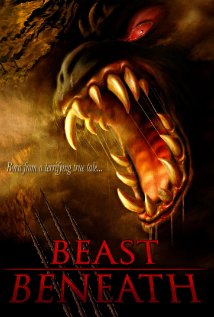
Another case of the cover art being scarier than the film.

If you’re in the mood for a low-budget, slow-paced monster matinee, I guess you could do worse than Beast Beneath. But you’d have to try pretty goddamn hard.

Seated beside a campfire, a father tells his bored teenage son the true (?) story of Griffith Park (their present location) in Los Angeles. Seems the family that once owned this prime piece of real estate was cheated out of it by a trio of unscrupulous douches.

The offenders and the land itself are cursed, and now the ghost of the family patriarch and his demonic dog haunt the premises. Sounds good on paper, but Beast Beneath never transcends the restraints imposed by its humble budget, and instead of inspired amateurism, we merely get amateurism.

Of note to followers of “Where Are They Now?” trivia. Jimmy Buffet-esque one-hit singer Bertie Higgins (“Key Largo,” 1982) cowrote and stars in Beast Beneath. His son Julian is the director. Hope they didn’t sink their own money into this project.

Grim (1995)

MV5BODUzMDk5NjUyOF5BMl5BanBnXkFtZTcwMjkzODQyMQ@@._V1_SY317_CR5,0,214,317_

Since when does a movie made in the 90s look like a movie made in the 70s? When it’s made in England, pretending to be Virginia! It certainly helps explain the abundance of denim jackets in this thing, that’s for sure.

Nutshell: Rob (Emmanuel Xuereb—he’s good in anything!) is a mining expert inspecting a series of tunnels and caves under a housing in development in “Virginia” (actually, Coleford, Gloucestershire) where folks have been disappearing. He and a bunch of concerned homeowners go spelunking into the bowels of the earth and are set upon by a magic troll-like being who can walk through walls.

The creature (Peter Tregloan) is the best thing about this SPoS—a toothy brute who bites and kills some of his victims, while others are imprisoned, presumably to be scarfed at a future date. By the way, the monster is initially summoned by some bored New Age suburbanites playing with a homemade Ouija board.

Grim is an idiotic film, but it’s the right kind of idiotic, as writer-director Paul Matthews leaves plenty of lengthy silences in the script so viewers can hurl snarky comments with impunity (a perfect movie for MST3K-style riffing). The story also gets increasingly (and I would argue “winningly”) bizarre, contains a decent amount of bloodletting, and leads to a WTF finale, with a minor character helplessly snared in a completely FUBAR situation. Grim is an amusing time-waster with an OK monster—nothing more, nothing less.

Sinister (2012)

MV5BMjI5MTg1Njg0Ml5BMl5BanBnXkFtZTcwNzg2Mjc4Nw@@._V1_SX214_

This one was described to me as “pants-shittingly” scary and I’m happy to report that I emerged from the experience high and dry.

But it’s not a flop, either.

Despite some really uneven pacing, Sinister registers on the high-voltage jump-scare meter, though you can see most of them coming a mile away.

True-crime author Ellison Oswalt (Ethan Hawke) recklessly moves his wife and two children into a house where a family murder/suicide took place in the not-too-distant past so he can write a book about it.

Editor’s Note: Frankly, this is another case of the protagonist being such a selfish prick that all the bad things that happen subsequently can be laid at his stupid feet. He doesn’t even bother to tell his rather dim wife about the house’s history till it’s far too late.

Oswalt discovers some disturbing home movies in the attic and begins to piece together the biggest story of his career—ritual serial killing that dates back several decades, with the killer(s) in thrall to an obscure Babylonian deity named Bughuul.

The pacing problems in Sinister I refer to earlier can be attributed to way, way too many scenes of Oswalt wandering through his house at night. Sometimes something happens, sometimes it doesn’t. But I felt like writer/director Scott Derrickson’s (The Exorcism of Emily Rose) decision to spend three-quarters of the movie skulking around in low light waiting for the scary face to emerge, wasn’t the most inspired.

The lack of contrast in scene after scene becomes an irritant.

Still, the occult concept is well-executed and profoundly creepy as Oswalt slowly comes to the realization that his ego has caused him to step foolishly into an inescapable trap—even as he can’t help but be impressed by its horrible shape and grandeur.