Maniac (2012)


MV5BMjI2NjMxMTQ5MV5BMl5BanBnXkFtZTcwODczMTQ3OQ@@._V1_SY317_CR0,0,214,317_

I distinctly remember seeing the original Maniac (1980) at the drive-in the year it came out.

It was an especially garish example of grindhouse sleazery directed by William Lustig (Maniac Cop, Vigilante), with splashy gore effects by the great Tom Savini, and starring Joe Spinell (The Godfather II, Taxi Driver) as Frank Zito, a lumpy schlub on a murderous rampage.

Whether he was obliterating necking teens with a shotgun, strangling hookers, or scalping his victims in order to dress up his mannequin collection, Zito proved a memorably demented protagonist.

For this slick, slightly less lurid remake, Lustig teamed with Franco fiends Alexandre Aja, Gregory Levasseur (writers) and Franck Khalfoun (director) to recast Frodo Bag… er, Elijah Wood as the prolific psycho with the crippling Mommy issues.

Frank Zito (Wood) is the rodentish owner of a vintage mannequin store obsessed with Anna (Nora Arnezeder), a beautiful photographer, who happens by his shop to admire his magnificent collection of dress forms.

When Frank isn’t awkwardly wooing Anna, he’s out skewering, strangling, slicing, and scalping a string of unlucky ladies who remind him of his horribly skanky mother. Can the love of a good woman redeem a savage killer? No, of course not. What a ridiculous idea.

Director Khalfoun charts the action with a very aggressive POV camera (Wood is seen mostly in reflections), that straps us into the driver’s seat of considerable carnage—a feverish perspective that most viewers should find deeply unsettling.

Wood portrays Zito as a shaky mess of neuroses and unchecked rage, a rather alarming change from the mild-mannered hobbit that we followed through three epic movies on his sojourn to Mount Doom.

Here, Wood’s character is on a different kind of quest; trying to annihilate the memories of the woman responsible for making him the man(iac) he is today.

Needless to say, not for squeamish or sensitive souls.

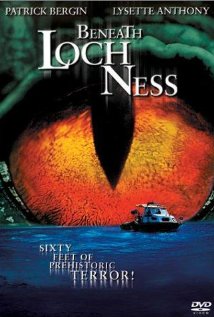
Beneath Loch Ness (2002)

MV5BMjAzNzc5NzMwM15BMl5BanBnXkFtZTcwNTgyMzIyMQ@@._V1_SY317_CR4,0,214,317_

I hate to repeat myself, but I’m going to say it again: If you don’t have a halfway decent onscreen monster, your monster movie is doomed. Doomed I tell you!

In the case of Beneath Loch Ness, the best that director and co-writer Chuck Comisky can manage for Nessie, the ill-tempered plesiosaur that occasionally wreaks havoc on local fishermen and scuba-diving scientists, is some dreadful animation that would shame a high school computer lab.

While seeking photographic evidence of prehistoric critters, a team of researchers in the employ of a cable TV adventure network loses its leader down a freshly opened trench at the bottom of the loch.

Enter the team’s former honcho, Case Howells (Brian Wimmer) who arrives fresh from the Middle East to wrangle the beast, soon followed by his ex-wife Elizabeth (Lysette Anthony) a pushy producer from the network.

The cartoon creature kills some more people so Howells teams up with Blay (Patrick Bergin—say whatever happened to him?) an obsessed local who lost his son to the monster several years before.

In his kilt, William Wallace makeup and Captain Ahab harpoon, Blay is easily the most compelling thing about Beneath Loch Ness. That, and some arresting footage of rural Scotland.

The animated Loch Ness Monster here is a thing of no scale or substance—so how could it frighten anyone? Even the guys sweating their asses off in rubber monster suits at Toho Studios understand this.

Look, if I want cartoon entertainment I’ll stick with The Venture Brothers or Metalocalypse, thanks.

Let this one return to the depths from whence it came.

Werewolf: The Beast Among Us (2012)

MV5BMjA0OTM0MzAyNV5BMl5BanBnXkFtZTcwOTUyNjQ1OA@@._V1_SY317_CR17,0,214,317_

If, like me, you viewed the Hugh Jackman vehicle Van Helsing as mere brain-dead spectacle, then be of good cheer. Werewolf: The Beast Among Us is an efficient example of how to perform genre gene splicing without relying on a bombardment of cheesy CGI to impress the yokels in the third row.

It’s sort of a rollicking Eastern European cowboy version of John Carpenter’s Vampires with a few wink-worthy nods to Jaws, steampunk fashion and the original Wolf Man—including a reprise of Maria Ouspenskia’s famous gypsy poem (“Even a man that’s pure of heart/And says his prayers by night…”).

Somewhere in the dark forests of Transylvania, in the latter part of the 19th century, a merry band of werewolf hunters rolls into a village currently under siege from members of the lycanthrope community. But, as several characters knowingly declare, “this is no ordinary werewolf!”

The hunters are led by taciturn gunslinger Charles (Ed Quinn) and the swashbuckling Stefan (Adam Croasdell), and aided in their quest by local lad Daniel (Guy Wilson), a medical student working for the town doctor (Stephen Rea). As the nimrods close in on an exceptionally wily werewolf, the townsfolk begin to realize that there is indeed, a “beast among us.”

Perhaps due to its obvious budget limitations (Hello, it’s filmed in Romania!), director Louis Morneau pumps up the fun factor and relies on a capable supporting cast (Rea, Stephen Bauer, Nia Peeples) to tell this ripping werewolf yarn.

The hunters are a posse of cool killers, especially Kazia (Ana Ularu), who fries her foes with a makeshift flamethrower and Fang (Florin Piersic) who takes a bite out of crime with his silver choppers. The werewolf CGI isn’t particularly inspired, but Morneau wisely lets a guy in a suit handle the closeup carnage when limbs are torn off and guts are gushing.

A genuinely pleasant surprise.

Hannibal Rising (2007)

MV5BMTIzMTA0NTM4NF5BMl5BanBnXkFtZTcwNjY3ODM0MQ@@._V1_SY317_CR0,0,214,317_

I’m all over the map after sitting through two-plus hours of Hannibal Rising, an elegantly told “origin story” of the guy who grows up to be flesh-eating foodie Anthony Hopkins in The Silence of the Lambs. The screenplay is by Thomas Harris, who scribbled all the books this material is based on, and the results are a weird, compelling mess—one that I am going to recommend, with reservations.

In the waning days of World War II, the Lecters, an Austrian or Lithuanian family of noble birth, flee their storybook castle to escape either the advancing Russians or the Germans. A plane crashes into a tank. Mom and Pop Lecter perish. A shiftless band of German or Austrian soldiers takes over Lecter Farm, which isn’t nearly as nice as Lecter Castle, but it ain’t bad. There’s a harsh winter. The famished brigands nosh on Hannibal’s beloved younger sister Mischa (Helena Lia-Tachovska) ’cause pizza delivery is still several years away from becoming reality.

Hannibal escapes to France or Belgium to seek shelter with his late mother’s brother. Luckily, the uncle’s croaked and his widow, a hot Japanese or Chinese woman (Gong Li), takes in the young refugee, who soon grows into a handsome and brilliant-but-troubled medical student (Gaspard Ulliel; picture a young, evil, Matthew Modine) with vengeance—and lots of emotional baggage—on his mind.

The entire subplot with Hannibal’s beautiful Japanese or Chinese aunt, who schools her nephew in the ways of the samurai (oh brother!), should have been excised; it serves no purpose whatsoever other than padding an already bloated running time. But years later, when young Lecter is tirelessly tracking the bastards that took his sister to lunch, Hannibal Rising achieves an almost-operatic grandeur. I don’t think I’m spoiling anything when I say that revenge is indeed a dish best served cold—with fava beans and a nice Chianti.

The Task (2011)

MV5BNzUzMDExMDUzNV5BMl5BanBnXkFtZTcwNDMzNjM1NA@@._V1_SX214_

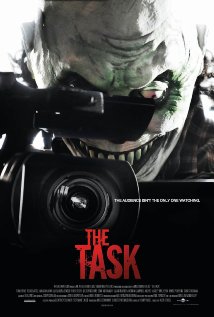
Filmed in Bulgaria masquerading as upstate New York, this faux reality-show-set-in-a-haunted-prison feature is severely lacking in just about every department.

From a generic, no-name cast to a predictable fake-out finale, The Task is a starvation diet of style and tension. And with precious little blood and guts—and no nudity—to distract our attention, the overall cheapness and absence of fresh ideas dooms the production from the get-go.

An assortment of reality show hopefuls are kidnapped and taken to an abandoned prison with a sinister reputation. Formerly under the rule of a sadistic warden who tortured and starved his inmates, the rambling edifice is rumored to be haunted, and the unlucky contestants must spend the night, completing a variety of unsavory tasks, in order to win $20,000.

Though the prison is wired with cameras, props, and spooky audio effects, the presence of a legit ghost throws a wrench into the works.

The Task is a total dud, no matter how you slice it. We’re never given a reason to care about any of the characters—and we don’t. If they were faced with an awesome battery of mind-bending horror and derangement, the blandness of the characters wouldn’t have made any difference.

As it stands, the stakes are never enough to draw anyone into the low-voltage narrative of The Task. As my former editor would say, when presented with uninspired copy, “It’s awfully so-whatty.”

The Eye (2008)

MV5BMTMyNjg3OTQyM15BMl5BanBnXkFtZTcwMjkyMzU1MQ@@._V1_SY317_CR0,0,214,317_

Though it pales in comparison to the Pang Brothers’ original from 2002, the American remake of The Eye with Jessica Alba is better than I thought it would be.

I’d even declare it passable entertainment.

But be warned, it’s another one of those movies that depicts ghosts as peripheral static; a blurry strobe image that flickers in and out of the material plane in annoyingly herky jerky fashion.

Who decided that this is the way that ghosts manifest themselves? It’s become another tiresome horror movie cliche and it’s really starting to annoy the shit out of me.

The lovely Sydney Wells (the lovely Ms. Alba) is a blind concert violinist who regains her sight after a cornea transplant. Sadly, her field of vision now includes the spiritual world, so she spies recently deceased dudes all over the place; trapped fearful souls that are having trouble moving on to the Happy Haunting Grounds.

With the help of a handsome eye specialist with the world’s worst bedside manner (Allesandro Nivelo), she figures out her new peepers came from a young Mexican woman with the power to see into the future.

And now Sydney, like Johnny Smith in The Dead Zone, is seeing impending disasters at every turn.

Some scenes are lifted practically verbatim from the original, like the pants-wettingly scary elevator sequence, but the frights are diluted here since we know Sydney will never succumb to the malign forces around her.

1. She’s Jessica Alba, the star of the movie.

2. Her character is practically a saint.

The ghosts simply don’t pack the eerie punch that characterized the earlier film.

My biggest complaint with The Eye co-directors David Moreau and Xavier Palud is their insistence on casting the always watchable Parker Posey as Sydney’s concerned sister Helen, a totally nothing part.

Helen isn’t funny, smart, or interesting. Why would you want an actress of Posey’s caliber to play such a one-dimensional character?

Smarten up, you guys.

Silent Night, Deadly Night (1984)

MV5BMTQyOTQwMzAwNl5BMl5BanBnXkFtZTcwMjEzMzYwMw@@._V1_SY317_CR5,0,214,317_

The real title of this Yuletide bloodbath should have been Billy Never Had a Chance. I mean, come on! Here’s a kid who’s already been spooked by his evil/senile grandpa into being afraid of Santa Claus, who then watches his parents get slaughtered by a stickup man dressed as St. Nick. Then he’s shipped off to an orphanage where a cruel Mother Superior (Lilyan Chauvin) beats him for watching a couple engage in sexual congress (in an orphanage?) and then forces him to sit on Santa’s lap. He’s not even 10 years old yet! How the hell did they think he was going to turn out? Our cookie-cutter approach to mental illness is so lame.

Fast-forward 10 years and Billy the ticking time bomb (Robert Brian Wilson) is now a handsome, strapping young man—with a job in a toy store. Yeah, what with his mom and dad getting iced by Santa and all, he probably should have reviewed his career options a bit more thoughtfully, but I guess he needed the money for a new bike or something. Inevitably, Christmas rolls around and Billy’s nerves are a trifle frayed, as visions of the holly jolly fiend bombard his every waking moment. And for the piece de resistance, his drunken store manager (Brit Leach) makes poor Billy pull Santa Claus duty for the legions of snotty moppets that descend on the store like locusts on Christmas Eve. Like I said, he never had a chance. Hell, I’d have gone on a killing spree for having to entertain the brats, even without Billy’s tragic backstory.

Yes, it’s a ham-fisted and lurid psychodrama with plot developments you can see coming from miles away, but director Charles Sellier made sure that Silent Night, Deadly Night doesn’t scrimp on the spectacle essentials (i.e., blood and boobs). And in its painfully obvious effort to illustrate why this traumatized kid becomes an axe-wielding killer, we are forced to relive those horrible formative years right alongside Billy—which is far and away the most horrifying aspect of the movie. Suck it, Mother Superior!

Let’s face it: You really can’t miss with an evil, murderous Santa Claus. Maybe they should have called it Portrait of Santa as a Young Maniac.

The Attic (2007)

MV5BMjExODI2OTg1NF5BMl5BanBnXkFtZTcwNjEzOTEzMg@@._V1_SY317_CR0,0,214,317_

I haven’t really watched Mad Men, so actress Elisabeth Moss is kind of a revelation to me. If you haven’t seen her in the miniseries Top of the Lake, directed by Jane Campion, I suggest you do so, because it’s totally brilliant, and so is she.

In The Attic, a younger Moss portrays Emma, the increasingly delusional protagonist in a rural-goth take on Polanski’s Repulsion. Wait, did I say delusional? Perhaps she’s just a curious insect that’s wandered into the wrong fly trap.

Emma lives in a house near the woods. Her father (John Savage) and mother (Catherine Mary Stewart; who could ever forget the classic Night of the Comet?) are hopeful that she’ll finally want to go to college, but Emma prefers traipsing around the house in her nightie or exploring the creepy attic with her developmentally disabled brother Frankie (Tom Malloy, who also wrote the script).

A psychiatrist (Thomas Jay Ryan) is called in by the parents, but Emma proves to be a patient with more layers than a blooming onion.

Moss is riveting as Emma, an unmoored girl in the wrong place at the wrong time. Is she going insane? Has she been possessed by a malevolent house spirit? Are Mom and Dad conspiring against her?

Like Rover with a new soup bone, you’ll be chewing on the possibilities for a while. That said, The Attic is by no means perfect: Director Mary Lambert (Pet Semetary, lots of Madonna videos) definitely built this one to be a slow burner—rich in atmospheric dread but with the action (and bloodletting) more strategically rationed.

Twixt (2011)

MV5BMTQ1MjAwODg5MV5BMl5BanBnXkFtZTcwNTkwNDA5OQ@@._V1_SY317_CR9,0,214,317_


Distinguished filmmaker (and winemaker) Francis Ford Coppola returns to his horror roots!

As we all know, one of his first films was the 1963 gothic thriller Dementia 13 for Roger Corman’s American International Pictures.

And like his earlier film, Twixt is an eerie, dreamlike story with revolving color/black and white scenery, and a narrative that shifts gears between reality, dream world, and the mind of a desperate writer trying to get in touch with his long-lost muse.

Hall Baltimore (Val Kilmer), described by one fan as “a bargain-basement Stephen King,” is out on an aimless book tour for his latest hack-job horror novel.

He rolls into Swann Valley, a sleepy little California community, and is immediately pounced upon by wannabe writer and town sheriff Bobby LaGrange (Bruce Dern), who wants to collaborate on a new book. “The whole town is haunted!” he tells the writer with glee.

Baltimore is an alcoholic, an indifferent husband, and a grieving father who’s clearly at the end of his rope, so he agrees to let the loony lawman show him the town.

And soon a new story is born, featuring a corpse with a stake through its heart, the ghost of Edgar Allen Poe, a dangerously pale girl with braces, a haunted hotel, and a clock tower that’s inhabited by “the devil himself.”

Obviously, Twixt is not on a par (or scale) with Coppola masterworks like The Godfather or Apocalypse Now. Plot points come and go, some resolved, some disappearing like lint in a stiff breeze.

But it’s a consistently intriguing little flick that’s both a horror whodunit and a tale about a tapped-out artist who needs to reconnect with his talent in order to survive.

For rabid cinephiles, the movie includes appearances by the likes of David Paymer, Joanne Whalley (Kilmer’s wife), Don Novello (a.k.a. Father Guido Sarducci!) and Elle Fanning, not to mention an introduction read by Tom Waits.

Ultimately, though, it’s Coppola who makes all the right moves, perhaps signaling a return to more creative endeavors than stomping on grapes.

Stag Night (2008)

MV5BMTA1MDQzMDgxOTZeQTJeQWpwZ15BbWU3MDg0OTI0OTM@._V1_SY317_CR2,0,214,317_

When using public transportation it’s generally a good idea to pay attention to the stops. This is especially true of the New York subway system since the labyrinthine underground is apparently teeming with cannibals.

Hmmm. Cannibals of New York—sounds strangely familiar.

A quartet of yuppie jerks gets 86ed from a strip club while celebrating Bro Mikey’s (Kip Pardue) bachelor party. On a whim they decide to catch a subway uptown for more partying, and meet up with a pair of strippers en route.

Mikey’s asshole brother Tony (Breckin Meyer) fails to impress exotic dancer Brita (Vinessa Shaw) with his drunken machismo so she judiciously maces the whole bunch, forcing them to evacuate the train—at an abandoned station.

All too soon the foreplay’s over and they’re on the run from a bunch of CHUDS (Cannibalistic Humanoid Underground Dwellers, duh!) who look like off-duty extras from The Pirates of the Caribbean.

Stag Night successfully takes a moldy premise and breathes some life into it by not wasting our precious time with shit we don’t care about. The group is dropped into perilous circumstances with very little fanfare, and the ensuing action is breathless and brutal, with buckets of believable blood and guts (including a couple tasty decapitations).

The depiction of the subterranean squatter camps is rendered in vivid detail, revealing a savage society that has siphoned electricity and water from our own, while developing its own harsh code of survival.

Writer Peter A. Dowling relies a bit too much on the chaotic shaky cam, but he’s obviously right at home with this sort of fast-paced murderous mayhem.

Worthy and watchable.