The Messengers (2007)

Please tell me if there’s an existing category for this well-chewed cinematic scenario: Family suffers urban-based trauma and decides to relocate to a nice, quiet, haunted house in the boonies.

The Shining is the most obvious example, but there are dozens of pale imitations, including this quaint little Kristen Stewart vehicle from five years back.

Directed by Hong Kong power players the Pang Brothers (The Eye films, Bangkok Dangerous, among others), The Messengers is first and foremost, a serviceable platform for Stewart’s photogenic petulance, brought to the screen courtesy of the boffo box-office returns fromThe Twilight saga.

Rising to the challenge, the spunky teen actually carries the movie. Of course, when you’re costarring with bored stiffs like Dylan McDermott (Dad) and Penelope Ann Miller (Mom), you needn’t have been Lee Strasberg’s star pupil to dominate the screen.

To her credit, Stewart gamely steps up to the plate, exuding Buffy confidence while delivering her lines with Locklearian panache.

BTW, am I the only one who confuses Dylan McDermott with Dermot Mulroney? Surely not!

In The Messengers, Stewart stars as Jess, the rebellious progeny of McDermott and Miller, who are leaving the temptations of Sodom and Gomorrah in the rear-view mirror in order to get back to the land, specifically as sunflower farmers in rural Saskatchewan.

You gotta admit; that’s a new one.

Sure enough, the family’s optimism for a fresh start is soon crushed to crumbs when it appears that their rustic farmhouse comes with creepy crawly specters of the previous occupants, who fell victim to a case of Jack Torrance Syndrome, also known as Daddy’s Got The Ax, Again.

This was a Ghost House production and Sam Raimi was one of the executive producers. The Pangs do a decent job of combining their talent for weaving blankets of dread with Raimi’s trademark splashy spook-tacular shocks.

The Messengers is a 100 percent sustainable movie, since the entire plot consists of recycled materia. Even so, the filmmakers went to considerable effort to pique our interest, and we don’t have to work too hard to swallow the Ghoul-Aid.

Please read the last sentence in a Crypt Keeper voice. It sounds better.

At the moment I’m leaning toward “Buyer Beware” as the name of this genre. “Real Estate Gone Wrong,” maybe? “Glengarry Glen MURDER?”

Tale of the Mummy (1998)

Here’s another sleeper that I owe to the fine folks over at the Horror Movie A Day site (horror-movie-a-day.blogspot.com). Thanks gents!

I was just recently bemoaning the fact that mummies are an underutilized movie monster. (And don’t bring up that crappy CGI-riddled Brendan Fraser series. Because it sucks, that’s why not!)

So why the reluctance to embrace the mummy? They’re undead, like vampires and zombies—but they aren’t as charismatic as the former, nor as utilitarian as the latter. They’re slow, predictable, and only deadly in confined spaces.To paraphrase Stephen King, “Uh oh, the mummy is chasing us. We’d better walk away briskly.”

Fortunately, in Tale of the Mummy, veteran rock video director Russell Mulcahy (Razorback, Highlander) gives us Talos, a decent mummy upgrade from the ol’ Universal Pictures shuffler, and then smartly pumps up the Egyptian mysticism in order to flesh out the frights. Mulcahy’s predilection for flash-and-pop visuals works well here, making even the drearier parts of London look suitably glam-noir.

As these things so often do, the story begins with a doomed archeological expedition, this one led by (a round of applause, please) Sir Christopher Lee, as Sir Richard Turkel. He and his cohorts unwisely enter the cursed tomb of Talos, a cruel and sadistic ex-pharaoh whose spirit gets awakened, only to be freed by Turkel’s granddaughter Samantha (Louise Lombard) 50 years later.

Talos wastes no time in wasting various reincarnated versions of himself (including a dog!), harvesting their organs in preparation for an impending planetary alignment that could restore him to full power (not a good thing for humanity, needless to say).

His main method of murder is rather clever, animating his bandages to flutter about formlessly in the breeze before strangling his victims. Tale of the Mummy is a fun, visually sumptuous yarn, one that moves quickly and looks great doing so.

Bonus: The cast is chock-full of familiar faces, and character-actor fan-boys and girls will squeal with delight at cameos by Christopher Lee, Shelley Duvall, Michael Lerner, and Jon Polito, not to mention young unknowns like Gerard Butler, Jack Davenport, and Sean Pertwee, who get some decent screen time here to pad those resumes for future greatness.

More mummies? Please?

A Haunting in Salem (2011)

Take a teaspoon of The Shining, a sprinkle of The Amityville Horror, stir in a tiny budget, and garnish with an intense, odd-looking little actor as your leading man, and what have you got? I’d say a “C”, maybe a “C+”.

New sheriff Wayne Downs (Bill Oberst Jr.) moves his super-hot wife (Courtney Abbiati) and two kids to Salem, Massachusetts, and settles into an old Gothic manor house that comes with the job. (Nice perk!)

As luck would have it, the joint is haunted by the ghosts of 19 pissed-off witches who were burned and hanged back in the the late 1600s—by the town sheriff— and were subsequently laid to rest on the property where Downs and his brood are currently taking up residence.

The house also comes with a brain-damaged gardener (Where does he live?) who mumbles dire warnings about the ghosts and is soon dispatched by same.

The Realtor neglected to mention any of this, but it does have a lovely bonus space that could be converted into a guest bedroom or a cathedral for your Black Mass, your Satanic rituals, or whatnot.

A Haunting in Salem isn’t a memorable film. It’s a painfully familiar tale and director Shane Van Dyke (one of Dick’s grandchildren; another, Cary, plays a local cop) doesn’t have the money or the chops to bring anything new to this haunted house party.

The frights, in addition to being rote and predictable, are few and far between. The story is set in a huge, historic mansion, but it looks like the cast and crew were only permitted to shoot in a couple of the rooms, which becomes distracting once you notice that every scene takes place in either the kitchen, the bathroom, the hall, or the daughter’s bedroom.

It’s only the earthy presence of Bill Oberst Jr. as the determined sheriff that gives the flimsy plot a solid grounding. He’s a sawed-off plug of a man with curiously scarred features who perpetually looks like he’s on the verge of a very messy nervous breakdown.

Thus, he’s perfectly cast as the husband and father that the rest of the family believes is going cuckoo, so their unease around him is palpable.

Also, the body language between the sheriff and his tall gorgeous wife Carrie reveals that they’re definitely not comfortable around each other.

Any tension is good tension, I always say. Now make it work!

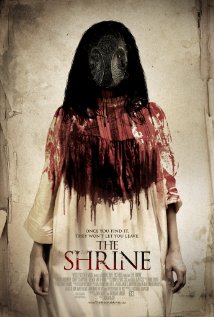
The Shrine (2010)

Imagine my surprise and color me impressed: this gritty Canadian feature kind of rocks.

You keep thinking you know “what kind” of movie you’re watching, and then suddenly you don’t. The Shrine manages the difficult trick of being able to switch gears without wrecking the engine.

It starts out as a warning to tourists against touring Eastern Europe without letting others know your whereabouts—because the worst will happen.

Guaranteed.

In this case, an American backpacker disappears in a small Polish town, which motivates a trio of journalists to investigate the enigmatic community, where such occurrences are all too common.

I might add that this is a grossly inaccurate portrayal of a journalist. Anyone still fortunate enough to work for a newspaper or magazine at this time is most decidedly not curious about anything—unless it’s figuring out how to hold onto a job that will soon be farmed out to interns.

Then comes the first shift, and now you’re watching one of those creepy Iron Curtain faux snuff films, and you consider getting up to water the plants.

But then Sam Raimi arrives and everything goes all Evil Dead. To conclude the festivities, we get a metaphysical mud-wrestling match, straight out of The Exorcist.

The Shrine works because it subverts our point of view so deftly that we don’t even realize that we should probably pick a side in this apocalyptic death match.

Not only that, but it succeeds in the way that (earlier reviewed film) Spiderhole failed—it provides us with a valid reason for scenes of squirm-inducing cruelty.

I swear, if you know that someone is being savaged as part of the plot, and not simply because we like the sound of screaming, it goes down a lot easier.

And now, a hearty round of applause for writer-director Jon Knautz, who did a superb job of juggling themes, tones, and terror. So tell us Jon: What’s next?

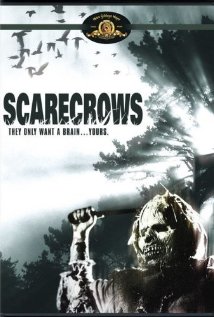
Scarecrows (1988)

Hmmm. I saw this one more than 20 years ago and I seem to remember it being a better movie.

Memories can play such cruel tricks…

Actually, it’s not half bad, but since it was made in the 1980s, you’ll have to overlook goofy haircuts.

Five military trained crooks make off with 3.5 million bucks from Camp Pendleton’s payroll department. The movie opens with the bad guys being flown to Mexico by a pilot and his daughter who are held at gunpoint.

No honor among thieves with this bunch, as one of the robbers, turncoat Bert (B.J. Turner), grabs the loot and bails out, landing in a creepy deserted cornfield.

Deserted by everyone, that is, except for the titular murderous scarecrows, who come to life and bag their limit.

Only the vaguest of reasons are given to explain why the scarecrows rise up and go on a killing spree, so if you’re a stickler for motivation, this won’t be your cup of grue. Suffice to say, the previous tenants of the family farm were into something devilish.

You might notice, too, that Bert’s dialogue seems to come out of nowhere, since we hear it while his lips clearly aren’t moving. Is he thinking out loud or is he a practicing ventriloquist?

Whatever the case, it’s distracting.

Also, the rest of the characters, in their quest to avoid being gutted and nailed to a pole, engage in some monumentally stupid behavior, which tends to suggest that their prowess as paramilitary bandits was more like a momentary stroke of luck.

To give writer-director William Wesley some credit, the cornfield setting is reasonably spooky and the scarecrows themselves are a pretty nasty bunch. Sadly, Scarecrows isn’t the action-packed fright fest that I remember, either.

Must have seen it during my drinking days—which should come to an end sooner or later.

YellowBrickRoad (2010)

This indie entry has such an unsettling premise and buildup, that I’m actually going to forgive the WTF ending. It wasn’t easy, but the first 75 minutes are skillfully constructed and hint at so much awful, otherworldly potential.

Filmmakers Andy Mitton and Jesse Holland effectively borrow the premise of The Blair Witch Project—research team goes into scary woods to investigate a local mystery—and successfully create a movie in which the viewer is constantly bombarded with possibilities and forced to invent scenarios that explain the increasingly bizarre circumstances.

A writer (Michael Laurino), his wife (Anessa Ramsey), and a handful of other science-y types go traipsing off into uncharted New Hampshire forest land to find out what happened to the entire population of the nearby town of Friar.

Seventy years previous, everyone inexplicably left Friar and followed a trail into the woods and were never seen alive again. The modern-day explorers find the coordinates of the trail and the expedition begins. What no one realizes until it’s far too late, is that it’s a doomed expedition leading only to—MADNESS!

It’s a subtle transformation that takes place in YellowBrickRoad; the further the characters travel on the trail, the more things break down. Tensions arise, their instruments cease to work, and worst of all, they are loudly serenaded with old-timey jazz music day and night, as if the entire forest is wired for sound.

After all this slow-baked agony, the ending is a rather pale payoff compared to what Mitton and Holland have put us through for most of the film, but credit must be given for the power of the journey itself, which at times resembles a low-budget take on Werner Herzog’s Aguirre: The Wrath of God rather than the aforementioned Blair Witch.

And that’s good company. 

The Hazing (2004)

Today’s lesson: Don’t judge a movie by its blurb. I read the words “fraternity” and “sorority” and my interest began to wane.

Glad I toughed it out. The Hazing is a first-rate, low-budg, sloppy kiss tribute to (surprise, surprise) Sam Raimi and The Evil Dead.

Nutshell: Two gals and three dudes pledging to brother-sister houses must complete a Halloween scavenger hunt and bring all their items to Hack House, a local mansion of the haunted variety.

Note: Bruce Campbell’s picture makes an appearance as one of the items the pledges must roundup on the scavenger hunt, for Pete’s sake.

Another needful thing is a potent grimoire of dark magic that’s in the possession of mysterious Professor Kapps (Brad Dourif). They grab the book, a demon is summoned, and so begins a night of Raimi-esque chaos, confusion, and high-voltage hack and stack.

And Brad Dourif kills (literally!) as the mad professor, providing a sturdy dramatic foundation for his less polished costars.

I was thoroughly entertained by The Hazing, mostly because it doesn’t take itself too seriously. Delia (Nectar Rose), shouts, “I wasn’t planning to stay out all night killing my friends!” when an evil spirit possesses her fellow pledges.

Fortunately, the goofy tone doesn’t diminish the horror action. It’s got a pedal-to-the-metal pace, decent body count, naked interludes, and scaredy-cat nerd Tim (Perry Shen), ends up a hero of sorts.

Tim proudly takes a moment of screen time to tell his fellow cast members why he isn’t a stereotype geek. “I don’t work with computers, I don’t like video games, and I’m not a virgin,” he insists.  “I lost my cherry when I was 15!”

The Hazing is very much in keeping with this statement. It’s not what you think it is. It’s way better.

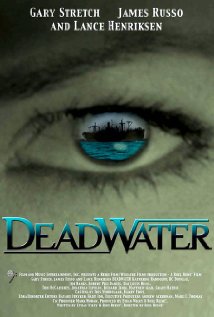
Deadwater (2008)

Deadwater is not a very good film, but the presence of grizzled vet Lance Henricksen helps a bit.

Kudos to director Roel Reiné, who took the time and energy to dress it up as a contemporary naval action thriller (not that there are abundant thrills to be had in this yawner) and include scenes of “advanced interrogation techniques.”

Abu Ghraib is mentioned a few times. That’s about as timely as it gets, though.

Somewhere at sea near Iran or Iraq (forgot which), a U.S. crew operating a recommissioned WW II vessel is slaughtered under mysterious circumstances, due mainly to the poor lighting and spastic camera work.

Old salt Col. John Willets (Henricksen) and his crack team of nobodies are sent to investigate. Lo and behold, one of the few survivors of the haunted holocaust is the colonel’s son, Colin Willets (played by Australian side-of-beef Gary Stretch, whose acting chops and resemblance to Henricksen are equally nonexistent).

So what the hell happened?

There are approximately 863,111 movies in which a team of well-armed investigators boards a derelict ship or facility to find out what became of the previous occupants. This isn’t nearly as good as say, Ghost Ship, one of the better efforts in that genre.

The threat remains mostly unseen (malevolent energy or something. Zzzzzzz.) and 95 percent of the movie consists of Henricksen and company moving stealthily through corridors and making ludicrous military hand gestures at each other.

Save this one for Low Expectations Sunday. BTW, if you’re looking for it in Netflix, you’ll find it under the title Black Ops. My advice? Don’t look too hard.

Slaughter Night (2006)

A handful of hard-partying Dutch kids take a tour of a mine where centuries (years?) before, a fiendish killer/sorcerer was executed.

I know what you’re thinking. Why in the hell would a group of reasonably attractive young adults end up in a mine? As Bill Murray once said, “It just doesn’t matter.”

What does matter is the spirit of the sorcerer is alive and kicking, and needs eight victims in order to … something or other. Become human again? Get out of hell? Get a free foot-long sub? See Murray quote.

Oh, and I have some free advice to anyone who happens to find themselves trapped in a haunted mine. Do not play with a Ouija Board. And do not split up so you can cover more ground.

Friggin’ amateurs.

Slaughter Night was produced in the Netherlands, and I will tip my hat to our Dutch Brothers for a well-acted, fast-paced blood letter, with a goodly amount of decapitations.

Once again, we have a case of overt Sam Raimi worship by writers/directors Frank van Geloven and Edwin Visser, as the possessed teens are dead ringers for Evil Dead‘s Deadites.

Even so, things move along pretty well, and the mine provides a suitably creepy and claustrophobic setting.

The film is also subtitled, which I actually prefer, as far too many horror flicks suffer from uneven sound. You know, where crucial dialogue is whispered by two characters, and you turn up the volume to compensate, right as the chainsaws and screaming start.

And that’s when my wife yells at me to “turn that screamy shit down.” So everybody’s happy.

Insidious (2010)

Right off the bat I was worried. The cover art proclaims, “From the makers of Paranormal Activity and Saw,” two films I didn’t much care for.

I thought the former was dull and the latter unbearably formulaic. So paddle my ass and call me Spanky—I rolled the dice and came up a winner with Insidious, a potent portrait of immaterial possession that belongs on the same domestic horror shelf as Poltergeist, The Exorcist, and The Grudge.

It isn’t as good as those films, but it’s good enough.

Teeny weeny actress Rose Byrne (Damages) is cast as Renai Lambert, a mother of three children. Byrne is totally spot-on here emotionally as the freaked-out-but-scrappy mom, but she looks like she’d shatter into gravel if she so much as contemplated child birth.

Patrick Wilson, a rather colorless fusion of Will Arnett, Robert Patrick, and Timothy Olyphant, is her husband Josh. As previously mentioned, they have three children.

The eldest, Dalton (Ty Simpkins), is a fearless tyke with a hidden talent for astral projection during sleep. A stroke of bad luck comes when Dalton, instead of hanging out in the girls’ locker room like a sensible youngster, gets his dumb-astral form trapped in a very bad-astral place, and all sorts of extra-dimensional creatures start showing up to claim the lad’s comatose body.

After getting the beans scared out of her on repeated occasions, Renai finally prevails on her prick of a husband to move from their extremely nice early 20th century Craftsman-style home into another, equally beautiful home.

Editor’s note: Having gone through numerous hellish scenarios with contractors, realtors, and movers, the Lamberts emerge from this part of the deal relatively unscathe). It’s only after the move that they find out, as the tag line declares, “It isn’t the house that’s haunted.”

I got a kick out of Insidious. The scares, though predictable, are fairly intense and original. There’s some surprisingly unannoying comedy relief in Specs (writer Leigh Wannell) and Tucker (Angus Sampson), a Mutt-and-Jeff team of nerdy ghost busters who quickly realize they’re in over their heads.

And veteran character actress Lin Shaye (Kingpin, There’s Something About Mary) does yeoman work as a capable psychic brought in by Josh’s mom Lorraine (Barbara Hershey, always a pleasure).

The ghosts, lost souls, and demons that materialize during the 103-minute run time are mostly frightening, and, more importantly, memorable.

Alone in the house, on a dark night, Insidious could well set your pants afloat.