Splintered (2010)


I’m recommending this British horror flick, but with some reservations.

In terms of style, originality, and watchability, Splintered is definitely a worthwhile experience. The acting is thoroughly professional, it’s handsomely photographed, and the story sails along at a tidy clip.

So why did I feel so underwhelmed at the end? Maybe because the movie turned out more like a Goth episode of Law & Order: SVU than the mind-blowing terror that I eternally crave.

Sophie (Holly Weston, who demonstrates considerable dramatic ability) is a teen suffering from bad dreams about a childhood monster that stalks her at bedtime.

What this has to do with her desire to track down a legendary beastie that’s been terrorizing the Welsh countryside is anyone’s guess, but there you are.

She and her feckless Scooby gang drive out to the woods, drink beer, get stoned, and hope for the best. Sophie stumbles upon an abandoned Catholic orphanage that looks like Buckingham Palace and gets imprisoned by Gavin (Stephen Walters) a feral weirdo who lives there.

Turns out Gavin is the civilized one—it’s his brother Vincent that’s got major aggression issues; these include tearing people’s throats out and a bad case of hot pants for Sophie.

I had this one pegged as a werewolf movie. There are numerous references to the full moon and at one point Sophie is seen reading up on the subject.

Well, it isn’t a werewolf, a golem, a ghost, a ghoul, or even El Chupacabra. It’s just a nimble cannibal boy raised by dogs. Once that shoe drops, I felt like I was wasting my time, though director Simeon Halligan does his best to keep the frights flowing.

It’s a bummer to wait out a movie for the “big reveal” only to discover that the “monster” is only mildly monstrous. Sorry, but my imagination is mightier than the pen that wrote Splintered.

Cabin in the Woods (2011)

Autobiographical side bar: I am old, old, old. I am not Li’l Sharky, Teen Sharky, or even Adult Contemporary Sharky. I’m Ol’ Sharky, an ancient relic from a cooler and weirder world. I carried Agamemnon’s sword; argued with Aristotle; and dogged Cleopatra like she was made of bacon. I shit the pyramids and danced with dinosaurs. I used to carpool to work with Gilgamesh, and even he called me “Gramps.” So when I tell you that I don’t go to the movies much anymore, you’ll begin to understand why. It’s too risky. I can’t be away from my climate-controlled condo for lengthy periods or my aorta will explode. I tried once, and the Visigoths that run the multiplex refused to let me pitch my oxygen tent in the theater. Bastards. All bastards.

Even so, I found myself in the vicinity of a theater with time to kill yesterday, so I purchased a ticket for the moving pictures and saw Cabin in the Woods. I’m very glad that I did. Joss Whedon is getting justifiably blown by critic and fanboy alike for hitting a box-office home run with The Avengers, but that’s no reason to overlook this marvelous muffin basket of a monster movie that he produced, co-wrote, and (second unit) directed. Sadly, the specifics of the story arc prevent a detailed critique, but let’s just say that this is a horror movie on a grand “meta” scale that dwarfs Wes Craven’s Scream series.

What Whedon does with Cabin in the Woods is place the late 20th century horror movie, and more specifically the subcategory known as Hack and Stack (a.k.a. Doomed Teenage Campers), into a miraculous context, one that weds the most dreadful aspects of Lovecraft and Phillip K. Dick. Whedon has created a horror movie mythos that dares to explain why its characters make such monumentally bad decisions, and why it’s imperative that the fools suffer before meeting their (mostly determined) gruesome fate. It’s a groovy concept, but really, just this once.

I don’t anticipate a rash of imitators, because this looks to be a genre only big enough for one. And Cabin in the Woods is it. At the same time, I can understand why some horror fans didn’t care for it. To them I would say, don’t think of this movie as an attempt to subvert the genre in a contrived or overly clever way—it’s more of an elegant novelty, an intricate lark that stands as a singular testament to outside-the-box thinking. In other words, Whedon’s laughing with us, and not at us.

The Pack (2010)

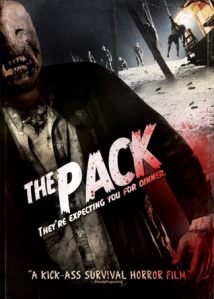
Stop the Interwebs! In fact, just drop what you’re doing for the next 81 minutes, crack a cold one, and summon The Pack from your Netflix netherworld. Don’t think! Just watch, because it’s a gem, a Horrificflicks revelation.

The Pack, a French-dubbed rural nightmare, is quite simply the most finely rendered horror film I’ve seen in a long, long time, at least since Neil Marshall’s The Descent. It’s successful in every sense: Original yet referential; gory but restrained; funny but not goofy, and it’s not horror lite, either.

It’s chock-a-block with cringe-inducing scenes, but the delicious jolt of shock doesn’t get washed away in a tedious “pain for the sake of watching pain” tidal wave. It’s too artfully evocative (it’s a beautifully shot movie) and carefully orchestrated to be mere torture porn, but it is relentless—like a dream that keeps going from bad to worse.

Final (Only?) Girl Charlotte Massott (the gutsy and striking Émilie Dequenne), is driving through uncharacteristically blighted French countryside, cranking speed metal, and smoking. Some bikers have been on her ass, hassling her for a while, so she decides to pick up Max (Benjamin Biolay), a hitchhiker who is perhaps a touch less sinister than the bikers she’s trying to avoid. She pulls up and says, “If you pull out your dick, I’ll hammer you!” With a stone impassive face that he wears for the entire movie, Max replies, “It’s too cold anyway.” (Practically a Truffaut opening!)

Evidently Charlotte is a remarkably trusting soul, because she takes a catnap while Max (whom she’s known for about 6 minutes) drives. When she wakes up, they’ve stopped at a ramshackle backwoods saloon/gas station/arcade, run by massive Madame La Speck (Yolande Moreau, whose maternal, Kathy Bates-like performance is terrific). At this point, the wheels come off for Charlotte and everything gets real weird and bleak, real quick.

A true horrorphile will be happier than a puppy in puke spotting subtle and shady references to Psycho (“Oh, Mother!”), The Texas Chainsaw Massacre (horrible hillbillies); Night of the Living Dead (flesh-eating, blood-sucking stumbling humanoids); and Pumpkinhead (farm setting, hayseed occultism, genuinely frightening beastie[s], lots of shots of windmills), not too mention every variation of Why Strangers Passing Through Blighted Lonely Territory Should Never Pick Up Hitchhikers, Much Less Go To Their Lair.

Writer-director Franck Richard’s The Pack boasts so many well-chosen fiendish delights, that I could sit here all day singling out its virtues. Instead, I’ll just point out a couple:

It’s a real shock when the monsters arrive. They don’t look stock or schlocky. I would compare them favorably to something dreamed up by Guillermo Del Toro.

The acting is strong across the board, including Phillippe Nahon, a Charles Durning lookalike who plays a Columbo-ish cop, and wears a shirt that reads “I Fuck On The First Date” throughout the film.

The action gets progressively grimmer, but Richard doesn’t dwell overly long on the suffering. There is a “circle of life” at work here that’s hideous in its organic inevitability. Make no mistake, no one will be disappointed with their level of discomfort.

Even so, The Pack never panders; it’s never sensational and garish for its own sake. Rather it has a soupçon of Tim Burton’s fairy-tale-gone-horribly-wrong sensibility, combined with Sam Raimi’s quick, decisive cuts. And the gruesome proceedings are tastefully seasoned with odd, welcome interludes of humor.

If I really had to compare The Pack to another film, it would be Clint Eastwood’s The Unforgiven: It’s genre filmmaking utilized to its full potential. It’s a familiar template that Richard is working from, but he raises the bar on quality and originality to the ceiling. I kept thinking I knew what was going on, because I’ve seen these stranded-motorist scenarios in hundreds of movies. But I was always surprised by something far stranger than I was expecting.

I kept waiting for the other shoe to drop, but instead, Richard kicked my ass with it. To my fellow fans hungry for a quality horror experience, all I can add is, go and enjoy. Heck, I may watch it again. What’s 81 minutes on a Sunday?

The Messengers (2007)

Please tell me if there’s an existing category for this well-chewed cinematic scenario: Family suffers urban-based trauma and decides to relocate to a nice, quiet, haunted house in the boonies.

The Shining is the most obvious example, but there are dozens of pale imitations, including this quaint little Kristen Stewart vehicle from five years back.

Directed by Hong Kong power players the Pang Brothers (The Eye films, Bangkok Dangerous, among others), The Messengers is first and foremost, a serviceable platform for Stewart’s photogenic petulance, brought to the screen courtesy of the boffo box-office returns fromThe Twilight saga.

Rising to the challenge, the spunky teen actually carries the movie. Of course, when you’re costarring with bored stiffs like Dylan McDermott (Dad) and Penelope Ann Miller (Mom), you needn’t have been Lee Strasberg’s star pupil to dominate the screen.

To her credit, Stewart gamely steps up to the plate, exuding Buffy confidence while delivering her lines with Locklearian panache.

BTW, am I the only one who confuses Dylan McDermott with Dermot Mulroney? Surely not!

In The Messengers, Stewart stars as Jess, the rebellious progeny of McDermott and Miller, who are leaving the temptations of Sodom and Gomorrah in the rear-view mirror in order to get back to the land, specifically as sunflower farmers in rural Saskatchewan.

You gotta admit; that’s a new one.

Sure enough, the family’s optimism for a fresh start is soon crushed to crumbs when it appears that their rustic farmhouse comes with creepy crawly specters of the previous occupants, who fell victim to a case of Jack Torrance Syndrome, also known as Daddy’s Got The Ax, Again.

This was a Ghost House production and Sam Raimi was one of the executive producers. The Pangs do a decent job of combining their talent for weaving blankets of dread with Raimi’s trademark splashy spook-tacular shocks.

The Messengers is a 100 percent sustainable movie, since the entire plot consists of recycled materia. Even so, the filmmakers went to considerable effort to pique our interest, and we don’t have to work too hard to swallow the Ghoul-Aid.

Please read the last sentence in a Crypt Keeper voice. It sounds better.

At the moment I’m leaning toward “Buyer Beware” as the name of this genre. “Real Estate Gone Wrong,” maybe? “Glengarry Glen MURDER?”

Legend of the Bog (2009)

Bog men. Can’t say I’ve seen too many.

Hell, I don’t even know how to categorize it. I’m going to go with “monster” since bullets don’t stop them and they’ve been preserved in peat for 2,000 years—even though this particular “bog body” looks more like a cross between Tor Johnson and Curly Howard: In other words, big, bald, and on a mindless rampage.

An assortment of Irish folks, including an archaeologist (Jason Barry), his foxy assistant (Nora-Jane Noone, who has the best pouty face this side of Mila Kunis), and a bitchy, ambitious real estate developer (Shelly Goldstein), get lost on the moors (“I told ye to mind the moors!”) and incur the wrath of a recently resurrected 2,000 year-old-man bog man (Adam Fogerty).

The bog man is being hunted by Hunter (Vinnie Jones, a.k.a. The Juggernaut in X-Men: Last Stand), who is understandably disappointed to discover that his conventional weapons are useless against the massive savage. Can the archaeologist figure out how to return the brute to his soggy coffin?

The problem with Legend of the Bog is that it tries to cram too many elements into a modest story and the plot sinks like a weighted body into a bottomless mud hole. OK, so we have a reanimated bog man who needs to keep himself hydrated regularly to survive.

Fine. It’s part of his DNA or something.

Then, we find out the seemingly random bunch of victims aren’t random at all, a development that adds nothing whatsoever to our emotional attachment to them.

Why did writer-director Brendan Foley bother to somehow justify a killing spree by this hairless gorilla? Waste of time.

On top of that, we’re saddled with a “who cares” romantic subplot, and a shower scene that contains no nudity.

Again, why bother?

Atrocious (2010)

I’m quite good at suspending my disbelief. Trust me, when it comes to horror, I have a very limber set of standards in that department.

And as much as I liked Atrocious, a found-footage frightener from Spain, I had some serious reservations believing that central characters July (Clara Morelada) and her brother Cristian (Cristian Valencia), would continue to schlep their camcorders around after figuring out that a fiendish killer is stalking them at their family’s rural retreat.

“Oh my God, there’s a fiendish killer in the house with us! Do you have a spare battery pack?”

Uh huh. It’s a shame too, because Atrocious has the makings of a crackerjack movie.

Teen siblings July and Cristian are spending their vacation with Mom (Chus Pereiro), Dad (Xavi Doz), and adorable kid brother Jose (Sergi Martin) at a Spanish country estate that comes equipped with its own massive hedge maze.

The pair fancy themselves as intrepid ghost-hunting, mystery solvers so they bring along two video cameras, which is a stroke of luck for the cops when they discovery that everyone’s been murdered about a week later.

After sifting through 37 hours of footage, the final cut serves as the movie itself. If you surmised that there would be an abundance of chaotic night scenes frantically shot by the protagonists whilst lost in the hedge maze, give yourself a gold star.

There is some first-rate fright footage here. And the actors playing July and Cristian are very good, very natural. Atrocious is worth the time it takes to watch, but the surfeit of film (not to mention battery power) is a contrivance that each viewer will have to sort out for themselves.

It doesn’t ruin the experience, but you may find yourself (as I did) shouting, “Oh come on, already!” at the screen on several occasions.

A Haunting in Salem (2011)

Take a teaspoon of The Shining, a sprinkle of The Amityville Horror, stir in a tiny budget, and garnish with an intense, odd-looking little actor as your leading man, and what have you got? I’d say a “C”, maybe a “C+”.

New sheriff Wayne Downs (Bill Oberst Jr.) moves his super-hot wife (Courtney Abbiati) and two kids to Salem, Massachusetts, and settles into an old Gothic manor house that comes with the job. (Nice perk!)

As luck would have it, the joint is haunted by the ghosts of 19 pissed-off witches who were burned and hanged back in the the late 1600s—by the town sheriff— and were subsequently laid to rest on the property where Downs and his brood are currently taking up residence.

The house also comes with a brain-damaged gardener (Where does he live?) who mumbles dire warnings about the ghosts and is soon dispatched by same.

The Realtor neglected to mention any of this, but it does have a lovely bonus space that could be converted into a guest bedroom or a cathedral for your Black Mass, your Satanic rituals, or whatnot.

A Haunting in Salem isn’t a memorable film. It’s a painfully familiar tale and director Shane Van Dyke (one of Dick’s grandchildren; another, Cary, plays a local cop) doesn’t have the money or the chops to bring anything new to this haunted house party.

The frights, in addition to being rote and predictable, are few and far between. The story is set in a huge, historic mansion, but it looks like the cast and crew were only permitted to shoot in a couple of the rooms, which becomes distracting once you notice that every scene takes place in either the kitchen, the bathroom, the hall, or the daughter’s bedroom.

It’s only the earthy presence of Bill Oberst Jr. as the determined sheriff that gives the flimsy plot a solid grounding. He’s a sawed-off plug of a man with curiously scarred features who perpetually looks like he’s on the verge of a very messy nervous breakdown.

Thus, he’s perfectly cast as the husband and father that the rest of the family believes is going cuckoo, so their unease around him is palpable.

Also, the body language between the sheriff and his tall gorgeous wife Carrie reveals that they’re definitely not comfortable around each other.

Any tension is good tension, I always say. Now make it work!

Grave Encounters (2011)

A ghost-chasing reality show crew makes the mistake of choosing a location that is actually, you know, haunted.

The intrepid Grave Encounters team decides to investigate the laundry list of paranormal events at the old Collingwood Mental Hospital, where “thousands” of patients were lobotomized, neglected, and otherwise discouraged in their quests for a sound mind.

Manic team leader Lance Preston (Sean Rogerson), loaded down with the latest in ghostbuster technology, hopes they’ll find evidence of a real haunting.

Careful what you wish for, dude.

It’s been a few moons since I reviewed a “found footage” feature, and I’m glad I found this one. Stylistic similarities aside, I dig Grave Encounters more than The Blair Witch Project. (Dig? Grave? See what I did there?)

True, TBWP came first, but to me, the scariest thing about that particular film, was the inability of its characters to camp successfully. Frankly, it hasn’t aged well.

Grave Encounters is a much less “subtle” movie, and the fright factor is much higher. Sure, most of the time, less is more. The suggestion of terror is more effective than beating you over the head with a bag of ghosts (see the original version of The Haunting, and the vapid remake with Owen Wilson and Catherine Zeta-Jones. Or better yet, just watch the original.)

Here is an exception to the rule. The Vicious Brothers, who wrote and directed, like to reveal their spooks, but they do so in an artful manner, staggering the flow of genuine frights in unpredictable ways.

Some scenes build to an expected payoff—and then it doesn’t happen. But it will. Later. When you’re not looking for it. Original premise? Hell to the no. Fun? Affirmative.

Triangle (2009)

I have to say, Triangle is a nifty thriller—albeit one that’s more like a cruise through the Twilight Zone, rather than an in-your-face horror spectacle.

It’s a fairly compelling riff on the concept of converging realities, duover days, and a rip in the time/space continuum, that forces one woman to relive the events of one unfortunate afternoon in a seemingly endless loop.

H-o-t single mom Jess (Melissa George) climbs aboard a spacious sailboat with a bunch of reasonably attractive Australians pretending to be Americans (it’s supposedly set in Florida, but this is an Aussie production complete with slippery accents) for a weekend of pleasure boating.

Somehow they get blown off course by a freak storm and end up capsized. The waterlogged survivors scurry aboard a deserted ocean liner/Flying Dutchman that just happens to be steaming by, and the stage is set for something sinister.

Jess tries desperately to repair their fate, even as she and her friends are hopelessly caught up in a Moebius strip of action, while we gather up the clues that are dutifully dropped by writer/director Christopher Smith.

Lines of dialogue are repeated throughout, as multiple versions of Jess look on from different perspectives each time she rewinds back to their boarding of the ghost ship.

Hint: The myth of Sisyphus is discussed briefly.

Triangle is another film that suffers from a slight case of the wanders (i.e., characters spend far too much time poking around like tourists in an antique mall), but even so, it’s an effective piece of genre entertainment, in which the Groundhog’s Day rules of reality result in the cast being murdered several times in various ways.

Saving money on the number of actors that need to be paid by having them slaughtered over and over, makes good economic sense—and helps shape a subtly scary seafaring saga, as poor Jess comes to the slow realization that she’s been running around this damned ship for a helluva long time.

And there’s not even a shuffleboard court or a wave pool.

Quarantine 2: Terminal (2011)

It’s a lesser effort than the first Quarantine, but I consider it a worthy sequel nonetheless, because most of the time, sequels suck ass.

Why would I be interested in an inferior distillation of an original formula? (Go back to Halloween II and work your way toward the present; the exceptions being Romero’s Dead films.)

However, I must wag a stern finger at writer/director John Pogue, for blowing an opportunity to make his movie substantially better.

I was sold on the premise right away. The same virus that caused the apartment dwellers to go berserk with a case of the man munchies in the original movie, breaks out again. Only this time on a plane. That’s right: Zombies on a Plane.

And not the slow, shuffling kind, either. These guys are strong, agile, and ready to rock and roll at 20,000 feet. My point is, if Pogue had contained the action to the cabin of a plane, he could have ratcheted up the tension tenfold.

In addition to zombies, you add the possibility of the plane plummeting to the ground—not to mention claustrophobia.

Instead, Pogue chooses to let his harried cast land the plane, and then hide in the basement of an airport, where, for the rest of the movie, they walk around a featureless industrial landscape in the dark.

The place is surrounded by soldiers who shoot anyone who emerges, but that’s not nearly as frightening as the prospect of a plummeting plane.

Pogue even had a formidable lead zombie in Ralph (George Back), an overweight, drunken golfer who proves extremely difficult to bring down once he’s succumbed to the virus. Big boy can wreak some serious havoc!

Despite some wasted potential, Quarantine 2 is a very watchable feature, with gallons of gore, that moves along at a brisk clip—until everyone gets lost at the airport.