Cabin in the Woods (2011)

Autobiographical side bar: I am old, old, old. I am not Li’l Sharky, Teen Sharky, or even Adult Contemporary Sharky. I’m Ol’ Sharky, an ancient relic from a cooler and weirder world. I carried Agamemnon’s sword; argued with Aristotle; and dogged Cleopatra like she was made of bacon. I shit the pyramids and danced with dinosaurs. I used to carpool to work with Gilgamesh, and even he called me “Gramps.” So when I tell you that I don’t go to the movies much anymore, you’ll begin to understand why. It’s too risky. I can’t be away from my climate-controlled condo for lengthy periods or my aorta will explode. I tried once, and the Visigoths that run the multiplex refused to let me pitch my oxygen tent in the theater. Bastards. All bastards.

Even so, I found myself in the vicinity of a theater with time to kill yesterday, so I purchased a ticket for the moving pictures and saw Cabin in the Woods. I’m very glad that I did. Joss Whedon is getting justifiably blown by critic and fanboy alike for hitting a box-office home run with The Avengers, but that’s no reason to overlook this marvelous muffin basket of a monster movie that he produced, co-wrote, and (second unit) directed. Sadly, the specifics of the story arc prevent a detailed critique, but let’s just say that this is a horror movie on a grand “meta” scale that dwarfs Wes Craven’s Scream series.

What Whedon does with Cabin in the Woods is place the late 20th century horror movie, and more specifically the subcategory known as Hack and Stack (a.k.a. Doomed Teenage Campers), into a miraculous context, one that weds the most dreadful aspects of Lovecraft and Phillip K. Dick. Whedon has created a horror movie mythos that dares to explain why its characters make such monumentally bad decisions, and why it’s imperative that the fools suffer before meeting their (mostly determined) gruesome fate. It’s a groovy concept, but really, just this once.

I don’t anticipate a rash of imitators, because this looks to be a genre only big enough for one. And Cabin in the Woods is it. At the same time, I can understand why some horror fans didn’t care for it. To them I would say, don’t think of this movie as an attempt to subvert the genre in a contrived or overly clever way—it’s more of an elegant novelty, an intricate lark that stands as a singular testament to outside-the-box thinking. In other words, Whedon’s laughing with us, and not at us.

Dying Breed (2008)

Another entry in the “isolated cannibal clan” genre, Dying Breed is way better than the earlier-reviewed Hillside Cannibals (but then, so is an average episode of Three’s Company), thanks in no small part to its being set in the deep, vibrant woodlands of Tasmania.

Zoologist Nina (Mirrah Foulkes) plunges into the harsh and unforgiving forests of Western Tasmania seeking evidence of the presumed-extinct Tasmanian tiger—the same mysterious beast that her zoologist sister Ruth was chasing several years earlier, before the latter turned up disfigured and drowned. (Dunno Nina, think I’d leave this one alone.)

Along with her boyfriend Matt (Aussie Leigh Whannell, who also wrote Insidious and a couple Saw movies), his obnoxious buddy Jack, and Jack’s cupcake, Rebecca, Nina wanders hither and yon before stumbling upon the rustic and remote township of Sarah.

As luck would have it, the town is populated by the descendants of Alexander Pearce (aka, “The Pieman”), an escaped convict who eluded the police in that area nearly 200 years earlier.

Pearce was later captured and hanged under a cloud of suspicion that he had resorted to chowing down on his chums while hunkered in the bush. Needless to say, the party soon finds itself firmly ensconced in the soup. (Or they end up in quite a pickle, your choice, but I like soup a little better.)

Instead of intrepid ineptitude (again, see Hillside Cannibals), Dying Breed is a grim, well-executed “don’t-go-in-the-woods” fable, directed, plotted, paced, and acted with unwavering efficiency.

The Tasmanian locale carries the same palpable sense of dread and foreboding as the back country of Pennsylvania in Deliverance (a movie that’s referenced here), and the local color is even more bloodthirsty.

Trigger Warning: There are some highly unpleasant implications vis-a-vis “women as breeding stock” here, which may not play in your particular domestic Peoria.

Hillside Cannibals (2006)

The synopsis for Hillside Cannibals describes it as being about some dude named Sawney Bean, a cannibal killer who’s been feasting on victims for 400 years. He lives with his flesh-eating inbred clan in some caves on a hillside (hence the title) in the California desert.

My question is: Where the hell did all this back story come from? There is no evidence of 400-year-old killers found anywhere in the movie. Unless I saw a severely truncated version (which I doubt, because the film is heavily padded; every third shot is of the same pile of skulls and bones on the ground), then director Leigh Scott and writer Steve Bevilacqua are full of crap.

Hell, the cannibals don’t even talk! They just grunt, gurgle, and gesticulate a lot. Perhaps a jaunty song should play during the opening credits (like in The Beverly Hillbillies) that explains the premise. It would have helped.

Nutshell: Five campers, for no reason in particular, go out into the desert for an evening of drinking, reefing, and screwing. A clan of Road Warrior extras, who apparently got their costumes at Goodwill, show up for a bloody buffet.

Final Girl Linda (Heather Conforto), spends the rest of the movie alternately trying to get help, rescue her boyfriend, and elude capture. That’s about it, really.

In their desperate attempt to somehow link this turkey to The Hills Have Eyes, Scott and Bevilacqua neglect the other aspects of the film. First of all, three of the five campers are dead within 12 minutes of the opening. This leaves only two other characters to be killed for the duration of the movie, a problem Scott tries to fix by briefly introducing three more campers, who are on screen just long enough to prove annoying, before they become lunch.

We don’t know who they are, why they’ve chosen to stop in this location, or anything else. While the scene does up the body count, the inclusion of these off-brand characters was clearly an afterthought and accurately illustrates the haphazard level of craft and creativity at work.

Despite all the piss-poor examples of padding and subplots that go nowhere (e.g., what’s the sheriff’s relationship to this band of bizarros? Is he a cousin or something? We never find out.) there is abundant gore and some genuinely nightmarish imagery, including an ending that’s totally grim.

I thought it was a nice stylish touch that when a new chief of the tribe takes power, he has to remove the face of the fallen leader and wear it around. Disgusting, but sort of cool, I guess.

Hillside Cannibals isn’t a complete waste of time—but it comes awfully close.

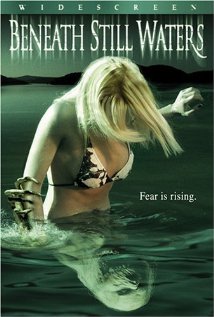
Beneath Still Waters (2005)


I figured Beneath Still Waters was worth a gamble since Brian (Bride of Re-Animator) Yuzna produced and directed this Spanish-UK collaboration. While there is ample gore and some stellar scenes of Bosch-like depravity, the pace is glacial—endless talky exposition and needless character development.

Nutshell: A town in Northern Spain is flooded after the construction of a new dam. The cover story is that the dam brings jobs, cheap power, and prosperity to the region, but the naked truth is that the “drowned town” was inhabited by a kinky cannibal cult led by a sinister Aleister Crowley acolyte named Salas (Patrick Gordon, as the Richard Lynch-style creepy cult leader).

Fast-forward 40 years later and the ghost or spirit or reanimated corpse of the evil magician returns accompanied by a very small band of fairly scary zombies, and a vendetta against the granddaughter of the former mayor who flooded the town.

There’s a good chunk of memorably nightmarish imagery thanks to the hallucinatory, low-tech, Euro-art school FX (think Méliès rather than Lucas), and Salas’s habit of tearing his victims’ heads off never gets old.

But it’s a pretty slow 90 minutes, most of which look like a made-for-TV movie from the 1970s, so prepare for rough sledding.