
Category: Survival
Lost, cast adrift, marooned—outlook dismal.

The Legend of Bloody Jack (2007)

If the cover blurb, “Based on the the terrifying true events behind America’s scariest campfire story,” is accurate, then I must confess that I’m really out of the loop on my lumberjack legends.
Is there really a ghost story about an ax-wielding hayseed who practices black magic? I must have missed that one. If the campfire tale is anything like this low-wattage lump of shit, I’m glad I did.
A pair of quickly dispatched investigators summon the spirit of the swinging sorcerer. Two days later, a van bearing seven soon-to-be-butchered mannequins from Abercrombie & Fitch arrives for one of those idyllic camping trips that never seems to materialize.
Whether it’s the abysmal acting, the seemingly random and feckless decision-making of the characters, or an irritatingly banter-filled screenplay that sounds like it was written by a miserably untalented college freshman, there’s plenty of blame to be shared for this stink bomb—but since it was written and directed by Todd Portugal, the lion’s share should be reserved for him.
The questions accumulate as the action (I guess you could call it “action”) slowly unravels like a third-generation Santa sweater. Why are the doomed 35-year-old kids who are trapped at the cabin in the woods waving flashlights around? The entire film takes place in bright sunlight.
How come when Tom (Josh Evans) disappears, his supposed “best friend” Nick (Craig Bonacorsi) won’t go look for him because “it’s too dangerous,” but later he decides that they should go in search of Deputy Vince (Jeremy Flynn), whom they saw drive away in a truck about 15 minutes before?
Why is Lisa (Jessica Szabo) so blasé after seeing her boyfriend George hacked into jerky? Why? Why? Why?
On the positive side of the street, the gore is plentiful (though amateurish), and there are three nude scenes by the 30-minute mark. That’s about it.
There’s also a nitwitted “surprise” ending that feels like it was hurriedly tacked on after Todd Portugal looked at his footage and smelled dead fish.
And what the hell is up with the title? Unless I was really asleep at the switch, I didn’t hear a single mention of anyone called Jack, bloody or otherwise, during the interminable 84-minute running time.
Spiderhole (2010)

Four reasonably attractive English art students decide that paying rent is for suckers, so they take up residence in a creepy, boarded up old mansion. Sure, squatting seems glamorous, but there are always unforeseen obstacles.
For example, no running water or electricity. Mysterious sounds in the night. And let’s not forget about the downstairs tenant, a deranged surgeon who periodically gasses his new guests, straps them to an operating table, and removes their body parts—while the latter scream, curse, and plead.
It’s a well-dressed effort by writer/director Daniel Simpson (the setting is suitably bleak and dreary), but Spiderhole is neither gory or excruciating enough to be torture porn, and it’s too damn slow to be a haunted-house hack ’em up.
Simpson valiantly tries to tie several gossamer-thin plot points together, but fails, as if finally throwing up his hands and admitting, “To hell with the story, let’s get back to cutting up the kids.”
He haphazardly chooses to reintroduce a minor subplot about a girl who’s been missing for 10 years (who cares?!) at the very end of the film, but by then the viewer has forgotten all about this earlier allusion that amounts to nothing, anyway.
The same pointless nihilism that (to me, anyway) makes Hostel and all those Saw movies so uninteresting is at work here. Simply binding a victim and hurting them while they struggle and cry (and maybe even escape a time or two), is skull-crushingly dull, unless there’s a reasonable explanation for doing so.
Otherwise, you have, what exactly? Shrieking? Not scary, but very annoying, to be sure. Call me old fashioned, but I want to know why the victims are screaming and what they did to deserve it.
Scarecrows (1988)
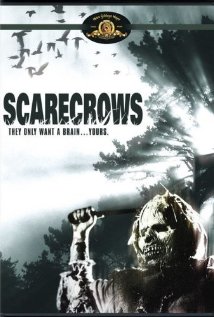
Hmmm. I saw this one more than 20 years ago and I seem to remember it being a better movie.
Memories can play such cruel tricks…
Actually, it’s not half bad, but since it was made in the 1980s, you’ll have to overlook goofy haircuts.
Five military trained crooks make off with 3.5 million bucks from Camp Pendleton’s payroll department. The movie opens with the bad guys being flown to Mexico by a pilot and his daughter who are held at gunpoint.
No honor among thieves with this bunch, as one of the robbers, turncoat Bert (B.J. Turner), grabs the loot and bails out, landing in a creepy deserted cornfield.
Deserted by everyone, that is, except for the titular murderous scarecrows, who come to life and bag their limit.
Only the vaguest of reasons are given to explain why the scarecrows rise up and go on a killing spree, so if you’re a stickler for motivation, this won’t be your cup of grue. Suffice to say, the previous tenants of the family farm were into something devilish.
You might notice, too, that Bert’s dialogue seems to come out of nowhere, since we hear it while his lips clearly aren’t moving. Is he thinking out loud or is he a practicing ventriloquist?
Whatever the case, it’s distracting.
Also, the rest of the characters, in their quest to avoid being gutted and nailed to a pole, engage in some monumentally stupid behavior, which tends to suggest that their prowess as paramilitary bandits was more like a momentary stroke of luck.
To give writer-director William Wesley some credit, the cornfield setting is reasonably spooky and the scarecrows themselves are a pretty nasty bunch. Sadly, Scarecrows isn’t the action-packed fright fest that I remember, either.
Must have seen it during my drinking days—which should come to an end sooner or later.
Hillside Cannibals (2006)

The synopsis for Hillside Cannibals describes it as being about some dude named Sawney Bean, a cannibal killer who’s been feasting on victims for 400 years. He lives with his flesh-eating inbred clan in some caves on a hillside (hence the title) in the California desert.
My question is: Where the hell did all this back story come from? There is no evidence of 400-year-old killers found anywhere in the movie. Unless I saw a severely truncated version (which I doubt, because the film is heavily padded; every third shot is of the same pile of skulls and bones on the ground), then director Leigh Scott and writer Steve Bevilacqua are full of crap.
Hell, the cannibals don’t even talk! They just grunt, gurgle, and gesticulate a lot. Perhaps a jaunty song should play during the opening credits (like in The Beverly Hillbillies) that explains the premise. It would have helped.
Nutshell: Five campers, for no reason in particular, go out into the desert for an evening of drinking, reefing, and screwing. A clan of Road Warrior extras, who apparently got their costumes at Goodwill, show up for a bloody buffet.
Final Girl Linda (Heather Conforto), spends the rest of the movie alternately trying to get help, rescue her boyfriend, and elude capture. That’s about it, really.
In their desperate attempt to somehow link this turkey to The Hills Have Eyes, Scott and Bevilacqua neglect the other aspects of the film. First of all, three of the five campers are dead within 12 minutes of the opening. This leaves only two other characters to be killed for the duration of the movie, a problem Scott tries to fix by briefly introducing three more campers, who are on screen just long enough to prove annoying, before they become lunch.
We don’t know who they are, why they’ve chosen to stop in this location, or anything else. While the scene does up the body count, the inclusion of these off-brand characters was clearly an afterthought and accurately illustrates the haphazard level of craft and creativity at work.
Despite all the piss-poor examples of padding and subplots that go nowhere (e.g., what’s the sheriff’s relationship to this band of bizarros? Is he a cousin or something? We never find out.) there is abundant gore and some genuinely nightmarish imagery, including an ending that’s totally grim.
I thought it was a nice stylish touch that when a new chief of the tribe takes power, he has to remove the face of the fallen leader and wear it around. Disgusting, but sort of cool, I guess.
Hillside Cannibals isn’t a complete waste of time—but it comes awfully close.
YellowBrickRoad (2010)

This indie entry has such an unsettling premise and buildup, that I’m actually going to forgive the WTF ending. It wasn’t easy, but the first 75 minutes are skillfully constructed and hint at so much awful, otherworldly potential.
Filmmakers Andy Mitton and Jesse Holland effectively borrow the premise of The Blair Witch Project—research team goes into scary woods to investigate a local mystery—and successfully create a movie in which the viewer is constantly bombarded with possibilities and forced to invent scenarios that explain the increasingly bizarre circumstances.
A writer (Michael Laurino), his wife (Anessa Ramsey), and a handful of other science-y types go traipsing off into uncharted New Hampshire forest land to find out what happened to the entire population of the nearby town of Friar.
Seventy years previous, everyone inexplicably left Friar and followed a trail into the woods and were never seen alive again. The modern-day explorers find the coordinates of the trail and the expedition begins. What no one realizes until it’s far too late, is that it’s a doomed expedition leading only to—MADNESS!
It’s a subtle transformation that takes place in YellowBrickRoad; the further the characters travel on the trail, the more things break down. Tensions arise, their instruments cease to work, and worst of all, they are loudly serenaded with old-timey jazz music day and night, as if the entire forest is wired for sound.
After all this slow-baked agony, the ending is a rather pale payoff compared to what Mitton and Holland have put us through for most of the film, but credit must be given for the power of the journey itself, which at times resembles a low-budget take on Werner Herzog’s Aguirre: The Wrath of God rather than the aforementioned Blair Witch.
And that’s good company.
Deadwater (2008)
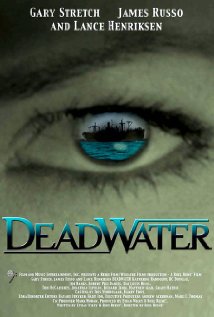
Deadwater is not a very good film, but the presence of grizzled vet Lance Henricksen helps a bit.
Kudos to director Roel Reiné, who took the time and energy to dress it up as a contemporary naval action thriller (not that there are abundant thrills to be had in this yawner) and include scenes of “advanced interrogation techniques.”
Abu Ghraib is mentioned a few times. That’s about as timely as it gets, though.
Somewhere at sea near Iran or Iraq (forgot which), a U.S. crew operating a recommissioned WW II vessel is slaughtered under mysterious circumstances, due mainly to the poor lighting and spastic camera work.
Old salt Col. John Willets (Henricksen) and his crack team of nobodies are sent to investigate. Lo and behold, one of the few survivors of the haunted holocaust is the colonel’s son, Colin Willets (played by Australian side-of-beef Gary Stretch, whose acting chops and resemblance to Henricksen are equally nonexistent).
So what the hell happened?
There are approximately 863,111 movies in which a team of well-armed investigators boards a derelict ship or facility to find out what became of the previous occupants. This isn’t nearly as good as say, Ghost Ship, one of the better efforts in that genre.
The threat remains mostly unseen (malevolent energy or something. Zzzzzzz.) and 95 percent of the movie consists of Henricksen and company moving stealthily through corridors and making ludicrous military hand gestures at each other.
Save this one for Low Expectations Sunday. BTW, if you’re looking for it in Netflix, you’ll find it under the title Black Ops. My advice? Don’t look too hard.
Sam’s Lake (2006)

I’m on the fence about Sam’s Lake.
It’s a slow-burner, but it’s got gorgeous scenery. The body count is low, but the story is fairly intriguing. There’s no bloodletting till around the 43 minute mark, and the carnage is minimal.
Despite all this, I felt compelled to see it through.
Sam (super-cute Fay Masterson) brings a carload of her partying friends up to a remote cabin on the lake where she grew up.
Once ensconced, Sam’s childhood pal and local garage mechanic Jessie (William Gregory Lee) drops in to share a chilling campfire story about a kid who escaped from a nearby mental hospital (there’s always a nearby mental hospital) and wasted his entire family with a pointy stick.
As is so often the case, this tall tale is no legend, as the campers soon become painfully aware.
The “twist” in Sam’s Lake isn’t very twisted, especially since it’s pretty damn obvious from the get-go that somebody here is a 24-carat killer. Even so, the buildup is sturdily constructed and the showdown contains genuine surprises.
Fay Masterson delivers a charged performance as a deviously clever protagonist. On the down side, there’s not much happening on the horny or hacking front. If you pass on Sam’s Lake, you haven’t missed anything. If you give it a chance, your patience will be ever-so-slightly rewarded.
Night of the Scarecrow (1995)

Call it a by-product of living in accelerated times. It’s getting to the point where I look at movies made before the turn of the century as “quaint.” I’m sure this happens to everybody on our relentless trek to the boneyard, but it seems when I watch perfectly good horror films from the ’80s and even the ’90s now, they look like relics from another world that I’ve forgotten.
“OMG, look at that poodle hair! Is that a Members Only jacket? Ned’s Atomic Dustbin?”
With the passing of time the cultural signposts of eras passed start to get a little blurry. I have younger friends who are into movies and they usually won’t rent something more than 10 years old, claiming “it looks cheap and weird,” and “the FX are gonna suck.” I’m still adjusting to being the “old guy” in these situations.
So Night of the Scarecrow is a film fossil from 16 years ago. It’s good. Satisfying, even. It’s like dinner at an old-school steak house after having nothing but rice and tofu for a month. There are no surprises but everything is served just the way you like it; meat and potatoes, a stiff drink, and no sass.
What I appreciate most is that it’s a movie that doesn’t dilly-dally; the plot races along like Richard Petty at Daytona. Within, oh, 15 minutes or so, we know all the characters who live in the nice little town of Hanford—the one with the dark secret.
Over 100 years prior, the town fathers made a deal with a passing warlock (I guess there were warlocks roaming the west during the Ulysses Grant administration). In exchange for fertile soil and a temperate climate, the warlock could do whatever he pleased in Hanford.
The horny wizard turns out to be an advocate of sex magic, luring the town’s women into awesome episodes of debauchery. The menfolk decide that ain’t cool, drug the warlock, and crucify him in the cornfield.
Cut to “modern” times. The warlock, now in the guise of a button-eyed, sack-headed scarecrow, starts slaughtering the Goodmans, descendants of the guy who betrayed him and stole his book of spells.
These include brothers George (Dirk Blocker), Thaddeus (Bruce Glover, Crispin’s dad) and William (Gary Lockwood), who all perish in ghastly fashion, while William’s daughter Claire (Elizabeth Barondes), and her mimbo Dillon (John Mese, who looks like a stand-in for Scott Bakula) try to find the spell that will banish the malevolent mage.
A better-than-average cast helps. Stephen Root (O Brother Where Art Thou, Red State) plays another incompetent sheriff, while John Hawkes (Deadwood, Winter’s Bone) delivers the goods as the asshole delinquent who unwittingly frees the warlock.
But the real scene-stealer is Glover, chewing the scenery like a hungry goat as a weak-willed preacher with a hot-to-trot daughter that gets defiled by Hawkes’ town rowdy. Seriously, Glover’s overacting is almost operatic, maybe a notch below bad Shakespeare. And it’s just another reason to watch this unexpectedly satisfying sleeper.
It’s My Party and I’ll Die If I Want To (2006)
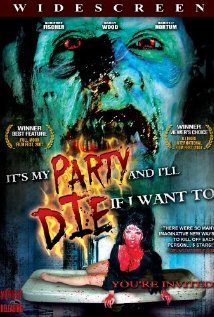
There are a thousand things wrong with It’s My Party and I’ll Die If I Want To—and I still dug it.
Director and writer (also editor, composer, and several other titles) Tony Wash had the brass to make his film on a budget so puny you can practically hear the car washes, garage sales, and bake sales (not to mention the ringing of credit cards) that went into the financing.
There are continuity errors, mushy sound quality, community theater acting, and it looks like it was shot on a flip phonw. Even so, Wash and his creative cohorts have some audacity and style. True, it’s a young Sam Raimi’s style, but nonetheless…
Sarah (Adrienne Fischer) thinks her friends have forgotten her 18th birthday. Geez, how could they forget? It’s on Halloween! And that means a costume party in an old house with a sinister reputation.
Part of that reputation, truthfully, should be because of its periodic ability to drastically change size and shape. The interior layout of Burkitt Manor is incomprehensible.
It turns out Sarah’s bland assortment of acquaintances have hit upon the brilliant idea of rigging up the old Burkitt Manor (where in either 1908 or 1930 a despotic husband beat his family into hamburger) as a haunted house to scare the bejeebers out of her.
Who knew kids were so motivated?
After 67 or so slow exposition scenes, the Karo syrup finally starts to fly, as the evil spirit of the house takes possession of young schmuck Travis (Oliver Lucach), and the body count clock is ticking.
Fortunately, we learn (in a training scene that includes a shower interlude—good call, Tony) Sarah is an expert in martial arts and her friends thoughtfully chipped in to buy her a katana! So we get a savage kung-fu showdown—with the plucky Sarah dressed as Elvira—in addition to buckets of viscera and a little gratuitous nudity.
It’s My Party and I’ll Die If I Want To is an amateur production with a capital “A”, even with a Tom Savini cameo. But Wash and his team work hard to get most of the details right.
And he borrows liberally from Raimi (the main creature is pretty much a Deadite), George Romero (The EC Comics segues are straight out of Creep Show), John Carpenter, and even Tarantino, which should be enough for horror geeks to suck on like an all-day lollipop.
It was for me, anyway. Someone give this kid a few bucks, eh?
 horrificflicks.com
You must be logged in to post a comment.