Boar (2017)

Boar is an Aussie animal-attack flick about a small outback community of ranchers threatened by a gigantic, bloodthirsty pig.

Yes, I know it sounds like Razorback (1979). When the star of the movie is a massive swine, comparisons are inevitable.

For my money, writer-director Chris Sun accomplishes exactly what he sets out to do, namely, make an old-fashioned thriller about a giant critter on a rampage that racks up a hella high body count.

It helps greatly that cinematography and practical creature effects were areas of focus for Sun. He dexterously shuffles hog-o-vision POV stalking camera with flying tracking shots of victims trying to escape the oncoming Pork Chop Express in ways that maximize impending terror.

When poor Blue (Roger Ward) has to make a stand against the monstrous boar, the buildup is dizzying, with cameras swooping and circling around him like vultures.

The cast of familiar faces include John Jarratt (Wolf Creek) and Bill Moseley (The Devil’s Rejects) in non-maniac roles.

In fact, Jarratt, who played one of the most cruel and violent killers ever in Wolf Creek, is borderline heroic here. He risks his life, unarmed, to rescue some old-looking teenage campers who’ve pitched their tents in the pig’s path of destruction.

It’s a refreshingly uncharacteristic touch, in a movie that’s full of them. Another example is heroic hulk Bernie (Nathan Jones, think Jason Statham Down Under) launching into a gleeful rap-a-long of “Ice Ice Baby” that reminds me of Quint’s crew enjoying a song in Jaws—a timely comic moment shortly before the shit hits the fan.

There are a number of such moments in Boar, particularly in the beery banter between drinking buddies Ken (Jarratt) and Blue, who are forced to put down their Fosters and run for their lives.

Blue yells at Ken for not loading his rifle before they drunkenly embark on a midnight run to track the creature.

“Well, I never reckoned I’d run into a pig the size of a rhino out here!” Ken retorts.

The “out here” Ken refers to is the beautiful Mary Valley in Queensland, Australia, whose bucolic splendors are never less than gorgeous. Even while characters plan, plot, and panic over their porky predicament, the scenery remains a sparkling gem.

Taken as a whole, Boar isn’t a bore; there are too many good things going on to complain about the uneven pace or a few CGI pig shots that don’t cut it.

Your time invested will be paid off in quality entertainment. You’re welcome.

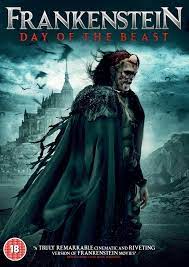
Frankenstein: Day Of The Beast (2011)

Frankenstein: Day Of The Beast is the low-budget shocker being watched by the doomed audience in The Last Matinee when the maniac (played by Ricardo Islas, the writer-director of this film) goes on his cinematic killing rampage.

Truth be told, I was intrigued enough by the footage to give it a shot, and it turned out to be worth the effort.

In this version of the Frankenstein tale, Victor Frankenstein (Adam Stephenson) has fled to a remote island to wed his beloved Elizabeth (Michelle Shields).

Victor has employed a squad of mercenaries to keep her safe, but the monster (Tim Krueger, who’s quite good) has promised his creator that he would appear on his wedding night to take her.

Islas stays fairly faithful to Mary Shelley’s source material, but departs from the template in significant ways. This incarnation of the Frankenstein Monster is pure evil, with no grey area. He kills in extravagantly brutal fashion, bifuracting one unlucky guard with intestines on full display. Another gets his spine removed, and a blind man is forced to swallow his own cane.

The monster also eats human flesh, so there’s that. Apparently mangling his victims wasn’t sufficient to inspire terror. This guy bites faces off and rips throats out with his teeth.

How downright monstrous!

As the title implies, Frankenstein: Day Of The Beast is a more elemental take on a familiar story, one that doesn’t hold back on the blood and guts, and allows no sympathy for the monster, who doesn’t speak, but occasionally laughs cruelly.

The aforementioned budget limitations show up in various forms, from flimsy sets to terrible acting by supporting characters, but Islas clearly understands what makes Frankenstein’s creation so damned frightening. He is a relentless enemy who can’t be destroyed.

So what are you gonna do? As the vengeful Mohawk says to Max in The Road Warrior, “You can run, but you can’t hide.”

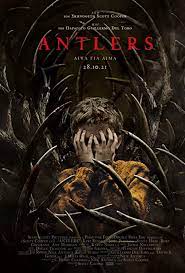
Antlers (2021)

“It all makes sense, you see. I mean, our ancestral spirits never died. They were here long before we were, and they’ll be here long after we’re gone. But now, they’re angry.”

Dark times call for dark movies. Antlers is a coal mine at midnight.

The opening observation comes from Warren Stokes (Graham Greene), the former sheriff of Cispus Falls, a blighted Oregon town where mutilated citizens are appearing with alarming frequency.

The current sheriff, Paul Meadows (Jesse Plemons), is seeking counsel. He’s out of his depth and confused, hypothesizing a cougar or bear attack is responsible for the mayhem.

Meanwhile, Paul’s schoolmarm sister Julia (Keri Russell) is trying to figure out why her sullen student Lucas (Jeremy T. Thomas) is drawing pictures of demons and monsters.

In Antlers, all the dots connect to the decline of the planet’s structural integrity. Our systematic “pillaging of Mother Earth” has opened the door to indigenous spirits, most notably the Wendigo, a voracious cannibal that inhabits evil men.

Just below the narrative surface of this riveting supernatural thriller lurks mounting evidence of an infected society that has no access to spiritual vaccine.

Cispus Falls is a moribund mining town, an urban landscape littered with old machinery and empty storefronts, where the only thriving business is meth production.

Deep-rooted trauma is the norm. Julia, a recovering alcoholic with her own childhood of parental abuse, eyes liquor bottles at the store with palpable longing, searching for strength and comfort from any source.

In the background, the news drones on about the opioid epidemic, failing industries, and environmental collapse.

Kerri Russell owns her role as a damaged, unhappy woman who realizes her altruistic motives for helping Lucas are likely futile, but it’s marginally better than giving in to the despair that runs deep in these parts.

She recognizes the telltale signs of abuse in Lucas’s haunted face, a reflection of a home life that is literally hellish. He is a child doomed to maintaining the monstrous status quo at his house, while his younger brother Aidan (Sawyer Jones) is held captive by something that used to be their meth-cooking father (Scott Haze).

The thing Lucas calls “New Dad” is growing increasingly hungry and his grocery list requires fresh meat.

“Is God really dead?” Aidan asks Lucas. “Daddy said God is dead.”

Director Scott Cooper, working alongside executive producer/malevolent maestro Guillermo del Toro, has constructed a thoroughly ravaged world with precious little light—one that is bone-chillingly familiar.

Hey, isn’t that our civilization crumbling?

There are moments of brain-freezing terror in Antlers, including horned creature craft with genuine nightmare potential, a del Toro calling card.

Yet it’s the overall tone that proves the most unsettling factor, because it presents a terminally ill worldview, a pandemic of the soul that never ends.

There may be small victories to be had, individuals worth saving, but the inescapable conclusion is that humanity is fighting a losing battle with havoc we’ve wrought on ourselves.

In nearly every scene, Julia and Paul (the good guys) are stymied by inadequacy and failure. The coroner is apologetic because he can’t explain how the victims were killed. A doctor is unable to predict if a patient will recover. The harried school principal (Amy Madigan) tells Julia she isn’t allowed to intervene on a student’s behalf.

Even Paul admits he was reluctant to take the sheriff’s job, which mainly consists of evicting local homeowners.

“Everyone thinks these problems are just going to go away, and we know that they don’t,” Julia tells him. She could be referring to any number of societal symptoms depicted in Antlers.

The wound runs too deep, there’s no saving this patient. The downward spiral is well under way and no one’s getting off.

Hope you like it bleak.

Night Teeth (2021)

I wish they hadn’t called it Night Teeth. It’s not a very good title for such an entertaining and inventive film.

Broke student Benny Perez (Jorge Lendeborg, Jr.) just wants to earn a little extra cash driving for a car service. He borrows a sweet ride from his older brother Jay (Raul Castillo) and picks up mysterious beauties Zoe (Lucy Fry) and Blaire (Debby Ryan) for a night of club hopping around Los Angeles.

The ladies are able to read Benny like a book and quickly determine he’s a newbie at the chauffeur game, a source of much amusement. And as the night goes on, Benny becomes alternatingly aroused and alarmed by his odd passengers, particularly after one stop when they return with a satchel full of bloody cash.

Meanwhile, his brother Jay has to get his boys together because there are vampires in Boyle Heights, and that runs counter to a long-standing treaty.

There’s a full slate of subplots in Night Teeth, including sparks between young Benny and the somehow-still-kind-hearted Blaire. When they’re together the movie freely pivots into a star-crossed romance and the night seems full of new possibilities.

Mostly the story sticks close to the mob-style coup being staged by ambitious vampire Victor (Alfie Allen), who wants to go back to the old ways of old days, when humans were fair game, regardless of their address.

Night Teeth is also one of those vampire movies (like Near Dark) that doesn’t use the “V” word, which is why I found the title clumsy, like it was picked out of a hat.

Even so, there is all-you-can-eat action, laughs, guts, and unlikely romance to be feasted on in Night Teeth. Just as in Vampires Vs The Bronx, bloodsuckers are depicted as affluent white gangsters trying to gain wealth and power by displacing a hardworking minority, in this case, Latin Americans.

“Who still uses crossbows?” Benny wonders out loud while trying to stay alive during a gnarly fight between undead rebels and vampire hunters. Find out this and other exquisite tidbits in Night Teeth, winningly directed by Adam Randall, and sharply written by Brent Dillon.

These vampires definitely don’t suck.

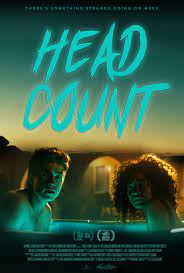
Head Count (2018)

The moral of the story: Don’t use the internet, it’s evil.

Evan (Isaac Jay) is a college kid on spring break looking for love and adventure. Careful what you wish for, my lad.

Instead of Lake Havasu, he heads for Joshua Tree to crash with his older brother Peyton (Cooper Rowe), and maybe bond over some hiking and camping.

Rather than pitch a tent, Evan ditches his brother at the first opportunity and falls in with a bunch of bohemian millennials renting a nearby house. Seeing attractive folks his own age that party all night is sufficient temptation for Evan, especially the beguiling Zoe (Ashleigh Morghan), a photographer currently without a boyfriend.

Scenes of low-key hedonism (weed, shrooms, booze) are followed by everyone gathered around the ol’ campfire for ghost stories. Since Evan doesn’t know one, he is directed to a website where he mistakenly recites a summoning spell for a shapeshifting demon.

Editor’s Note: Check and verify your sources, people! How dumb do you have to be to read an incantation that warns you not to say a certain name out loud? What hayseed community college do these nitwits attend?

None of them are going to have to worry about graduation requirements, if it’s any consolation.

The malevolent entity called a hsijie can appear to look like anyone and even these inebriated dorks begin to notice that various members of their group seem to have gained the ability to be in two places at once.

This is called a clue, and Evan is the only one present who picks up on it. The carefree weekend takes on a distinctly ominous tone after pretty Zoe walks off a cliff and injures her ankle.

Did she jump or was she pushed?

Other than Evan and Camille (Bevin Bru), the rest of the group can’t be bothered to examine the evidence that’s all around them, preferring beer pong and Never Have I Ever to thoughts of self-preservation.

Head Count succeeds as a low-budge (but not to its detriment) thriller with a nifty paranormal threat that remains largely out of sight. Even so, writer-director Elle Callahan (Witch Hunt) brings tensions to a boil with strategically placed pointers amidst all the scenes of collegiate cavorting that inevitably ensue when the parents are out of town.

I told you kids! No parties! You’re all grounded.

Six feet deep.

Monstrum (2016)

Directed and co-written by South Korean filmmaker Jong-ho Huh, Monstrum is an exquisitely crafted 16th century period piece about a legendary beast that is decimating the population of Mount Inwangsan.

It is also a very astute political thriller about a beleaguered king (Park Hee Soon) who is being undermined by his cabinet ministers. The powers behind the throne conspire to keep the peasants wary and fearful by fueling rumors of a horrible creature that not only kills its victims but spreads the plague throughout the countryside.

Naturally, the peasants would like to see something done to mitigate the mutilations, so the king summons a loyal general (Kim Myung-min) to lead a party of warriors and farmers to hunt down and destroy the thing known as Monstrum.

The plot bubbles with palace intrigue and betrayals as a persistent rumor turns flesh (fur) in the form of a monstrous black cat that’s grown to massive proportions thanks to a steady diet of disease-ridden corpses.

The Monstrum itself isn’t the best CGI critter ever, but it’s far from the worst. Thematically, it represents man-made corruption, dishing out death as an equal opportunity destroyer, feasting on peasant and noble alike.

The monster is generally on the money in Monstrum, but the movie’s also chockful of superb swordplay and martial arts choreography that dazzles the senses. It’s no Crouching Tiger, but it’s definitely a hidden gem.

It also boasts terrific cast chemistry and you’ll have no trouble rooting for the scrappy band of heroes that takes on the vicious monster and stands up to a cadre of treacherous politicians.

And like Masque of the Red Death or Brotherhood of the Wolf, Monstrum uses a deadly plague to illustrate the indifference of the aristocracy to the suffering of an impoverished working class.

Twas ever thus.

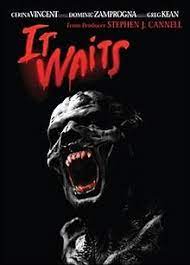
It Waits (2005)

If your expectations are not currently residing in a lofty skyscraper, then It Waits should do the trick. The time passed and I was engaged, despite the teensy budget and a general lack of dramatic ability from the cast.

First and foremost, this is a story about redemption. Yes, there is a winged monster that dismembers campers, and plays cat-and-mouse with the lovely Danielle (Cerina Vincent), an alcoholic ranger stationed at a lonely tower in the forest primeval.

See, Danielle recently got shitfaced with her friend Julie, and was at the wheel of their jeep when it crashed, killing her bestie. Since then, she’s retreated to the solitude of her fire-watch perch to sulk and drink some more, with a wisecracking parrot as her primary companion.

If only there were some way for her to save the day, and earn back her self-respect!

Meanwhile, a bunch of stupid college students blast a hole in the side of a mountain, freeing a demon/gargoyle that’s resided there for ages and ages. After dispensing with the hors d’oeuvres, the monster plays the long game with Danielle, waging a gruesome terror campaign and reducing everyone around her to bloody mulch.

Director Steven Monroe recognizes that Danielle is the focus of the feature, so she’s never far from the camera, an aesthetic gamble that pays off. While her emotive capability seldom rises above school play levels, actress Cerina Vincent pumps the gas when action is called for and spends the majority of her screen-time looking absolutely ravishing.

The creature also gets a fair amount of camera time, and it’s a sturdily built costume that wreaks plenty of havoc, resembling Pumpkinhead with a wingspan. In fact, the diabolical monster seems rather too formidable for the plucky ranger.

Fortunately, dynamite is a great equalizer. Keep expectations on the ground floor and you will be reasonably pleased with It Waits.

We Need To Do Something (2021)

There are moments in We Need To Do Something in which director Sean King O’Grady and writer Max Booth III manage to make us forget that the movie is mostly about an annoying family trapped in their bathroom.

There is a powerful storm. Dad, Mom, daughter Melissa, and son Bobby hole up in the master bath. A tree crashes through the roof imprisoning the bickering clan in the can.

The presence of a rattlesnake in the restroom livens things up a bit, and provides some semblance of actual danger.

Further, the subplot about Melissa (Sierra McCormick) and her girlfriend Amy (Lisette Alexis) casting a spell on a nosy classmate that apparently results in the Earth’s destruction is intriguing, and could have been developed.

However, there is just so much horror that can be plumbed from living in a loo. Robert (Pat Healy), the twitchy family patriarch proves to be utterly useless in a crisis, impotently raging around the room, making life miserable for everyone—including the viewer.

As the face of toxic masculinity, Healy is an angry, unstable child whose very presence makes any situation 100-times more unbearable.

This gets old real fast.

Diane (Vinessa Shaw), Robert’s wife, is preoccupied with buoying Bobby’s (John James Cronin) spirits, particularly after the latter’s encounter with the roving rattler.

Single-set monotony takes over, and the lack of legitimate threats beyond Robert’s rapid decline into lunacy (it was a short trip) do not inspire much in the way of suspense.

Will Melissa cop to the crime of crashing civilization? Will anyone survive the dangers lurking beyond the camera’s reach? Will someone please kill Dad?

In the final reckoning, We Need To Do Something falls short of achieving any sort of entertainment momentum, since it’s forced to rely on offscreen developments to move the story forward.

Rather than a movie, Max Booth’s script suggests the sort of exercise in stale irony that one endures in community college playwriting classes.

Feel free to skip this class. You won’t learn anything.

Willy’s Wonderland (2021)

S’okay.

Granted, Willy’s Wonderland is an entertaining movie, but director Kevin Lewis and writer G. O. Parsons ultimately underdeliver on the fright front. Yes, Nicolas Cage gives a spirited performance as a mute janitor battling Satanic forces inside a cursed restaurant, but much of the action feels like missed opportunity.

A man of few words (Cage) blows a couple tires while traveling the backroads of the country. Local entrepreneur Tex Macadoo (Ric Reitz) and his tow-truck driving flunky (Chris Warner) take charge of the situation, offering to fix the stranger’s bitchin’ car in exchange for a night’s work, cleaning up Willy’s Wonderland, a former family eatery (think Chuck E. Cheese) inhabited by evil mascots who made a deal with the devil.

Cage agrees to the terms, and thus embarks on an earnest quest to restore the decaying fun zone to its former pristine condition. There are even inspired montage sequences that feature serious deep cleaning by NC that made me laugh.

The squad of evil automatons (a gorilla, an alligator, a Mexican bandit, a fairy, a knight, and a weasel) are one of those aforementioned wasted opportunities, as they turn out to be easily disposed of by the industrious janitor.

The only thing keeping Cage from really cleaning house, is a recurring gag that has him taking breaks in the middle of combat, where he guzzles an energy drink and plays pinball for a while. The bit gets tiresome and momentum grinds to a halt.

Comic actress Beth Grant (The Mindy Project) is on hand as a corrupt sheriff keeping the town’s dirty secret, and she provides a level of energy and commitment that compensates for some of the script shortcomings.

Willy’s Wonderland has moments of divine lunacy. There could and should have been more.

The Beach House (2020)

Turns out an extinction event is no day at the beach.

Two couples get acquainted over wine and weed edibles at a sweet shack by the seashore during an atmospheric catastrophe, after which everything changes for the worse.

Written and directed by Jeffrey A. Brown, The Beach House conjures scare scenarios along the same lines as The Block Island Sound and Color Out Of Space, a pair of recent cosmic horror entries that are also long on tension and short on answers.

College sweethearts in crisis, Randall (Noah Le Gros) and Emily (Liana Liberato), take a break from academia to spend the weekend at Randall’s family beach house.

It all looks promising until another pair of beachcombers arrive with a reservation for the same weekend. Awkward!

Mitch (Jake Weber) and Jane (Maryann Nagel), a distantly recognized, slightly older couple, are amiable and open to suggestions. The newly formed quartet agree to share quarters and a dinner party becomes the order of the day.

Like all civilized people, we welcome members into our tribe with barbecued meat, wine, and really potent edibles. Old records are played, dreams discussed, and for a short time these strangers relax in each other’s company in a beautiful home by the sea.

As a curiously glittered fog descends, Jane winds her way down to the beach.

It’s not a spoiler to say that everything falls apart, because it does so in such an artfully considered way. The Beach House depicts a low-key apocalypse that implodes an idyllic weekend getaway, and offers four stagnant souls an opportunity to embrace real change.

Writer-director Brown is an avowed fan of Invasion of the Body Snatchers (every iteration), and he creates perpetual nervousness by keeping the camera affixed to on-the-move Emily, who’s becomes the pivotal character forced to witness Jane’s uncanny transformation and Randall’s inability to adapt to a changing landscape.

It’s in the air. It’s in the water. It’s in you.

With the same respect for bourgeois leisure time as New Wave bosses like Luis Buñuel and Jean-Luc Godard, Brown pops his peeps into a pressure cooker beyond their control and reduces them to essential salts.

Speaking of waves, Mitch seems to have disappeared into them.

Characterizing some of the recurring elements here as “Lovecraftian,” isn’t misleading, but the term is becoming a convenient marketing junk drawer. It should remind us that the reclusive Rhode Islander doesn’t hold creative claim to the entire universe.

The nightmare evolution taking place in The Beach House could be accidental or inevitable; environmental or extra-terrestrial. In the end, it doesn’t matter. The scary thing is, it’s happening.