The Substance (2024)

Your attention horror shoppers!

The Substance should be seen, full stop.

Nominated for five Oscars including best actress for Demi Moore? As it should be.

French writer-director Coralie Fargeat (Revenge) turns up the rage to Nova, and opens the taps at the blood bank in a body horror spectacle that will likely leave a bruise on your soul. It’s definitely worth the uncomfortable moments.

Fargeat gives us the impression that The Substance is another tale of dashed dreams in the Hollywood meat grinder, and it certainly is. In fact, the meat grinding has never been portrayed in such glaring and grotesque detail.

Elizabeth Sparkle (Demi Moore) is a beloved fitness guru who has gotten too long in the tooth to pump up sponsor sales. She is unceremoniously dumped by the venal head of the network (Dennis Quaid), who announces his plan to find a younger model, while angrily taking a pee.

Fearing for her fading career, Sparkle takes a chance on a miracle rejuvenation drug called The Substance, which promises a “a younger, better version” of yourself.

Her decision to join the program, which includes a grumpy operator, a squalid post office box, hellish injection regimen, and the gradual draining of her own vitality, is the trap springing shut.

It’s only proper that a trouper like Demi Moore has enough presence and pathos to make her vainglorious plight extremely moving, as she’s forced to grapple with her younger, better self (Margaret Qualley) for limited consciousness.

Of course, things get worse, and by the time the finale rolls around, with a mutated star trying to host a live New Year’s Eve special, it’s a straight-up Frankenstein heartbreaker, with an angry mob in pursuit.

Each time Coralie Fargeat reaches a narrative turning point in The Substance, she amps up the gore to the point of anguish, and I admire that audaciousness in the telling of this particular story.

Fargeat never delivers half measures or wimps out in any way, and in Demi Moore she has the perfect vehicle to bring home a brutal point.

“Women are bloody,” my wife reminds me. “Birth, menstruation, it’s gross.”

I get the picture, and so will you.

Out Of Darkness (2022)

If you have a craving for rugged terrain, Out Of Darkness is your oyster.

Otherwise, patience is required for this impressive-looking hero’s journey into the unknown against an unseen enemy.

About 45,000 years ago, a small tribe of prehistoric explorers wash up on a distant inhospitable shore, determined to carve out a future for themselves.

Fortunately they speak in subtitles or we’d be as lost as they are!

The group is led by alpha male Adem (Chuku Modu), an arrogant hothead long on bravery and short on common sense. When they determine that something is stalking them, their search for food and shelter takes on a sense of urgency, especially after Adem’s son Heron (Luna Mwezi) gets snatched away from the campfire.

As the not very tightly-knit unit comes unraveled, it’s up to Beyah (Safia Oakley-Green), a relative stranger among them, to figure out what nature of beast is decimating the tribe.

Shot in Scotland, the location scenery is the best thing about Out Of Darkness. The landscape is pure primeval desolation, and proves to be a mightier foe than the “demon” that’s assailing the company.

The atmosphere of hiding and hunting is fairly absorbing, but the pace is painfully slow and the ending is a tepid letdown that should rightfully inspire shouts of “What? That’s it?” from the home audience.

Out Of Darkness fails to live up to the potential of its savage setting—instead we get a fossilized lesson about living and dying by the sword. Or in this case, the spear.

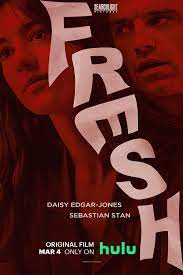
Fresh (2022)

Ask anyone. The dating scene can be murder, especially if the relationship consumes you.

In director Mimi Cave’s black-comic thriller Fresh, Noa (Daisy Edgar-Jones) is a smart, witty, modern girl just looking for a meaningful nibble in her stagnant dating pool when she meets Steve (Sebastian Stan), a super-attractive doctor at her local produce market.

After a quick roll in the sack, Noa is whisked off for a magical weekend trip with the too-good-to-be-true Steve, despite warnings from her lesbian BFF Mollie (Jonica T. Gibbs) that there are some definite red flags in this picture.

Next thing Noa knows is waking up chained to a floor. This is never a good sign.

Turns out Steve has a thriving black market business that needs new blood occasionally.

“What the fuck is happening?” Noa screams at Steve.

“I’ll tell you, but you’re going to freak out,” Steve replies.

Noa is in a very bad place, but she shows grit and determination by convincing her captor that she shares his unusual tastes for the very finest cuts of meat.

Yes, it’s every bit as gruesome as you think, and then some, but Cave also sneaks in stress-relieving laughs when we need them most, particularly after one of the director’s many rapid-fire meat-cutting-and-eating montages designed to make the viewer queasy with self-loathing.

“I don’t eat animals,” Steve tells Daisy in the early days of their courtship. Not ones with four legs, anyway.

Fresh doesn’t pull any punches in its portrayal of toxic masculinity, embodied by the charmingly evil Steve, a respectable man with a home and family who just can’t resist a tempting morsel.

Unfortunately, as any upset stomach commercial ably demonstrates, sometimes your food will fight back.

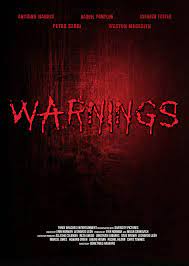
Warnings (2019)

Real estate is always a solid investment—unless you’re in a state where realtors needn’t disclose past tragic events, such as occupation by a sinister cult and lots of subsequent disappearances.

Like I said, a crap shoot.

Such is the case with Marcus (Antoine Harris) and Grace (Shannon Foster), who think they’ve found a perfect parcel of land near Ojai, California to set up a commercial cannabis operation.

To celebrate their new future as ganja growers, the couple invite friends Phillip (Peter Sabri), Dominic (Weston Meredith), and Patricia (Erlinda Navarro), down for a weekend of drinking games and exploring the property.

At first, guest and host alike have trouble sleeping. Patricia in particular is gripped by nightmares of bloodletting and dismemberment.

Meanwhile Phil and Dominic get into a lover’s quarrel, and Dominic storms off to find a signal for his phone. Never to be seen again.

Thanks to a gabby security officer, the group finds out that at least one ex-cult member (with cannibal tendencies) is still running around terrorizing the community.

Unfortunately, this is the kind of red flag that will cause most investors to bail out.

The maniac is a brawny dude, marginally scary, but nothing really paranormal happens until his victims rise from the grave seeking revenge.

Filmed on a micro budget by director Demetrius Navarro, Warnings isn’t a good movie, but it’s good enough if gruesome events taking place in a scenic location float your boat.

Let’s give it a C+.

Bones and All (2022)

Horror Romance. Seems simple enough, but there are thousands of things that can go wrong, and usually do.

Absence of chemistry between the leads; indulgent editing, inane dialogue, and indifferent art direction, to name a few usual suspects.

Director Luca Guadagnino—along with screenwriter David Kajganich, and cinematographer Arseni Khachaturan—makes magic happen on all fronts in Bones and All, an absorbing and tragic love story, based on a YA novel by Camille DeAngelis.

The moods here shift like unstable weather. We’re following a narrative that’s by turns gruesome, seductive, and visually intoxicating, even when the protagonists are merely rambling down the road, which happens a fair amount during the slow-burning, 2-hour running time.

Or when they’re eating people.

Yes, we are talking about young cannibals in love, but don’t have a cow, man. Weathering the outré scenes is a small price to pay for a unique experience.

As for the subject matter, cannibalism fits snugly into the metaphor drawer under Dark Afflictions.

To say that Maren Yearly (Taylor Russell) is a little different than the other girls at her high school, would be a vicious understatement.

While playing slap and tickle with friends at a slumber party, Maren, the new girl, mistakenly bites down on some finger food, forcing she and her nervous daddy (Andre Holland) to quickly relocate—again.

Soon after, Maren awakens to find Pops has abandoned her, leaving behind a cassette tape he made to help her understand her “condition.”

With little cash and no other options, Maren heads to Minnesota in search of her mother’s relatives and hopefully a sense of her own identity.

During her journey she meets Sully (Mark Rylance), a seemingly benign drifter who identifies her as a fellow “eater,” a small cabal of carnivores that strongly prefer human hocks to anything raised on the farm.

Sully, a smiling and helpful ghoul who feeds opportunistically, is a recurring nightmare for Maren, made flesh and bloody by Rylance’s riveting portrayal.

The next “eater” she encounters is Lee (Timothee Chalamet), a wiry skate dude with a lousy dye job driving a stolen blue pickup. This one sticks, and they drive off together like Thelma and Louise on a second date.

Luca Guadagnino makes bold style and story choices throughout Bones and All, and his judgment is razor-sharp. He grants the camera enough room to shape heartbreaking tableaux of faded beauty amidst a backdrop of rural American poverty.

Like Steinbeck characters, somehow retaining their humanity in the face of crushing circumstances, Maren and Lee are devoted and determined to carve out a bloody little life for themselves, no matter the price.

While they bear some resemblance to other fugitive movie couples (Sailor and Lula in Wild At Heart, Caleb and Mae in Near Dark, Kit and Holly in Badlands), these kids are a different breed.

Hunger is present in every word and action. It’s a black current that soaks into the fabric of a strikingly gorgeous film, and the actors, especially Taylor Russell, handle that internal struggle with amazing grace.

My wife (former Theater major, I’ll have you know!) remarked that Russell is flawless, and gives one of the most naturalistic performances she’s seen in recent years.

All that’s based on a single viewing. There will be more to follow.

Bones and All is an unexpected trunk of perilous wonders, with loneliness and loss lurking among shiner coins such as love and freedom.

It’s an emotional risk to sort it all out, but worth taking if we want to get better.

Escape the Field (2022)

I hate waking up in a cornfield with no memory of getting there. So, right away, I was a little reluctant to proceed with Escape the Field, a succinctly titled puzzler from English filmmaker Emerson Moore.

Six people regain consciousness amongst an endless jungle of corn. They’re each equipped with a single item (lantern, matches, water, knife, etc), and together must reason their way out of ear shot.

The field is loaded with booby traps, and there is a killer shrewdly disguised as corn, lurking about and making life miserable for everyone.

Sam (Jordan Clare Robbins), who is clearly the brains of this bunch, quickly devours clues and discovers an evolving map that presumably leads to a less starchy environment.

Joining Sam on her doomed patrol, is Ryan (Shane West, in the Adam Baldwin role), a seething, guilt-ridded soldier; Tyler (Theo Rossi, in the Robert Beltran role), a smiling divorced father who develops a crush on Sam, and Cameron (Tahirah Sharif), an emotionally unstable British intelligence agent.

There are two other people in their little posse, but they don’t do anything except die.

After dodging Corn Man and and assorted deadly pitfalls, Sam begins to see a pattern. Someone is obviously watching their progress through the deadly gauntlet.

But who? And what do they want?

Don’t hold your breath waiting for answers. As more than one person remarks during Escape the Field, “there’s no way out.”

This becomes apparent at around the 30-minute mark, leaving another 58 minutes of futile floundering in the field.

Writer-director Emerson Moore surely should have known that we’d get fed up with all this friggin’ corn.

In the case of Escape the Field, I would stick with the old horror movie adage, “Steer clear of the Moore.”

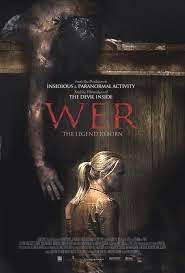
Wer (2013)

I’m reasonably sure that this movie would have more of a following if it wasn’t saddled with such a clunker of a title.

Wer? Really, that’s the best we can do?

It’s a shame because Wer is top-shelf lycanthrope mayhem all day, every day.

Co-writer and director William Brent Bell wisely saved his nickels and dimes by filming in Romania and calling it France, where American lawyer Kate Moore (A.J. Cook from Criminal Minds) is defending a hulking peasant (Brian Scott O’Connor) accused of tearing up a family of tourists. Limb from limb.

And taking huge bites out of them.

The makeup and prosthetic work by Almost Human Inc. is worth the price of the ticket. The scene when Kate examines the shredded remains of the victims is startlingly savage. Seldom has bodily harm been rendered in such vicious detail.

A shaking hand-held camera gives Wer the appearance of a found footage police procedural, with lengthy talking sequences that flare into bloody chaos without warning.

Now that’s what I’m talking about. Modest movies that turn out to be way better than I expect are the coin of my realm. They’re my jam.

Now if you’ll excuse me, I’m going to make some toast.

Editor’s Note: Come and have a hang at our new Facebook site!

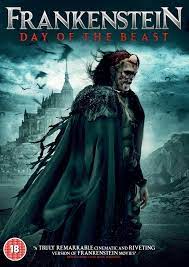
Frankenstein: Day Of The Beast (2011)

Frankenstein: Day Of The Beast is the low-budget shocker being watched by the doomed audience in The Last Matinee when the maniac (played by Ricardo Islas, the writer-director of this film) goes on his cinematic killing rampage.

Truth be told, I was intrigued enough by the footage to give it a shot, and it turned out to be worth the effort.

In this version of the Frankenstein tale, Victor Frankenstein (Adam Stephenson) has fled to a remote island to wed his beloved Elizabeth (Michelle Shields).

Victor has employed a squad of mercenaries to keep her safe, but the monster (Tim Krueger, who’s quite good) has promised his creator that he would appear on his wedding night to take her.

Islas stays fairly faithful to Mary Shelley’s source material, but departs from the template in significant ways. This incarnation of the Frankenstein Monster is pure evil, with no grey area. He kills in extravagantly brutal fashion, bifuracting one unlucky guard with intestines on full display. Another gets his spine removed, and a blind man is forced to swallow his own cane.

The monster also eats human flesh, so there’s that. Apparently mangling his victims wasn’t sufficient to inspire terror. This guy bites faces off and rips throats out with his teeth.

How downright monstrous!

As the title implies, Frankenstein: Day Of The Beast is a more elemental take on a familiar story, one that doesn’t hold back on the blood and guts, and allows no sympathy for the monster, who doesn’t speak, but occasionally laughs cruelly.

The aforementioned budget limitations show up in various forms, from flimsy sets to terrible acting by supporting characters, but Islas clearly understands what makes Frankenstein’s creation so damned frightening. He is a relentless enemy who can’t be destroyed.

So what are you gonna do? As the vengeful Mohawk says to Max in The Road Warrior, “You can run, but you can’t hide.”

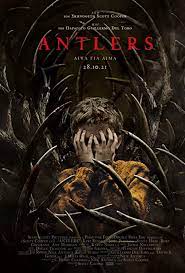
Antlers (2021)

“It all makes sense, you see. I mean, our ancestral spirits never died. They were here long before we were, and they’ll be here long after we’re gone. But now, they’re angry.”

Dark times call for dark movies. Antlers is a coal mine at midnight.

The opening observation comes from Warren Stokes (Graham Greene), the former sheriff of Cispus Falls, a blighted Oregon town where mutilated citizens are appearing with alarming frequency.

The current sheriff, Paul Meadows (Jesse Plemons), is seeking counsel. He’s out of his depth and confused, hypothesizing a cougar or bear attack is responsible for the mayhem.

Meanwhile, Paul’s schoolmarm sister Julia (Keri Russell) is trying to figure out why her sullen student Lucas (Jeremy T. Thomas) is drawing pictures of demons and monsters.

In Antlers, all the dots connect to the decline of the planet’s structural integrity. Our systematic “pillaging of Mother Earth” has opened the door to indigenous spirits, most notably the Wendigo, a voracious cannibal that inhabits evil men.

Just below the narrative surface of this riveting supernatural thriller lurks mounting evidence of an infected society that has no access to spiritual vaccine.

Cispus Falls is a moribund mining town, an urban landscape littered with old machinery and empty storefronts, where the only thriving business is meth production.

Deep-rooted trauma is the norm. Julia, a recovering alcoholic with her own childhood of parental abuse, eyes liquor bottles at the store with palpable longing, searching for strength and comfort from any source.

In the background, the news drones on about the opioid epidemic, failing industries, and environmental collapse.

Kerri Russell owns her role as a damaged, unhappy woman who realizes her altruistic motives for helping Lucas are likely futile, but it’s marginally better than giving in to the despair that runs deep in these parts.

She recognizes the telltale signs of abuse in Lucas’s haunted face, a reflection of a home life that is literally hellish. He is a child doomed to maintaining the monstrous status quo at his house, while his younger brother Aidan (Sawyer Jones) is held captive by something that used to be their meth-cooking father (Scott Haze).

The thing Lucas calls “New Dad” is growing increasingly hungry and his grocery list requires fresh meat.

“Is God really dead?” Aidan asks Lucas. “Daddy said God is dead.”

Director Scott Cooper, working alongside executive producer/malevolent maestro Guillermo del Toro, has constructed a thoroughly ravaged world with precious little light—one that is bone-chillingly familiar.

Hey, isn’t that our civilization crumbling?

There are moments of brain-freezing terror in Antlers, including horned creature craft with genuine nightmare potential, a del Toro calling card.

Yet it’s the overall tone that proves the most unsettling factor, because it presents a terminally ill worldview, a pandemic of the soul that never ends.

There may be small victories to be had, individuals worth saving, but the inescapable conclusion is that humanity is fighting a losing battle with havoc we’ve wrought on ourselves.

In nearly every scene, Julia and Paul (the good guys) are stymied by inadequacy and failure. The coroner is apologetic because he can’t explain how the victims were killed. A doctor is unable to predict if a patient will recover. The harried school principal (Amy Madigan) tells Julia she isn’t allowed to intervene on a student’s behalf.

Even Paul admits he was reluctant to take the sheriff’s job, which mainly consists of evicting local homeowners.

“Everyone thinks these problems are just going to go away, and we know that they don’t,” Julia tells him. She could be referring to any number of societal symptoms depicted in Antlers.

The wound runs too deep, there’s no saving this patient. The downward spiral is well under way and no one’s getting off.

Hope you like it bleak.

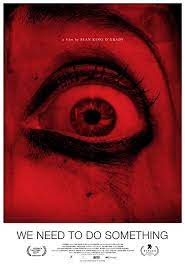
We Need To Do Something (2021)

There are moments in We Need To Do Something in which director Sean King O’Grady and writer Max Booth III manage to make us forget that the movie is mostly about an annoying family trapped in their bathroom.

There is a powerful storm. Dad, Mom, daughter Melissa, and son Bobby hole up in the master bath. A tree crashes through the roof imprisoning the bickering clan in the can.

The presence of a rattlesnake in the restroom livens things up a bit, and provides some semblance of actual danger.

Further, the subplot about Melissa (Sierra McCormick) and her girlfriend Amy (Lisette Alexis) casting a spell on a nosy classmate that apparently results in the Earth’s destruction is intriguing, and could have been developed.

However, there is just so much horror that can be plumbed from living in a loo. Robert (Pat Healy), the twitchy family patriarch proves to be utterly useless in a crisis, impotently raging around the room, making life miserable for everyone—including the viewer.

As the face of toxic masculinity, Healy is an angry, unstable child whose very presence makes any situation 100-times more unbearable.

This gets old real fast.

Diane (Vinessa Shaw), Robert’s wife, is preoccupied with buoying Bobby’s (John James Cronin) spirits, particularly after the latter’s encounter with the roving rattler.

Single-set monotony takes over, and the lack of legitimate threats beyond Robert’s rapid decline into lunacy (it was a short trip) do not inspire much in the way of suspense.

Will Melissa cop to the crime of crashing civilization? Will anyone survive the dangers lurking beyond the camera’s reach? Will someone please kill Dad?

In the final reckoning, We Need To Do Something falls short of achieving any sort of entertainment momentum, since it’s forced to rely on offscreen developments to move the story forward.

Rather than a movie, Max Booth’s script suggests the sort of exercise in stale irony that one endures in community college playwriting classes.

Feel free to skip this class. You won’t learn anything.