The Gorge (2025)

So many genres, so little time.

When the creative team in charge of a film project gets carried away trying to please each and every imagined audience member, the results are usually a load of crap.

The Gorge, written by Zach Dean and directed by Scott Derrickson, seemingly utilizes this kitchen-sink approach, tossing a zesty, messy melange of romance, action, horror, and conspiracy theory that’s a just a tad over two hours in length.

And somehow it works pretty damn well as a super-engaging popcorn flick!

Levi (Miles Teller) and Drasa (Anya Taylor-Joy) are two highly trained snipers from different countries assigned guard duty at opposite watch towers on either side of the enormous and mysterious titular gorge.

The mercenaries are armed to the hilt and instructed not to contact each other, but the need for company proves too much for Levi and Drasa, and soon they’re flirtatiously firing rounds, demonstrating their skill and accuracy, while a Ramones record plays.

“I guess this qualifies as a Meet Cute,” I whisper to Mrs. Sharky.

Though separated by a chasm that occasionally spits out monstrous hybrid humanoids called Hollow Men, the hired guns overcome logistical challenges and use a zip line to hook up and become not just a couple, but an elite and capable survival team.

This comes in handy when their military handler (Sigourney Weaver) decides they can no longer be trusted.

Once the protagonists figure out that this version of the future has no future, their decision to join forces is logical and inevitable. Besides, they’re a hot couple, and Drasa is clearly the aggressor, eventually rescuing Levi from an unexpected plummet into the abyss.

Through waves of decent monster attacks and fabulous fire fights, we actually grow fairly attached to Levi and especially the badass Drasa, which helps keep the viewer grounded during the mood shifts and infrequent talky interludes.

The Gorge is also a very impressive example of world-building, an important component to any successful popcorn operation. The mise-en scene has been carefully considered providing a foundation of future realism that looks like it was designed by the prison industrial complex.

No wonder no one want to hang around!

Ouija: Origin Of Evil (2016)

Prolific genre dynamo Mike Flanagan (Haunting of Hill House, Oculus, Dr. Sleep) created this prequel to Ouija (2014), and consensus opinion holds that Ouija: Origin of Evil, is far superior to its predecessor, though that may have more to do with the “meh” quality of the original material, rather than an auteur’s magic wand.

We travel back to the year 1967, where widowed mother Alice (Elizabeth Reaser) makes a modest living as a phony fortune teller, aided in her deceptive practices by daughters Lina (Annalise Basso) and Doris (Lulu Wilson).

Alice and eldest daughter Lina consider adding a Ouija board to their seance shtick, but all too quickly this occult stepping stone gets a grip on Doris, the youngest, resulting in a once-innocent child playing host to a number of spiritual entities, good and bad, including her late father (good) and a fiendish Nazi doctor (bad).

Flanagan and cowriter Jeff Howard weave together enough plot points for seven sweaters, but don’t sweat the details. Ouija: Origin of Evil is trademark Flanagan territory, as a fractured family faces a perilous paranormal presence coming from inside the house.

The technicians Flanagan puts to work on his projects are first-rate, intuitively establishing the tone, time, and terroir in which his particular domestic terror can take hold of hearts and spines.

Here, art director Alberto Gonzalez-Reyna and cinematographer Michael Fimognari mute the sunny ’60s California scenery in dark shades of green and gold, so wardrobe colors appear especially vivid and blooming—a keen counterpoint to the carnage being carried on behind closed doors at the local fortune teller’s house!

Despite being a minor entry in Mike Flanagan’s filmography, Ouija: Origin of Evil is a compelling and highly watchable film in its own right, and needn’t be seen in the company of any other Ouija entries in the hopes of additional illumination.

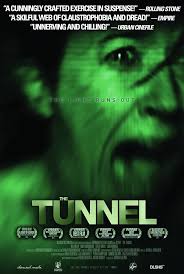
The Tunnel (2011)

An investigative reporter and a film crew descend into the darkness looking for a story—and find a doozy.

The Tunnel is a supremely creepy Australian found footage/creature feature that takes place in a vast network of subway tunnels beneath the streets of Sydney. Natasha Wagner (Bel Delía) is an ambitious journalist with water on the brain.

Specifically, Natasha wants to know why the city government abandoned a plan to recycle millions of gallons of water located in an old underground reservoir, so she picks up a map and convinces her trusty team of techs to have a look around down there and roll cameras.

Instead of civic corruption, Natasha, cameraman Steve Miller (Steve Davis), sound guy Jim “Tangles” Williams (Luke Arnold), and unit producer Pete Ferguson (Andy Rodoreda) uncover evidence of homeless folks living in the tunnels, as well as a fearsome predator that’s decimating their numbers.

Director Carlo Ledesma keeps the pace breathless and chaotic, dumping the cast in a very dark place. Fading sources of illumination prove particularly vexing to the trapped investigators, who have deduced that whatever manner of beast is stalking them, it’s frightened of light.

As is the case with media outlets these days, the whole case gets shut down at the behest of powerful interests, despite a few pesky survivors with some questionable footage.

And they never did find poor Tangles!

The Visit (2015)

As someone rapidly approaching senior citizen status, I get why old people are perceived as weird and scary.

The aging mind is undependable, and at times downright incomprehensible. With life expectancy continuing to rise, the question becomes: What do we do with all these crazy old coots?

It’s clearly something that occupies the mind of speculative filmmaker M. Night Shyamalan, as he addresses the issue in The Visit, as well as in Old (2021). Let’s call it Golden Age Anxiety.

Becca (Olivia DeJonge) and her rap-happy kid brother Tyler (Ed Oxenbould) are spending a week with their grandparents on the family farm.

So far, so good.

Mom (Katherine Hahn) has been estranged from her conservative parents for many years, so the teen travelers have never actually met Nana (Deanna Dunagan) and Pop Pop (Peter McRobbie), and have no idea what’s in store for them.

An aspiring documentarian, Becca brings along a couple of cameras to commemorate the reconciliation of a fractured family, and provide the found footage foundation of Shyamalan’s feature.

Suffice to say that The Visit doesn’t go as planned. As Becca and Tyler try their best to get better acquainted with the kinfolk, the latter just keep turning up the freaky to a point that becomes impossible to ignore.

They are given a 9:30 curfew, and instructed to stay in their rooms, lest they witness Nana screaming and vomiting in the nude, or Pop Pop taking another trip out to his locked shed.

Being inquisitive kids, Becca and Tyler investigate further, discussing their discoveries with Mom over Skype, rightfully concluding that something is strangely amiss.

As the cuckoo grandparents, Peter McRobbie and Deanna Dunagan are captivating, both in terms of their gamut of lunacy, and increasingly failing attempts to conceal the craziness.

Often funny, a little sweet, and madly unpredictable, The Visit culminates in a 100 percent slasher movie ending, that should feed those hungry for mayhem after numerous attempts at domestic bonding.

Not the most creative solution, but a satisfying one.

Shyamalan doesn’t always hit what he’s aiming for, but he capitalizes on the singular terror experienced by kids upon meeting batshit relations for the first time—and realizing that they’re trapped with them.

Recommended.

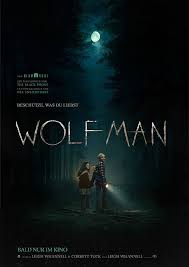
Wolf Man (2025)

The most impressive thing about Leigh Whannell’s Wolf Man is that it got made.

Whannell, the Australian horror maestro who introduced us to the Saw and Insidious franchises, clearly has serious show biz clout to get this turkey green-lighted.

This was obviously a “troubled” production.

Blake (Christopher Abbott) is a stay-at-home dad married to busy magazine writer Charlotte (Julia Garner). While Charlotte earns bucks, Blake looks after their daughter Ginger (Matilda Firth), until he’s notified that his father Grady (Sam Jaeger) has been declared officially dead, after being reported missing for several years.

Now the owner of the family farm, Blake drags his dubious brood out to the Middle of Nowhere, and in real time they are attacked by a strange creature (see the film’s title), and spend the evening running and hiding from same.

Meanwhile, Blake, the dutiful husband and father, begins to change into something remarkably similar to the beast that’s stalking them.

Wow. Didn’t see that one coming.

There is little dialogue, which lends itself to Mystery Science Theater ad-libbing during the howlingly bad action sequences, such as Blake gnawing on his own arm, and two guys in simian rubber masks wrestling on a dark floor.

What are we watching?

Wolf Man is simply godawful, and since Whannell directed and cowrote this mess, he gets the lion’s share of the blame.

It’s a complete waste of Julia Garner’s talents, and hopefully won’t interfere with her trajectory as one of Hollywood’s best young actresses. She’s given very little to do besides wander through the night with a flashlight.

I’ve said this before when reviewing werewolf movies and it certainly applies to Wolf Man: If you can’t come up with better transformation effects than The Howling or American Werewolf In London—both of which were made 43 years ago!—then don’t bother.

The Secret Of Crickley Hall (2012)

Sounds like a Hardy Boys Mystery that never made it to the editing stage, but The Secret Of Crickley Hall is a cracking good BBC miniseries (three one-hour episodes) based on the book by James Herbert.

Written and directed by Dr. Who alum Joe Ahearne, the story straddles past/present timelines, spilling the dramatic details of the Caleigh family, who are hoping for a fresh start in the North of England after the disappearance of their son.

The idea of turning the page on tragedy seems highly unlikely at this location, as Crickley Hall turns out to be a former orphanage that was overseen by seriously damaged WW I veteran Augustus Cribben (Douglas Henshall) and his seething sister Magda (Sarah Smart).

In keeping with the popular paranormal theory that those who’ve experienced loss are more sensitive to the plight of the deceased (The Changeling, et al), motivated mom Eve Caleigh (Suranne Jones), intuits that her still-missing child is somehow connected with the orphans who died in a flood at Crickley Hall during WW II.

This leads to a parallel narrative from the past about Nancy Linnet (Olivia Cooke), a determined young teacher hired to educate the wayward waifs of Crickley Hall. Instead, she uncovers terrible abuses visited upon the children by the cruel Cribben siblings, who unfortunately remain above suspicion in their community.

With a few splashes of redemption, revenge, and romance, and featuring a realistically frightening ghost, The Secret Of Crickley Hall is well-above-average haunted house hoopla handled by a cast of top drawer talent that includes David Warner and Donald Sumpter in crucial character roles.

Ghosts may or may not be scarier in the English countryside, but their tales fit this bleak territory like a black glove.

Recommended!

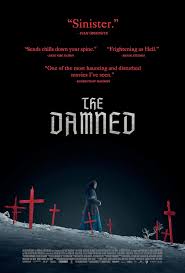
The Damned (2024)

Cinema doesn’t get more international than The Damned, a UK-Belgium-France-Iceland coproduction, filmed in the furthest reaches of Iceland’s Westfjord’s region, as convincing a frozen hellscape as you’re likely to find this side of Ice Station Zebra.

The Damned takes place in the latter part of the 19th century in a remote arctic fishing camp, where a small but determined band of anglers grind out a meager existence wrangling fish from the unforgiving sea.

The recently widowed Eva (Odessa Young), the owner of the fishing boat (and possible Vermeer model), calls the shots around the camp, though she often appears lost and childlike in the presence of her crusty crew.

One particular day, they spy a ship foundering on the rocks, and after some debate, decide that they can’t rescue survivors due to their own lack of food and supplies.

It’s this weighty decision that places the crew in metaphysical danger, as superstitions about vengeful drowned sailors take root in the hearts and minds of the simple fisher folk.

Devotees of the winter horror sub-genre will be right at home amongst the wind, snow, and angry tides, as reason gives way to fear and guilt in the face of powerful elemental forces, all captured by Eli Arenson’s breathtaking cinematography. Skating effortlessly between warm firelight intimacy and the brutal splendor of the Icelandic tundra, the camerawork underscores nature’s icy indifference to human ambition.

Director Thordur Palsson allows the chilly isolation to exacerbate the dread that haunts the crew until something has to give—in this case, sanity. The Damned delivers demons that we didn’t expect, in a winter wonderland of lost souls on thin ice.

Stoke the fire and get another blanket in case of the shivers.

Hush (2016)

Tonight! The War Between the Sexes! Right here on Pay Per View! Let’s give it up for Hush!

Writer-director Mike Flanagan (Haunting of Hill House, Fall of the House of Usher, Midnight Mass, Oculus) and his wife, writer-actress Kate Siegel constructed this lean, mean thriller about a deaf-mute author fighting for her life against a sadistic killer.

Hush also makes sense as an anxiety inducing metaphor about unwanted male attention, as Maddie Young (Siegel), a best-selling author, can’t even have a reasonable expectation of privacy IN THE MIDDLE OF A FRIGGIN’ FOREST!

Maddie lives in a nice house (with lots of doors and windows) somewhere in the deep woods. A bout with meningitis at age 13 has left her without speech and hearing, but she has a crafty writer’s brain that never stops ticking, as we squeamishly witness her reviewing potential escape options that never materialize.

The plucky scribe finds herself trapped in her bucolic hacienda by a masked madman (John Gallagher Jr) with a crossbow, who just recently finished an evisceration job on Maddie’s neighbor (Samantha Sloyan).

Who? Why? Not important. Perhaps Cupid’s in a real bad mood today. Flanagan and Siegel play the cat-mouse game to the hilt, which usually ends up plunging into someone’s neck or torso.

Nosey neighbors don’t fare well in Hush, but the timely arrival of a cat named Bitch provides Maddie with enough of a diversion to go on the offensive against toxic masculinity. The killer reminds Maddie that he’s enjoying himself, and that he can take her whenever he wants.

The maniac clearly derives grim pleasure in cutting off her limited means of communication (he also collects cell phones) and watching Maddie react to the mounting stressors he places upon her.

The entire movie is gaze-oriented. Maddie is either keeping track of her assailant roaming around in her yard (he makes no effort at stealth or concealing his identity, which makes the situation even more dire)—or the killer is feverishly observing Maddie as she tries to hide and barricade herself inside a house with too many access points.

As I mentioned, Hush is all killer, no filler. No competing storylines, no comedy relief, no shaky camera tomfoolery. Just two people (one of whom can’t call for help) airing their differences. To the death.

This is what happens when you don’t respect boundaries.

The Substance (2024)

Your attention horror shoppers!

The Substance should be seen, full stop.

Nominated for five Oscars including best actress for Demi Moore? As it should be.

French writer-director Coralie Fargeat (Revenge) turns up the rage to Nova, and opens the taps at the blood bank in a body horror spectacle that will likely leave a bruise on your soul. It’s definitely worth the uncomfortable moments.

Fargeat gives us the impression that The Substance is another tale of dashed dreams in the Hollywood meat grinder, and it certainly is. In fact, the meat grinding has never been portrayed in such glaring and grotesque detail.

Elizabeth Sparkle (Demi Moore) is a beloved fitness guru who has gotten too long in the tooth to pump up sponsor sales. She is unceremoniously dumped by the venal head of the network (Dennis Quaid), who announces his plan to find a younger model, while angrily taking a pee.

Fearing for her fading career, Sparkle takes a chance on a miracle rejuvenation drug called The Substance, which promises a “a younger, better version” of yourself.

Her decision to join the program, which includes a grumpy operator, a squalid post office box, hellish injection regimen, and the gradual draining of her own vitality, is the trap springing shut.

It’s only proper that a trouper like Demi Moore has enough presence and pathos to make her vainglorious plight extremely moving, as she’s forced to grapple with her younger, better self (Margaret Qualley) for limited consciousness.

Of course, things get worse, and by the time the finale rolls around, with a mutated star trying to host a live New Year’s Eve special, it’s a straight-up Frankenstein heartbreaker, with an angry mob in pursuit.

Each time Coralie Fargeat reaches a narrative turning point in The Substance, she amps up the gore to the point of anguish, and I admire that audaciousness in the telling of this particular story.

Fargeat never delivers half measures or wimps out in any way, and in Demi Moore she has the perfect vehicle to bring home a brutal point.

“Women are bloody,” my wife reminds me. “Birth, menstruation, it’s gross.”

I get the picture, and so will you.

Out Of Darkness (2022)

If you have a craving for rugged terrain, Out Of Darkness is your oyster.

Otherwise, patience is required for this impressive-looking hero’s journey into the unknown against an unseen enemy.

About 45,000 years ago, a small tribe of prehistoric explorers wash up on a distant inhospitable shore, determined to carve out a future for themselves.

Fortunately they speak in subtitles or we’d be as lost as they are!

The group is led by alpha male Adem (Chuku Modu), an arrogant hothead long on bravery and short on common sense. When they determine that something is stalking them, their search for food and shelter takes on a sense of urgency, especially after Adem’s son Heron (Luna Mwezi) gets snatched away from the campfire.

As the not very tightly-knit unit comes unraveled, it’s up to Beyah (Safia Oakley-Green), a relative stranger among them, to figure out what nature of beast is decimating the tribe.

Shot in Scotland, the location scenery is the best thing about Out Of Darkness. The landscape is pure primeval desolation, and proves to be a mightier foe than the “demon” that’s assailing the company.

The atmosphere of hiding and hunting is fairly absorbing, but the pace is painfully slow and the ending is a tepid letdown that should rightfully inspire shouts of “What? That’s it?” from the home audience.

Out Of Darkness fails to live up to the potential of its savage setting—instead we get a fossilized lesson about living and dying by the sword. Or in this case, the spear.