The Resident (2011)

It’s Hammer Time!

A release from the revived (and revered) Hammer Films imprint, The Resident traces its ancestry from gothic mysteries, slasher cinema, erotic thrillers, and Hitchcock’s Psycho.

It’s even got Christopher Lee in a supporting role! Doesn’t get more Hammer than that.

Oscar winner Hilary Swank portrays Juliet, a frazzled ER doctor on the fly from a failed relationship. In search of new lodgings, she chances upon an old building with a spectacular view of the Brooklyn Bridge, owned by Max (Jeffrey Dean Morgan), a charming landlord who resides on the premises with his ailing grandfather August (Christopher Lee).

When Juliet flirts with and kisses Max, it seems perfectly natural. He and Juliet are both attractive and successful people, their mutual interest is a given. She’s also lonely and drinks too much wine.

Finnish writer-director Antti Jokinen infuses the standard melodrama in The Resident, with a willingness to get uncomfortably close to his characters. Juliet isn’t sleeping well and can’t shake the feeling that someone is invading her space.

It’s not much of a mystery, as we learn that Max, the guy who owns the building, is indeed a highly disturbed individual, but perhaps not unreasonably so. It could be argued that Juliet’s reckless behavior with the heart of an unstable suitor is the cause of all the misery.

“You kissed me first,” he reminds her. And when Juliet has the nerve to get back together with her asshole ex, the wheels really come off.

Jokinen’s use of floating and flying camerawork is absorbing, making a mostly single-set apartment appear to be filled with more passages and secret doors than the Vatican.

The Resident is better than it has a right to be, largely thanks to Jeffrey Dean Morgan’s impressively layered performance as Max, a tortured soul who maybe just wanted to meet a nice girl. And a doctor to boot!

Morgan isn’t shy about delving the creepier depths of Max’s obsession, whether it’s licking Juliet’s hand from beneath her bed while she sleeps, or having a little cuddle party with her clothes, he’s clearly an actor unafraid of committing to a role.

Anyone expecting an arrogant and antagonistic villain in the vein of The Walking Dead’s Negan will, I thnk, be surprised by Morgan’s ability to generate menace, revulsion, and sympathy—right up until the bloody nail-gun finale.

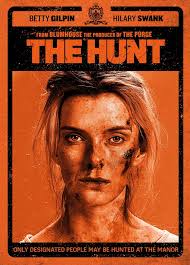
The Hunt (2020)

Rich people hunting poor people for sport. Yeah, so what?

Richard Connell’s short story, The Most Dangerous Game, featuring a Russian nobleman tracking an American captive on a private island, is the source material for this concept, and it was published just over 100 years ago!

A familiar premise, but in The Hunt, it’s all about where you stand politically that determines your fate. Always room for innovation.

The setup is pure boilerplate, as a dozen seemingly random folks are kidnapped and transferred to a private hunting reserve called The Manor, where they’re given weapons to defend themselves against their affluent captors.

But something’s just a little off. The victims are not what they seem, and neither are the hunters.

Writers Damon Lindelof (Lost) and Nick Cuse drop little hints throughout the film about who exactly is hunting who, and the reveal is both unexpected and fertile ground for hilarity, as liberals, who aren’t all that competent with guns, try to exterminate right-wing pundits, podcasters, and NRA supporters.

The Hunt leaves no room for good guys and bad guys, but Crystal (Betty Gilpin), an ex-military badass who was captured by mistake, takes the entire operation down, culminating in vicious hand-to-hand combat with Hilary Swank, the mastermind of the whole scenario.

The action sequences are tightly and efficiently orchestrated, particularly during a deadly shootout in a Mom & Pop grocery store, where in between salvos of bullets, a shopkeeper (Amy Madigan) wonders why one of the gunmen (Ike Barenholtz) feels the need to own so many guns?

Director Craig Zobel maintains a whippingly brisk level of excitement peppered with acidic observations from everyone involved, which should lead to repeat viewings in order to extract hidden gems.

Need to mend some fences after the election? The Hunt should satisfy both ends of the American politcial spectrum, and most points in between, as long as we haven’t lost the ability to laugh at our foolish selves.

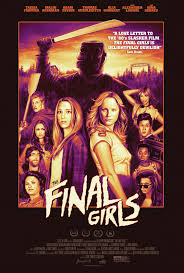
The Final Girls (2015)

It started with Back to the Future, of course, the idea that a troubled teen could fix the present by kicking ass in the past.

The Happy Death Day series introduces horror into the equation, and recent stabs at the genre include Totally Killer, a film reviewed here.

The Final Girls adds even more spice to the stew, as Max (Taissa Farmiga), grieving the death of her Scream Queen mother, Amanda Cartwright (Malin Ackerman), gets dumped into the early 1980s after a catastrophe at a screening of Mom’s most famous feature, Camp Bloodbath.

Director Todd Strauss-Schulson and writers Joshua John Miller and M.A. Fortin have a ball with a group of contemporary adolescents spun 40-plus years into the past to be fodder for a Jason Voorhees-style killing machine at a doomed summer camp.

Like the Scream franchise, the ability to adapt and survive by figuring out the “rules” of a slasher movie is the name of the game in The Final Girls, but the action also affords Max the chance to not only reconnect with her mother, but to act as a sort of spiritual advisor to a character carelessly described as “the shy girl with a guitar and a clipboard.”

Max and her friends travel even further back in time to witness the origin of the camp killer in the 1950s, and they all notice when the world around them is in black and white. One of them reckons she’s having a stroke because she’s suddenly colorblind!

The cinematography by Elle Smolkin also grabs our attention with a bevy of unbelievable shots, such as the killer, set ablaze, chasing the kids in slow motion. Or the apocalyptic purple sky during Max’s final battle.

There’s frightening fun in abundance, but there’s also inside jokes about lame movie stereotypes such as the airhead slut Tina (Angela Trimbur), who must be tied up to keep her from stripping off her clothes and summoning the killer.

Adam Devine from Workaholics delivers boffo laughs as Kurt, a one-dimensional stud from Hollywood’s disposable character drawer, who somehow makes his quest for endless nooky a righteous cause.

The Final Girls is an excellent example of a teen time-travel traumatic adventure. Maybe one of the best.

The Skeleton Key (2005)

Yes, the ending of The Skeleton Key is kind of a bummer. Think of it as social justice from beyond the grave.

The luminous Kate Hudson headlines as Caroline, a big-hearted hospice care worker hired to look after catatonic Ben Devereaux (John Hurt), a senior citizen sucking his last few breaths in a decaying plantation house somewhere in the Louisiana bayou.

Caroline’s routine is not made any easier by the presence of Ben’s overbearing wife Grace (Gena Rowlands), who rules the swampy mansion with an iron will in service to an arcane agenda.

Director Iain Softley (Hackers, Backbeat) and writer Ehren Kruger (The Ring, Scream 3) successfully stitch-up a scary Southern gothic, placing the very curious Caroline smack-dab in the middle of a mystery that will test her to the limits, and then some.

Softley deftly guides his camera through keyholes and tumbling tumblers as Caroline unlocks the secrets of a blighted house, mostly kept in the attic. It could be argued that she makes a few too many discoveries for her own good.

John Hurt has no dialogue, yet his face is required to reveal multiple layers of unexpressed anguish, as a man who literally hasn’t a clue how he got here. Gena Rowlands, who recently passed away, is highly animated as a mad matriarch wielding sorcerous formulas to prolong her already very long life.

As previously noted, the finale of The Skeleton Key is decidedly downbeat—until we consider the context of the tragic events that caused the curse. Then, maybe, it’s not so bad.

While you sort out your feelings, please enjoy this crackerjack feature.

Oddity (2024)

Irish filmmaker Damian McCarthy made a bit of a splash with his debut, Caveat (2020), an indie-horror shocker that more than recouped the measly 250,000 pounds spent on its production.

Oddity is McCarthy’s second film, and the raw talent revealed in Caveat gains both power and polish, anchored by an incendiary performance by Carolyn Bracken, as twin sisters Dani and Darcy Timmins—the former a murder victim, the latter a blind collector of cursed objects.

Darcy decides that her sister’s murder at the hands of an escaped mental patient (Tadhg Murphy) is just a little too coincidental, considering her sister’s husband Ted (Gwilym Lee) is a psychiatrist at the nearby asylum from whence the killer came!

As if that weren’t enough to put a bee in her bonnet, Darcy discovers that Ted has a new girlfriend (Caroline Menton) less than a year after her sister’s brutal death by bludgeoning.

Through a magic ritual involving the glass eye of the alleged killer, Darcy figures out who the real culprits are and rebrands herself as an instrument of vengeance.

The obvious care and attention to detail provided by writer-director McCarthy is a pleasure to behold—the atmosphere of the mostly single set of a remote country house successfully develops layers of menace with each scene.

The narrative is bone simple, as Darcy arranges a sinister fate for the conspirators responsible for her twin’s demise, disguised as a bizarre housewarming gift: a life-sized wooden man that appears to be distressingly ambulatory.

The actual business of the revenge plot isn’t terribly intricate, but McCarthy consistently avoids the obvious choices, and the viewer is all the better for it.

Oddity is a first-rate horror experience that belies the lack of a body count, and indicates that Damian McCarthy is emerging as a confident comer in modern genre filmmaking.

Don’t believe me? See for yourself!

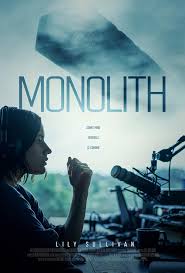
Monolith (2022)

An investigative journalist (Lily Sullivan) has suffered a career setback. Hoping to salvage her reputation with a new podcast about unexplained phenomenon, she retreats to her parents’ posh pad in the Australian wilderness to brainstorm some ideas.

“I need a story,” she tells her boss on the phone. To paraphrase Apocalypse Now, for her sins, they gave her one.

Monolith, written by Lucy Campbell and directed by Matt Vesely, is confined to one location, with a single actress interacting with other characters online and over the telephone.

The journalist, at first reluctantly, and then with single-minded vigor, pursues a juicy conspiracy story revolving around the mysterious distribution of “black bricks” that exert a kind of power over those who receive them.

As she assembles and submits episodes of her podcast, her listeners begin to take notice, and soon her inbox is full of testimony from people who’ve had experiences with these bricks, the effects of which include visions, loss of appetite, cognitive decline, and occasionally a fatal illness.

As often happens with conspiracy cases, the reporter gets swept up and goes down a very deep, dark rabbit hole, that originates surprisingly close to home.

Lily Sullivan dramatically carries Monolith and she’s quite up to the task, as her increasingly odd situation requires a fully stocked arsenal of emotional firepower. She threatens, cajoles, pleads, and does a remarkable job inhabiting what appears to be a nervous breakdown of some sort, that also could be a fight for her very soul.

Sullivan’s transformation from a sulky ego-driven internet personality to an obsessed participant in her own developing story, is astonishing and completely believable.

Well worth the watch, in my opinion.

Abigail (2024)

“What are we talking about, like an Anne Rice or a True Blood? You know, Twilight? Very different kinds of vampires.”

So wonders Sammy (Kathryn Newton), one of a crew of professional criminals hired to kidnap the 12-year-old daughter (Alisha Weir) of a powerful crime boss.

This isn’t one of those vampire movies where the characters behave like they’ve never seen a vampire movie.

Quite the opposite, and directors Matt Bettinelli-Olpin and Tyler Gillett use the opportunity to remind us that maybe we don’t know shit about Nosferatu Nation.

“The thing about being a vampire is, it takes a long time to learn how to do the cool shit,” explains Abigail, the ballerina from hell at the center of the horror-thriller-comedy that bears her name.

Abigail is a blast, and way too freaking much fun not to earn my humble endorsement.

A group of Usual Suspects are promised $50 million to snatch the fancy dancing Abigail and bring her to a safe house to await a ransom payment from her father, Kristof Lazaar, a legendary criminal mastermind spoken of with Keyser Sozé reverence.

There’s Frank (Dan Stevens), the leader, a paranoid ex-undercover cop; Joey (Melissa Barrera), the empathetic army doctor trying to kick a drug habit. Peter (Kevin Durand), is a massive mob leg-breaker, Rickles (Will Catlett), a Marine sharpshooter, Sammy, the cute punky hacker chick, and Dean (Angus Cloud), a loose-cannon getaway driver.

The crooks, forced to hole up, quickly get on each others’ nerves with well-written, zesty crook dialogue leading us to believe we’re watching a hard-boiled caper flick, like, The Usual Suspects.

The similarities don’t end there.

As the captors settle in for a 24-hour babysitting gig, the frightened little girl reveals herself to be a vicious, sadistic bloodsucker who wants to “play with her food.”

We’re swept along as the tiny dancer turns the tables, easily terrorizing and dominating the band of seasoned professionals, usually accompanied by the thunderous strains of Tchaikovsky’s Swan Lake.

It is at this point that Abigail reaches its comedic zenith, and it’s a dilly.

Joey: Why didn’t she kill you?

Frank: She is fucking with us!

Joey: I’m guessing none of the weapons worked.

Frank: Well, the stake worked on my fucking leg, and she used the crucifix on Peter like a fucking pincushion and the garlic did fuck all!

Amidst the copious blood-letting , savage sucking, and decapitation, bargains are made and broken as further scheming by henchmen complicates the caper considerably.

And then her father shows up, and we get some tips on the finer points of parenting. Abigail moves at a breathless pace, only slowing occasionally for a tactical pause before further mutilation occurs.

I’m clapping. Really!

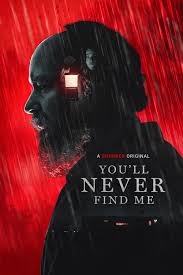
You’ll Never Find Me (2023)

Welcome to a dark night of the soul. Even bad people have them.

In some nameless Australian trailer park, Patrick (Brendan Rock) sits in his living room drinking whiskey. Outside, there is thunder and lightning, just like the night Frankenstein’s creature woke up.

Patrick is alone, but not for long.

A wayward woman (Jordan Cowan), lost in the storm and soaked to the skin, pounds on his door seeking a telephone.

“You’ve knocked on the wrong door,” Patrick tells the shoeless visitor.

Of course, things are not that simple. The wrong door depends on who’s standing where.

You’ll Never Find Me, written and co-directed by Australian newcomer Indianna Bell, is an intricately constructed two-person play, featuring unexpected shifts in the power dynamic taking place over the course of a dark and stormy evening.

It’s Patrick’s house, and he’s obviously a formidable man who prefers solitude. A drenched woman with no shoes can’t possibly be a threat.

So why is he uneasy?

Patrick explains to her that feral kids living in the park routinely beat on his door and run away. Even at two in the morning during a violent storm?

That’s enough to drive anyone mad.

Gradually, Patrick warms up to his guest and promises to help her, but he’s also clearly suspicious about her point of origin. She claims she fells asleep at the beach.

“The beach?” Patrick wonders aloud, as if he’d never heard the word.

Viewers are left to puzzle and ponder the scant information provided by these mysterious players, as both sides continue to distract and interrogate the other while passing the time with a few hands of cards.

We can tell from the outset that Patrick is a (deservedly) haunted man, and as the tension in the trailer escalates, a very big decision about his future—the same one faced by Hamlet—becomes an unbearable burden.

With its single set, minimal action, and tiny, terrific cast, You’ll Never Find Me is a harrowing and claustrophobic watch, with revolving doors of trust and deception leading to the ultimate question: To be or not to be.

Original, highly rewarding, and vigorously recommended.

I Know What You Did Last Summer (1997)

Has it really been 27 years since that summer when everyone knew what we did?

Type O Negative’s gloomy cover of Seals & Crofts’ “Summer Breeze” playing over the opening credits should have tipped me off.

There’s angst in the air, probably from Y2K, just over the horizon.

We’ve got major marquee value here. I Know What You Did Last Summer has a formerly fresh cast to die for, led by Sarah Michelle Gellar as Helen Shivers, a small-town beauty queen being chased by a vengeful fisherman decked out in foul weather gear.

Along for the ride is her angry douche boyfriend, Barry Cox (Ryan Phillippe), the group’s moral compass, Julie James (Jennifer Love-Hewitt), and Julie’s working-class beau, Ray Bronson (Freddie Prinze, Jr).

Best-looking cast ever assembled? No dogs in that bunch.

On a fateful Fourth of July evening, the four most attractive graduating teens in a North Carolina fishing community accidentally run over a pedestrian on their way home from a make-out sesh at the beach.

The formerly close-knit quartet quickly comes apart at the seams. They decide to ditch the stiff in the Atlantic Ocean, and seal their secret by vowing never to speak of this unfortunate incident again.

We skip ahead one year to find out that our pretty protagonists are suffering the effects of collective guilt as their lofty ambitions have fizzled out.

Instead of heading off to New York to become a star, Helen is stuck in town working at her family’s bridal shop. You know, in the fishing village.

Julie, the brain, is bombing out of college, and rich kid Barry is holed up at his parents’ house drinking and brooding. Ray is on a boat.

Then Julie gets a note with the title of the movie in it, and the band gets back together!

The script by Kevin Williamson (Scream) is played with a straight face, so anyone expecting witty insights into horror movie tropes, are simply left with a bunch of tropes to sort through.

The plot proffers suspects aplenty, red herrings, and a few surprises, but it’s all pretty standard cat-and-mouse revenge stuff that unfolds at a leisurely pace.

The kills, courtesy of a maniac mariner armed with a gaff hook, are nothing special, and the eventual unmasking contains zero drama.

Tack on a WTF ending and cue the music.

Most of the “entertainment” value derived from IKWYDLS comes from screen time spent with the spirited ensemble, but Gellar, Phillippe, and company aren’t given much to work with.

The principal characters are rough sketches from better movies, and our comely cast is mostly reduced to fleeing and fretting.

There’s something fundamentally wrong with seeing TV’s Buffy Summers afraid of some swab in a raincoat, and eventually being snuffed out in cursory fashion.

I get it, this is a different character, but even so…

Apparently there were sequels and a remake. I can’t imagine why.

Alone (2020)

“That’s one of the most stressful movies I’ve ever seen!”

This quote comes from Mrs. Sharky, who perhaps unwisely left the selection of this evening’s entertainment to me.

She says that Alone is like death by a thousand cuts and accurately represents the kind of micro-aggression that women traveling by themselves encounter far too often.

Sometimes it’s just assholes, sometimes it’s Ted Bundy.

Jessica (Jules Willcox) decides to pack up her troubles in a U-Haul and head for greener pastures after her husband commits suicide—a similar premise to Alex Garland’s recent film Men.

Instead of rest and recuperation, her healing mission gets derailed by a menacing motorist (Mark Menchaca) who proves harder to get rid of than a mosquito in your tent.

As previously mentioned, sometimes extreme tragedy and trauma are considered action items in the universe we live in, as the landscape shifts from indifferent to malign and the real character development gets started.

Alone director Johm Hyams (Black Summer) and writer Mattias Olsson devise a brutal (and stressful!) battlefield in the rainy tall timber of the Pacific Northwest.

There is very little dialogue and our protagonist spends much of her screen time hiding in the bush from a diabolical serial killer who knows the area well. Jessica’s propensity to make noise (heavy breathing, mewling whimpers) during these anxious interludes drove my wife nuts.

“Shut up, already!” she shouted more than once. “It’s easy to hide in the woods! Just shut the hell up!”

Pursuit, capture, escape, more pursuit, and murder are the forces at work here, and the tension levels go “pop” on several occasions, such as when Jessica agonizingly overhears her stalker talking jovially with his wife and child on the phone, telling them he’ll be home in a few days.

Take a break if you need to, but stick with it. Alone delivers a satisfyingly savage finale that will make your blood pressure dance the meringue.

Who says cinema should be relaxing? Take up yoga, or something.