Eden Lake (2008)

Talk about grueling; Eden Lake makes Straw Dogs look like a Frankie and Annette double feature. Writer-director James Watkins (The Woman in Black) methodically stokes the fear furnace until the tension is nearly unbearable—but you don’t dare look away.

By firmly establishing his protagonists as something more than pale quaking stereotypes, Watkins succeeds where Eli Roth and James Wan fall short; namely giving the viewer a good reason to be shocked and horrified about the cruelties inflicted on them.

In search of a romantic weekend, Steve (Michael Fassbender) and his girlfriend Jenny (Kelly Reilly) drive way out to hell and gone in the English countryside to camp on a secluded beach that’s about to become the centerpiece of a condo development. The couple incurs the wrath of local juvenile delinquents on BMX bikes and things rapidly spin out of control. Sure, it’s all a big joke, till someone gets hurt—or in this case, killed.

While Steve and Jenny definitely do not deserve their eventual fates, it can be rightly said that the awful shit pit they land in is due mostly to Steve being a colossal asshole who should have just walked away before everything went to hell. He has several chances to do so, but his idiotic pride won’t let him.

Eden Lake should look familiar: the plot is nearly identical to The Strangers (or Deliverance, The Hills Have Eyes, The Texas Chainsaw Massacre, and Wrong Turn, for that matter). Above all else, never ever pitch your tent in an isolated rural area, especially after witnessing the casual cruelty of the locals.

But there is a critical difference. There’s no explanation for the amorality and astonishing lack of empathy on the part of the teens in The Strangers. Boredom maybe? Gangsta rap? Point and shoot video games? Guess we’ll never know.

In Watkins’ film, the young miscreants are squarely under the sway of Brett (Jack O’Connell), the group’s psychotic Alpha male, who, like any good tyrant, whittles away his subjects’ humanity with bullying and threats. (I kept thinking of African child soldiers, forced under impossible pressure into remorseless killers.)

Each nightmarish escalation of the action is presented as a transgression that could have been avoided, but also as a disturbingly believable development, considering the hellish circumstances the characters find themselves in. And that is why Eden Lake is so damn terrifying and transfixing.

The Woman in Black (2012)

Also known as Harry Potter and the Angry Mother’s Ghost.

OK, I made that up, but The Woman in Black is noteworthy for reasons other than the presence of Daniel Radcliffe.

The movie marks the return of the Hammer Films imprint. As a lineal descendant of stately Brit-horror celluloid like The Brides of Dracula and Night Creatures, The Woman in Black is a worthy addition, with an expansive sense of dread invoked by proper gothic storytelling.

True, it comes rattling with haunted house tropes that are as well worn as Jacob Marley’s chains, but my admiration for its almost-gentlemanly ability to coax scares remains undiminished.

Radcliffe plays Arthur Kipps, a morose young attorney with a broken heart, who apparently has been slacking on the job after the death of his wife. Kipps is told by a less-than-sympathetic boss to get his lawyer ass to a remote village to sort out the paperwork of a recently deceased client.

Problem 1: The villagers remove the welcome mat upon his arrival.

Problem 2: The paperwork resides at Eelmarsh House, a decaying mansion that appears to be sinking into a swamp.

Problem 3: The house is fiercely haunted by the ghost of a woman who lost her son due to the negligence of the house’s previous occupants.

Problem 4: Whenever the ghost gets restless, village children start dying.

Problem 5: The ghost is restless now, so Kipps takes it into his head to play ghostbuster and lay the spirit to rest, perhaps in an effort to come to terms with his own tragic past.

The storyline advances in predictable fashion, but even so, it’s a reliable yarn that crackles like a fresh log on the fire. Rather than recalling vintage Hammer stock, I was reminded of The Changeling with George C. Scott; a familial tragedy with a supernatural revenge motif that’s told earnestly, but with skill and vigor.

However, I must point out one incredible scene that makes me wonder what director James Watkins and writer Susan Hill (based on her novel) were smoking at lunch break.

Kipps hits upon the outré idea of recovering the body of the young boy who drowned in the marsh, in an attempt to appease the pissed-off apparition.

So he and his friend Mr. Daily (Ciarán Hinds) go gamely splashing around underwater near the boy’s grave marker until they find and retrieve the muddy little bugger from his aquatic resting place.

For some reason, this sequence reminds me of poor Bela Lugosi in Bride of the Monster, forced to wrestle with an inanimate octopus in a cold tank of water.

I would just like to ask Watkins and Hill, who in the hell would ever entertain such an outlandish scheme for even a moment? Nobody, that’s who, and certainly not a clever young wizard.

The Messengers (2007)

Please tell me if there’s an existing category for this well-chewed cinematic scenario: Family suffers urban-based trauma and decides to relocate to a nice, quiet, haunted house in the boonies.

The Shining is the most obvious example, but there are dozens of pale imitations, including this quaint little Kristen Stewart vehicle from five years back.

Directed by Hong Kong power players the Pang Brothers (The Eye films, Bangkok Dangerous, among others), The Messengers is first and foremost, a serviceable platform for Stewart’s photogenic petulance, brought to the screen courtesy of the boffo box-office returns fromThe Twilight saga.

Rising to the challenge, the spunky teen actually carries the movie. Of course, when you’re costarring with bored stiffs like Dylan McDermott (Dad) and Penelope Ann Miller (Mom), you needn’t have been Lee Strasberg’s star pupil to dominate the screen.

To her credit, Stewart gamely steps up to the plate, exuding Buffy confidence while delivering her lines with Locklearian panache.

BTW, am I the only one who confuses Dylan McDermott with Dermot Mulroney? Surely not!

In The Messengers, Stewart stars as Jess, the rebellious progeny of McDermott and Miller, who are leaving the temptations of Sodom and Gomorrah in the rear-view mirror in order to get back to the land, specifically as sunflower farmers in rural Saskatchewan.

You gotta admit; that’s a new one.

Sure enough, the family’s optimism for a fresh start is soon crushed to crumbs when it appears that their rustic farmhouse comes with creepy crawly specters of the previous occupants, who fell victim to a case of Jack Torrance Syndrome, also known as Daddy’s Got The Ax, Again.

This was a Ghost House production and Sam Raimi was one of the executive producers. The Pangs do a decent job of combining their talent for weaving blankets of dread with Raimi’s trademark splashy spook-tacular shocks.

The Messengers is a 100 percent sustainable movie, since the entire plot consists of recycled materia. Even so, the filmmakers went to considerable effort to pique our interest, and we don’t have to work too hard to swallow the Ghoul-Aid.

Please read the last sentence in a Crypt Keeper voice. It sounds better.

At the moment I’m leaning toward “Buyer Beware” as the name of this genre. “Real Estate Gone Wrong,” maybe? “Glengarry Glen MURDER?”

Legend of the Bog (2009)

Bog men. Can’t say I’ve seen too many.

Hell, I don’t even know how to categorize it. I’m going to go with “monster” since bullets don’t stop them and they’ve been preserved in peat for 2,000 years—even though this particular “bog body” looks more like a cross between Tor Johnson and Curly Howard: In other words, big, bald, and on a mindless rampage.

An assortment of Irish folks, including an archaeologist (Jason Barry), his foxy assistant (Nora-Jane Noone, who has the best pouty face this side of Mila Kunis), and a bitchy, ambitious real estate developer (Shelly Goldstein), get lost on the moors (“I told ye to mind the moors!”) and incur the wrath of a recently resurrected 2,000 year-old-man bog man (Adam Fogerty).

The bog man is being hunted by Hunter (Vinnie Jones, a.k.a. The Juggernaut in X-Men: Last Stand), who is understandably disappointed to discover that his conventional weapons are useless against the massive savage. Can the archaeologist figure out how to return the brute to his soggy coffin?

The problem with Legend of the Bog is that it tries to cram too many elements into a modest story and the plot sinks like a weighted body into a bottomless mud hole. OK, so we have a reanimated bog man who needs to keep himself hydrated regularly to survive.

Fine. It’s part of his DNA or something.

Then, we find out the seemingly random bunch of victims aren’t random at all, a development that adds nothing whatsoever to our emotional attachment to them.

Why did writer-director Brendan Foley bother to somehow justify a killing spree by this hairless gorilla? Waste of time.

On top of that, we’re saddled with a “who cares” romantic subplot, and a shower scene that contains no nudity.

Again, why bother?

A Haunting in Salem (2011)

Take a teaspoon of The Shining, a sprinkle of The Amityville Horror, stir in a tiny budget, and garnish with an intense, odd-looking little actor as your leading man, and what have you got? I’d say a “C”, maybe a “C+”.

New sheriff Wayne Downs (Bill Oberst Jr.) moves his super-hot wife (Courtney Abbiati) and two kids to Salem, Massachusetts, and settles into an old Gothic manor house that comes with the job. (Nice perk!)

As luck would have it, the joint is haunted by the ghosts of 19 pissed-off witches who were burned and hanged back in the the late 1600s—by the town sheriff— and were subsequently laid to rest on the property where Downs and his brood are currently taking up residence.

The house also comes with a brain-damaged gardener (Where does he live?) who mumbles dire warnings about the ghosts and is soon dispatched by same.

The Realtor neglected to mention any of this, but it does have a lovely bonus space that could be converted into a guest bedroom or a cathedral for your Black Mass, your Satanic rituals, or whatnot.

A Haunting in Salem isn’t a memorable film. It’s a painfully familiar tale and director Shane Van Dyke (one of Dick’s grandchildren; another, Cary, plays a local cop) doesn’t have the money or the chops to bring anything new to this haunted house party.

The frights, in addition to being rote and predictable, are few and far between. The story is set in a huge, historic mansion, but it looks like the cast and crew were only permitted to shoot in a couple of the rooms, which becomes distracting once you notice that every scene takes place in either the kitchen, the bathroom, the hall, or the daughter’s bedroom.

It’s only the earthy presence of Bill Oberst Jr. as the determined sheriff that gives the flimsy plot a solid grounding. He’s a sawed-off plug of a man with curiously scarred features who perpetually looks like he’s on the verge of a very messy nervous breakdown.

Thus, he’s perfectly cast as the husband and father that the rest of the family believes is going cuckoo, so their unease around him is palpable.

Also, the body language between the sheriff and his tall gorgeous wife Carrie reveals that they’re definitely not comfortable around each other.

Any tension is good tension, I always say. Now make it work!

Tales From The Dead (2008)

An odd little film. It’s certainly J-Horror; the cast is Japanese, and so is the dialogue.

I’m just not sure why.

Writer-director Jason Cuadrado is American, his crew is American, and it’s filmed in California.

A contract job for a Japanese studio?

Point of origin aside, Tales From the Dead is a reasonably engaging anthology of four tales spun by blithe medium Tamika (Leni Ito) to a stranded motorist whom she has rescued from the side of the road.

Tamika spends most of her free time hanging out with earth-bound spirits in search of justice, helping to right the wrongs done to them in life. Her psychic powers came to her via a bite from a black widow while attending her father’s funeral, a “gift from beyond,” as it were.

Tamika’s first story is the richest, about a catatonic son returned to his family home, and the loving arms of his grieving parents who had thought him lost.

After a few clever plot twists are revealed, the familiar feeling of domestic dread, that palpable sense of creeping evil anchored to a mundane location that serves as the foundation for the best J-Horror, escalates dramatically and disturbingly.

The rest of the vignettes range from “meh” to “pretty good,” adequate storytelling from the same template utilized by Tales From The Crypt or The Twilight Zone.

It’s all formula, but the time passes agreeably, bolstered by life lessons imparted from the transgressions of the doomed souls depicted herein.

Savage Island (2005)

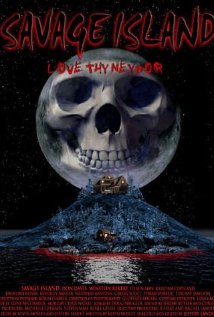
Here’s a drinking game you can play as the credits roll. Down a shot of whiskey whenever the name “Lando” appears. Between the efforts of writer/director/stunt driver/pianist/editor Jeffrey Lando and his brother (?) Peter, you’ll be shitfaced by the time the movie starts, and then again at the end. It will probably help.

Unlikeable yuppie pricks Steven (Steven Man) and Julia (Kristina Copeland), along with their squawling infant, take a trip to a remote island in British Columbia to visit Julia’s parents. After Julia’s idiot brother Peter (Brendan Beiser) runs over a child belonging to a family of grubby squatters, the yuppie pricks find themselves besieged by vengeful hillbillies (let’s just call them that) who demand their squawling infant as recompense. It goes downhill from there.

While the writing in Savage Island is nothing less than terrible, I have to drop a few props on Jeffrey Lando for his consistency of vision. He finishes what he starts, a third-rate, low-budget riff on Deliverance and Straw Dogs. The Savages (the appropriately named island hillbillies) are nicely fleshed out, and I appreciate that Pa (Winston Rekert) and Ma (Lindsay Jameson) look like Merle Haggard and Sarah Palin, respectively. For that matter, the yokel clan is far more interesting—and sympathetic— than their whiny bourgeois captives.

Bonus: The part of Julia’s stubborn father Keith is played by Don Davis, who was memorable in Twin Peaks as Major Briggs, the father of rebellious teen Bobby, one of Laura Palmer’s many swains.

Swamp Devil (2008)

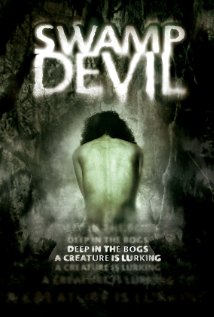
My beef with this craposaurus is pretty basic. When you have a title like Swamp Devil, you’d better deliver something at least on a par with Swamp Thing, a movie that was made 26 freakin’ years before this one.

In other words, I want to see a sodden, drippy, slime-covered mess of a monster—and not something that looks like one of those wacky inflatable arm-flailing tube men you see at car lots. It’s that simple.

There’s a barely-there plot about a murderer who haunts the swamps after he was killed by a vigilante mob. Nicholas Wright (a poor man’s Robert Carradine) plays the human face of the “Swamp Devil,” a carelessly CGI’d stalk of celery that’s nearly as menacing as the Little Green Sprout.

Bruce Dern is in this, for some reason, as a former lawman turned-fugitive and Cindy Sampson (who was quite good in The Shrine—scream queen in the making?) plays his daughter.

I’m really trying to come up with some justification for sitting through Swamp Devil, but I’m drawing a blank. I suppose Dern is more than adequate in his role, but really, he has the look of a man hoping he won’t miss the last bus out of town—and that his paycheck doesn’t bounce out the window.

Speaking of Dern, I seem to recall him on The Tonight Show many years ago talking to Johnny Carson about the worst film he’d ever made. Dern recounted his experiences as a young actor on the set of The Incredible Two-Headed Transplant (1971), a grimy, low-budget shocker co-starring Casey Kasem that was part of the now-extinct “Guy With An Extra Head” movement of the early 70s. (It consisted of two movies: this one and the slightly more famous The Thing With Two Heads, starring Rosie Grier and Ray Milland—recommended!)

Anyway, Dern says after the shooting wrapped, he went to get his final check from the slippery producer—and the office, set, and trailers were all gone. Not a trace of them. Perhaps the next time he’s asked that question, Bruce could share a story about Swamp Devil. I, for one, would love to hear it.

Wicked Little Things (2006)

The moral of Wicked Little Things is a little elusive, but upon my second viewing, this is what I came up with: If you have a terminally ill spouse, make sure you’ve got insurance up the wazoo.

Just another horror movie where the real monster is corporate America…

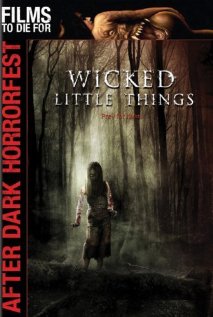
Filmed in Bulgaria, but set in Pennsylvania mining country, Wicked Little Things opens with one of those sepia-toned flashbacks that explains the premise.

In 1913, a heartless mine owner (See? A capitalist villain!) forces poor local children to work deep in the bowels of the earth. After an unplanned tectonic event, a bunch of the miserable waifs are buried alive.

We are then magically transported to the present, where MILF Karen Tunney (Lori Heuring), and her two daughters, Sarah (Scout Taylor-Compton), a surly teen, and Emma (Chloe Moretz), an empathetic moppet, are relocating to this blighted area after the death of Karen’s husband.

Pop’s long, withering illness ate up the family funds, so his dependents are forced to occupy a spacious, but dilapidated family home. Karen’s plans of flipping her fixer-upper are dashed when she finds out that she doesn’t actually own the house, and that the surrounding forest is chock-full of voracious zombie kids, who have emerged from their graves, dressed like cockney street urchins.

Maybe they should have called the movie Hungry Little Things.

It’s not a work of art, but Wicked Little Things maintains a firm hand on mood and tension throughout. I’ve never thought children the least bit horrifying (unless I’m at a restaurant trying to enjoy a meal), but these zombie rug rats are a silent, relentless, and bloodthirsty band that makes mincemeat out of dependable character actor Geoffrey Lewis (Really? You don’t know Geoffrey Lewis?) and a host of bit players.

The real tragedy is that the whole mess could have been avoided if Karen had a better insurance policy.

Tucker & Dale Vs. Evil (2010)

For anyone, anywhere who relishes a hack-and-stack about nitwit teens and disastrous camping trips, this one’s your Apocalypse Now.

Somehow, against all odds, Tucker & Dale Vs. Evil subverts the horror trope of kids-as-kindling and the vicious hillbillies who stalk them, and manages to be funny and charming, while still delivering the gory goodies

As you’ve no doubt heard, the premise depicts Tucker (Alan Tudyk from Firefly) and Dale (Tyler Labine) as virtuous and kindly rural types who want nothing more than to fix up a little cabin in the woods so they can have a getaway for their fishing and beer-drinking weekends.

Enter a carload of snotty college students led by paranoid and delusional Chad (Jesse Moss), who has the hots for sweet Allison (Katrina Bowden), and the stage is set for a riotous epic of blood, lethal misunderstandings, and even a sweet, timid romance. Surprise!

In lesser hands, this might have turned into a gimmicky, unfunny satire (see the Scary Movie franchise), but writer/director Eli Craig really digs deep to bring out the good-natured decency of the titular hillbillies, even while splashing the screen with enough viscera to appease hardcore genre hounds.

Tudyk and Labine are funny and genuine as virtual innocents who have no idea why these preppy campers are freaking out and trying to kill each other—especially after they go to all the trouble of rescuing their friend Allison from drowning.

What the hell’s wrong with kids today? As someone who generally roots for the killer in these films (Look, I hate teenagers!), Tucker & Dale Vs. Evil is a welcome and diverting variation on a theme.