Gonjiam: Haunted Asylum (2018)

Hey, we’ve got a package on the porch! Were you expecting scary shit from South Korea?

Gonjiam: Haunted Asylum is an international entry in the found-footage genre, directed by Jung Bum-shik, and it follows a team of horror vloggers live-streaming from an abandoned insane asylum with a sinister reputation.

Based on a real location that CNN Travel dubbed “One of the 7 Freakiest Places on the Planet,” it’s rumored that the former director of Gonjiam Asylum killed all of her patients and then hung herself.

Team captain Ha-joon (Wi Ha-joon) sets up a video control room outside the asylum while his camera-toting crew of three men and three women explore the premises, agreeing to meet up outside the mysterious Room 402, that has never been opened.

Ha-joon hopes that by securing one million views, he and his team will receive a ton of advertising revenue and enjoy the fame and fortune of being paranormal VIPs.

Needless to say, there is no happy ending in the offing. Gonjiam is gorged with ghosts apparently still in thrall to the former director, an evil woman who loves nothing more than a friendly game of ping pong.

Director Jung Bum-shik nurtures tension like a mad nanny and reveals plot twists with precision timing for maximum impact. The imperiled explorers manage to be distinctive without being a bunch of cliches, and the chaotic camera work is handled with extreme dexterity.

The breakdown of the group dynamic is inevitable in Gonjiam: Haunted Asylum. No state-of-the-art gadgetry or high-tech surveillance gear can protect the mind from fear once it’s taken hold.

And if you happen to be in one of CNN’s Freakiest Places on the Planet, it can be a lethal combination. Recommended!

Why aren’t you watching it already?

Forest of Death (2023)

I have to admire the moxie of writer-director Brendan Rudnicki—aka, President and CEO of DBS Films—who doesn’t let little things like money get in the way of quick-hitting horror films like Forest of Death.

Weighing in at a lean 75 minutes, Rudnicki wastes no time with story arc, motivation, or any of that other fancy pants nonsense. It’s two basic-cable couples playing drinking games in the woods with a skinwalker/shapeshifter haunting the vicinity.

Despite a predictable premise and a shortage of dramatic talent, there are moments in Forest of Death where the total is greater than the sum of its cheapo parts, and Rudnicki makes his crude puppet show dance and caper.

Make no mistake, this movie doesn’t dawdle, placing the protagonists in danger within 10 minutes of the opening credits. Even so, Rudnicki feels confident enough to include two cheerful, upbeat musical interludes of his nondescript characters enjoying a few rousing rounds of gin rummy.

There is very little creature action, since the evil spirit can assume any form, which is another handy budget-saving device employed by the resourceful Rudnicki.

Once the skinwalker has infiltrated the cabin, it’s only a matter of time before the dominos start falling, and friends turn on each other. The question each viewer must answer for themselves is how much nutritional value can be derived from such a thoroughly chewed bone?

When there’s no meat, you make soup. Forest of Death is strictly warmed-over leftovers.

I was passably entertained, but no one will be blown away by loads of fresh ideas. As a resumé builder for Brendan Rudnicki, though, it’s a statement of purpose.

Off Season (2021)

Old School creepy goes a long way in my book. I’m always in the mood for an immersive plunge into nightmare waters.

Off Season is Old School creepy, a diabolical downward spiral with definite shades of Carnival of Souls and Dead and Buried tellingly layered into a Lovecraftian landscape.

Writer-director Mickey Keating, a former Blumhouse intern, has manifested another one of those damned tourist trap towns that visitors find impossible to leave behind.

Marie (Jocelin Donahue) is the daughter of reclusive actress Ava Aldrich (Melora Walters), who recently passed away and was laid to rest on the small coastal island where she grew up.

Funny thing, before she died, Ava told her daughter specifically to not allow her body to be buried there.

Funnier thing: Two lawyers she’s never met inform Marie that her mother changed her will, and that she wanted to be buried on the island.

Shortly thereafter, Marie receives a mysterious letter from the caretaker of the cemetery instructing her to come at once to address the recent vandalism of Ava’s grave.

Once she and her whiny husband George (Joe Swanberg) arrive on the island, the trap springs shut and the real nightmare can begin. Marie discovers the community is a hotbed of pagan idolatry and that many years before the villagers made a deal with “a man who came from the sea.”

Off Season comes foggily shrouded in a fatalistic sense of inevitability that dwarfs our petty terrestrial concerns, offering us a glimpse of life everlasting.

And we all lived happily ever after in thrall to Cthulhu, or someone like him. Well, maybe not so happily. Let’s say creepily.

Significant Other (2022)

Camping makes everything worse. Debate me.

If you’re a real horror fan, you know it’s true. Significant Other is just another case study in the facts of life.

Written and directed by Dan Berk and Robert Olson, the movie also offers relationship advice on how not to upset your boyfriend when he’s been body snatched by an alien scout checking out Earth as a possible invasion site.

Harry (Jake Lacy) convinces his anxiety ridden girlfriend Ruth (Maika Monroe) to go on a camping and hiking weekend. The communication between Harry, a hearty, upbeat outdoorsman, and his dour partner is not good.

For the first quarter of the movie, Harry ignores and dismisses every word from Ruth, which leads to a really awkward marriage proposal that puts a damper on the campers.

Ruth storms off to be alone. Harry goes for a walk to clear his head. Both make discoveries of the Third Kind, and when they meet up again, they’re not the same people.

Harry plays host to an alien consciousness, and is as surprised as anyone that his feelings for Ruth are complicating his mission.

Significant Other almost ventures into romantic comedy territory, because this relationship turns toxic in a big way, leading to a modest blood bath. Harry falls off a cliff, gets eaten by a shark, and has his head smashed into pudding, but he’s harder to kill than a cockroach.

Finally, Ruth ends up in Harry’s shoes and seemingly outwits the cosmic conqueror, making her getaway. It’s a small victory, as it turns out, because like shitty boyfriends, there are always plenty of invaders to go around.

Recommended? You betcha.

Brides of Dracula (1960)

“Count Dracula, monarch of all vampires, is dead, but his disciples live on, to spread the cult and corrupt the world.”

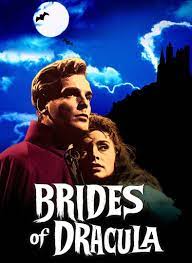
Like the gloomy narrator indicates in his ominous introduction to Brides of Dracula, the marquee bloodsucker, played by Christopher Lee, managed to get himself skewered in a previous Hammer Films production, so this time around we get Baron Meinster (the dashing David Peel), certainly one of the first examples of vampire as pop star.

When Meinster materializes at the Transylvania Academy of Proper Young Ladies to visit Marianne (Yvonne Monlaur), the pretty new French teacher, the gathered gals go gaga over the dapper blonde Baron.

Check out the image above used to promote the film. It looks Heathcliff and Catherine off to a make-out sesh on the moors.

But I’m getting ahead of myself.

By this point in the movie, Marianne has already freed Meinster from captivity by his daffy dowager mother the Baroness Meinster (Martita Hunt), who for years has kept vigil over her evil offspring, aided by Greta (Freda Jackson), her equally loony servant.

Earlier, the Baroness discovers Marianne stuck at the local pub, abandoned by her cowardly coachman (Michael Ripper). Lonely for educated company, the increasingly unstable noblewoman invites Marianne up to her castle, to sleep in one of her many guest bedrooms.

From her window, Marianne spies the young Baron wandering on his own balcony below. Throwing common sense to the wind, she instantly believes the beautiful man has been wrongfully incarcerated and helps him to escape.

Nice going, Marianne!

The newly liberated nosferatu is soon feasting on the hottest peasant woman in the village (Marie Deveraux), as well as Marianne’s jealous roommate Gina (Andree Melly).

Greta, once his captor, has decided to help out Meinster by digging up the dead girls and making them more presentable for their master.

Now that’s what I call Goth!

True, there is no Dracula on hand, but we do get Doctor Van Helsing (Peter Cushing) the Hall of Fame vampire slayer, operating at the top of his game. Cushing is typically excellent and erudite as the dedicated undead destroyer, who has a couple gnarly brawls with the new count on the block.

After getting a bite from Meinster, Van Helsing demonstrates uncanny resourcefulness, by treating his unholy hickey with a hot branding iron and some H20 blessed by the local priest.

Despite the absence of the iconic Christopher Lee, Brides of Dracula gallops along at a brisk clip, with impending danger reliably signaled by Malcolm Williamson’s anxious orchestration, that during moments of high drama seems on the verge of complete nervous collapse.

The veteran supporting cast is spot on. Freda Jackson is a howling mad domestic that nonetheless adapts to new duties with surprising confidence. And the enchanting Andree Melly glowingly epitomizes the movie’s tagline: “He turned innocent beauty into unspeakable horror!”

Even minor characters, like Dr. Tobler (Miles Malleson), the dipsomaniac local sawbones, are given sufficient space by director Terence Fisher to have small comic interludes that prove successful more often than not.

Speaking of comic interludes, there is some lame-ass bat puppetry happening here that might also inspire a few laughs. That should not deter anyone in the slightest.

Brides of Dracula is Hammer horror at its hottest, featuring a plethora of glaring bloodshot eyes, heaving bosoms, and a fair amount of fang action.

Required viewing in my estimation. See what all the fuss is about.

Deadstream (2022)

Now that’s what I’m talking about!

As if to put an exclamation point on my earlier observation that internet adventurers are the new Red Shirts, along comes Deadstream, the Apocalypse Now of found footage horror.

Sean Ruddy (Joseph Winter) is an internet personality who stages dangerous stunts that also manage to be offensive, such as getting smuggled across the Mexican border in the trunk of a car.

After his latest spectacle goes horribly wrong, Ruddy hopes to apologize and move on, but his fans are deserting him in droves, peppering his inbox with destructive criticism.

Comments pop up throughout the movie acting as a sort of Greek chorus to the action, which is plentiful. Even as Sean battles all manner of paranormal entity, the comment string keeps up a barrage of fan posts that are funny, annoying, and even surprisingly useful.

Among my favorite comments: “Glad I’m not you,” “Better start praying,” and “Please sign this petition at Move.org so Sean will stop being be such a pussy.”

In order to atone for a bad call, Ruddy comes clean to his public about the one fear he’s never tackled—ghosts.

So, strapped with all the latest gear thanks to a sponsorship from an energy drink company, the repentant daredevil vows to spend a night in the most haunted house in America—that he can successfully break into without getting arrested.

The lion’s share of Deadstream originates from one of Sean’s cameras that are spread throughout Death House, the site of his viral vigil, or mounted on his person.

Admittedly, this is a long time to be looking up Sean’s nose, but writer-directors Joseph and Vanessa Winter reward our patience by throwing everything but the yeti at our fearful protagonist.

Sean spends an enchanted evening fending off angry spirits, misshapen freaks, and a hot girl named Chrissy (Melanie Stone) who wanders into the chaos.

Like the legendary Don Knotts in The Ghost and Mister Chicken, Joseph Winter delivers an unhinged scaredy-cat performance, that comes garnished with the best girlie shriek of man-terror I’ve heard in a minute.

As Sean Ruddy, a man who will do anything to please the ever-present and increasingly fickle comment string, Winter willfully throws himself into a thankless part, that of sacrificial lamb to his voracious followers.

Ruddy makes himself vulnerable to the dark forces of the house and to his followers. Will the truth set him free?

His unwavering commitment to see the project through drives Deadstream to thoughtful new frontiers that bear examining. For instance, shouldn’t everyone come equipped with a Stupid Things To Do spin board?

Simply in terms of pound-for-pound raw energy, and entertainment bang for the buck, Deadstream is a hot ticket.

I was a wee bit disappointed that the Winters decided to pay homage to Sam Raimi about three-fourths of the way through the film, precisely because they had managed to avoid doing so up to that point.

The Deadites must have a strong union.

Umma (2022)

I swore I’d never be like my mother!”

It’s easy enough to say, and you can substitute “father” if you want. Mostly they’re just words, and they don’t help.

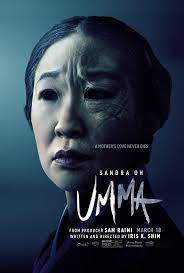
The central point of terror in Umma (Korean word for “Mama”) is the idea of inherited sin, and how kids are rotten fruit from a poison tree.

As conceived by Iris K. Shim, Umma is a ghost story about being haunted by your own family. Unlike the trend toward pitch-black horizons these days, Shim’s feature maintains its grace despite grim subject matter, and even offers a glimmer of hope.

Amanda (Sandra Oh), an agoraphobic beekeeper, raises her daughter Chris (Fivel Stewart) on a lovely, spacious farm, where electricity (phones, TVs, you name it) is forbidden.

Like all the other threads in the movie, it traces back to Amanda’s tortured childhood and the abuse she suffered at the hand of a mean, unstable mother (MeeWha Alana Lee).

Their idyllic existence gets upended by the arrival of a suitcase containing her mother’s remains, which coincides with the manifestation of her angry ghost, who proceeds to torment Amanda from the grave.

As if life weren’t stressful enough, she also discovers that Chris wants to leave the analog farm and go to college! The pressure to maintain her equilibrium overpowers Amanda, and that’s how the ghost gets in.

Filmmaker Shim isn’t afraid to tackle touchy subjects, and Amanda’s plight is pretty much universal, trying to shelter her own daughter from the worst family traits—even as she gains insight by subletting her soul to a mother’s rage.

In Umma, it isn’t curses or cannibalism that’s passed on, but fear and resentment. You know, real shit.

Pro Tip: Acceptance is your best option when confronted with an angry ghost.

We’re All Going to the World’s Fair (2021)

It’s definitely an immersive experience and most definitely a horror film.

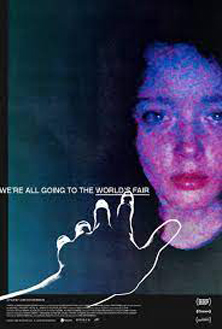
Writer-director Jane Schoenbrun has found a fresh fear angle in We’re All Going to the World’s Fair, forging sinister and frightening links in a story told largely online.

Casey (Anna Cobb) is the personification of teen restlessness. With establishing shots revealing a dreary anonymous urban nowhere, little wonder that she seeks stimulation and community on the web.

And so the web snares another fly as bored blogger Casey creates laptop videos of herself charting her progress through a horror-themed Online Role Playing Game called The World’s Fair.

To enter the game, a player must bleed. Not sure what kind of port you use for upload.

It’s a plot that cooks over a slow fire, but WAGttWF hums with a steadily climbing anxiety level. Our concern for Casey’s welfare deepens as we realize she’s not the only one playing, and the tone of her video posts get darker.

Casey mentions her father’s rifle. She knows where it is.

All kinds of red flags and warning bells go off, but Casey proves capable of mastering her game emotions, even if her opponent (Michael J. Rogers) does not.

Rogers portrays one of those super creepy concern troll that lurks under every virtual bridge. Switching to his perspective, Schoenbrum daringly gives us a nervous glimpse into his painfully shameful world—and that’s more than enough.

We’re All Going to the World’s Fair is a minefield of a movie about a very real war between the sexes. You read about it every day: A lonely wretch goes bananas and kills people because they are psychologically incapable of real-life interaction.

These are the ones I’m warning you about. They are a cause for concern.

La Llorona (2019)

You can’t keep a good ghost down. Not when there’s justice to be meted out.

The titular spirit, who typically wanders the seaside mourning her deceased children in Mexican folklore, becomes a powerful avenger in the hands of Guatemalan filmmaker Jayro Bustamante.

In La Llorona, the vengeful ghost not only seeks retribution for the death of her offspring, but for entire villages of Guatemalan natives slaughtered and enslaved in the 1980s by General Enrique Monteverde (Julio Diaz), a military strongman currently on trial for genocide.

Now a delusional old paranoid, Enrique holes up in a spacious villa while outside the streets are stuffed with protestors, whose singing and chanting are a constant reminder of half-remembered atrocities.

Enrique’s sleep is troubled and he frequently sleepwalks through the house with a loaded pistol.

His steely wife Carmen (Margarita Kenefic) is determined to stand by her man, but their daughter Natalia (Sabrina de la Hoz), a doctor, is having doubts about her papa’s innocence.

With the arrival of Alma (Maria Mercedes Coroy), a beguiling Mayan maid, the stage is set and the Monteverde house is ready for its fall. Enrique is fascinated and troubled by the quiet girl with the long black hair, because she’s a dead ringer for one of his dead victims.

La Llorona is a riveting slow burner that draws substantial power from Bustamante’s steady-frame approach. Once he establishes a visually arresting tableau, he locks it down. There is almost no camera movement in the house and scenes run long with minimal dialogue.

This lack of flow effectively imprisons the viewer in the pressure cooker alongside the guilty parties, and it’s an unnerving experience.

After all, we’re not on trial here.

Terrified (2017)

It’s scary watching a good neighborhood go bad.

Set in the suburbs of Buenos Aires, Terrified zooms in on one unlucky block of real estate, where strange things are happening.

How strange, you ask?

Just ask the kid next door. He was recently run over by a bus and buried, but has returned after clawing his way out of the grave. The boy’s mother (Julieta Vallina) is beside herself, as you might expect.

Her detective boyfriend Funes (Maximiliano Ghione) calls in retired cop Jano (Norberto Gonzalo), a forensic expert with a knack for bizarre cases.

Before the investigation can begin, renowned paranormal researcher Dr. Mora Albreck (Elvira Onetto) materializes with questions of her own. Despite the assembled brain power, the best theory that Albreck can proffer is that they are sitting on a nest of beings from another dimension.

Further observations from the good doctor reveal that the creatures occupy the same space we do and can inhabit our bodies. Also, they drink blood and seem to enjoy tormenting their subjects to death.

Using comically archaic spiritual weights and measuring devices, Albreck assembles concrete evidence that establishes the existence of vampiric entities that can crawl out from under the bed or emerge from the closet at will.

“What should we do now?” a colleague asks her.

“I have no idea,” she answers truthfully.

Terrified is a potent and terrifyingly graphic film about the dissemination of fear in an urban setting, with roots in paranormal activity. In this regard, it’s quite unlike the Paranormal Activity series of films created by Oren Peli.

Instead of endless sequences spent observing snoring citizens, we get pants-wetting shock value from a parade of singular spooks that will leave trauma marks on the cerebral cortex.

Argentine writer-director Demían Rugna wields a deep arsenal of disorienting camera moves that offer no comfort or safe space to hide. We bounce from mouse-eye views looking up, to sinister surveillance peering in the windows, to awful things taking shape on the periphery of the senses.

Utilizing every centimeter of the frame, Rugna proves, just as H.P. Lovecraft did before him, that there’s plenty of room for malign beings to coexist with us—and drive us insane.

This is not a comforting thought. Terrified delivers the scary when it counts.