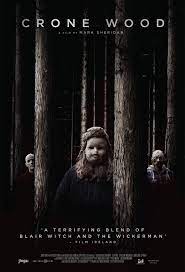
Crone Wood (2016)

If a gorgeous woman wants to go camping on the first date, it’s definitely a red flag.

In Crone Wood, Irish writer-director Mark Sheridan’s ultra low-budget, found footage debut, a very cute couple hit upon the novel idea of pitching a tent in the great outdoors and documenting their overnight excursion on camera.

Danny (Ed Murphy) is still pinching himself over meeting the beautiful, free-spirited Hailey (Elva Trill), and doesn’t want their evening to end. When she suggests a hiking and camping adventure, he’s only too happy to take her to the Army Surplus store for sleeping bags—especially after Hailey informs him that they’ll be sharing a tent.

The two tentatively get to know each other, passing Danny’s camera back and forth recording the lush scenery and their jokey, lovey-dovey insights. Hailey mocks Danny’s attempts to set up camp, and later throws a fit when she finds the camera running during a spirited make-out session.

Danny confesses that he’s never been with a woman as hot as Hailey, and he wanted something to remember her by when she inevitably comes to her senses and dumps him.

Soon Danny will have more serious problems.

As the nascent couple wanders deeper into the wild Irish countryside, they come upon ruined stone structures which they explore by daylight and again in the darkness by the light of the camera.

Danny is convinced that someone is following them. Why this necessitates a midnight run through a twisty, crumbling obstacle course is unclear, but he is soon proven correct, as the novice campers are pursued and captured by masked followers of a witches coven who’ve inhabited Crone Wood since time immemorial.

And things get real between Hailey and Danny. Real intense.

At this point, comparisons to folk-horror landmarks such as Wicker Man and Midsommar will be inevitable, though there is a crucial difference, in terms of the fate that awaits Danny.

Crowdfunded for a measly $17,000 and filmed in about two weeks, Crone Wood is nevertheless a captivatingly creepy feature especially if you’re a lovestruck sucker punching above their weight class.

Really, aren’t we all?

Stoker Hills (2020)

Funny, I thought with a title like Stoker Hills, that there might be vampires in the vicinity.

Nope, not even a nibble, though blood is drained if you pay attention. I’m not advising you to do so.

Three students enrolled in Professor Tony Todd’s community college film class get themselves kidnapped while working on a zombie movie, and must escape the clutches of a fiendish killer in an underground labyrinth.

Ryan (David Gridley), Jake (William Bedford-Hill), and Erica (Steffani Brass) set out with the noblest intentions to create a cinematic hybrid of “The Walking Dead and Pretty Woman.”

Shooting B-roll of a trolling Erica decked out in hooker garb goes south when she gets snatched by a goon in a creepy car. The dufus bros take off in hot pursuit, eventually leading to a secret trailer in the woods, where they too are set upon and abducted.

The camera is found by a fireman and turned over to the cops.

What looks to be a promising setup is soon squandered, as director Benjamin Louis and scenarist Jonah Kuehner unwisely shift gears into the police investigation that follows their disappearance.

We are summarily introduced to a pair of plodding detectives (Eric Etabari and William Lee Scott, the former inexplicably garbed like he’s auditioning for Guys & Dolls) who manage to grind narrative momentum to a screeching halt.

We’re handed scene after scene of these two dull dicks mulling over the found footage for clues, occasionally cutting back to the tied-up victims trying laboriously to escape their shackles, as if to remind us that there’s still a plot that needs resolving here.

The storyline twists and rebounds with their ponderous investigative revelations, including a serial killer with a pig heart (Jason Sweat) in need of fresh blood. The outré details don’t add up to much of anything, until the very last scene.

At that point, you will have the privilege of deciding if Stoker Hills is a clever little film with a “Gotcha” ending, or a low-budget time-waster with the lamest finale since, “Gosh, what a crazy dream!”

It’s an awesome responsibility when you think about it.

Deadstream (2022)

Now that’s what I’m talking about!

As if to put an exclamation point on my earlier observation that internet adventurers are the new Red Shirts, along comes Deadstream, the Apocalypse Now of found footage horror.

Sean Ruddy (Joseph Winter) is an internet personality who stages dangerous stunts that also manage to be offensive, such as getting smuggled across the Mexican border in the trunk of a car.

After his latest spectacle goes horribly wrong, Ruddy hopes to apologize and move on, but his fans are deserting him in droves, peppering his inbox with destructive criticism.

Comments pop up throughout the movie acting as a sort of Greek chorus to the action, which is plentiful. Even as Sean battles all manner of paranormal entity, the comment string keeps up a barrage of fan posts that are funny, annoying, and even surprisingly useful.

Among my favorite comments: “Glad I’m not you,” “Better start praying,” and “Please sign this petition at Move.org so Sean will stop being be such a pussy.”

In order to atone for a bad call, Ruddy comes clean to his public about the one fear he’s never tackled—ghosts.

So, strapped with all the latest gear thanks to a sponsorship from an energy drink company, the repentant daredevil vows to spend a night in the most haunted house in America—that he can successfully break into without getting arrested.

The lion’s share of Deadstream originates from one of Sean’s cameras that are spread throughout Death House, the site of his viral vigil, or mounted on his person.

Admittedly, this is a long time to be looking up Sean’s nose, but writer-directors Joseph and Vanessa Winter reward our patience by throwing everything but the yeti at our fearful protagonist.

Sean spends an enchanted evening fending off angry spirits, misshapen freaks, and a hot girl named Chrissy (Melanie Stone) who wanders into the chaos.

Like the legendary Don Knotts in The Ghost and Mister Chicken, Joseph Winter delivers an unhinged scaredy-cat performance, that comes garnished with the best girlie shriek of man-terror I’ve heard in a minute.

As Sean Ruddy, a man who will do anything to please the ever-present and increasingly fickle comment string, Winter willfully throws himself into a thankless part, that of sacrificial lamb to his voracious followers.

Ruddy makes himself vulnerable to the dark forces of the house and to his followers. Will the truth set him free?

His unwavering commitment to see the project through drives Deadstream to thoughtful new frontiers that bear examining. For instance, shouldn’t everyone come equipped with a Stupid Things To Do spin board?

Simply in terms of pound-for-pound raw energy, and entertainment bang for the buck, Deadstream is a hot ticket.

I was a wee bit disappointed that the Winters decided to pay homage to Sam Raimi about three-fourths of the way through the film, precisely because they had managed to avoid doing so up to that point.

The Deadites must have a strong union.

Horror in the High Desert (2021)

Social influencers are horror movie gold!

I alluded to this situation in my review of The Deep House, as the answer to the burning question, “Why would otherwise intelligent people put on scuba gear to explore a haunted house at the bottom of a lake?”

The protagonists are compelled to take on insanely dangerous missions in order to attract (and maintain) followers! Building that brand is indeed hazardous to your health.

Horror in the High Desert is an 82-minute found-footage shocker about Gary Hinge (Eric Mencis), a popular outdoor adventure blogger who disappears under (you guessed it!) “mysterious circumstances,” while exploring a remote area of Nevada’s high desert.

Possibly based on the real-life case of Kenny Veach (Google that shit), writer-director Dutch Marich dutifully assembles realistic interviews with family, friends, and investigators, all of whom are trying to figure out what happened to someone who was, by all accounts, an expert at wilderness survival.

Spoiler alert: It ain’t good, and eventually the talking heads give way to Gary Hinge’s final creepy posts, from a location he clearly didn’t want to revisit.

The fearless blogger admits to increasing anxiety, and with good reason. All his instincts warn Hinge away from the nasty little shack in the middle of Nowhere, Nevada.

But his core followers have demanded video evidence, so he has no choice but to return to a cursed location. Film, or it didn’t happen.

As a blogger myself, I can only hope my dozen or so regular readers don’t start clamoring for personal peril on my part—unless you’d enjoy footage of me collecting dog poop in the backyard.

The ending leaves open the possibility of a sequel (or three), as it’s reported during the credits that no less than 17 teams of danger bloggers went out to find Hinge.

Horror in the High Desert is a more than ample warning to the foolhardy. Don’t let obnoxious fans push you over the brink and into the arms of … someone you do not ever want to meet.

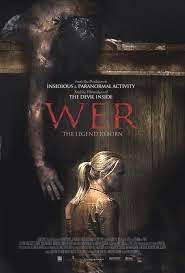
Wer (2013)

I’m reasonably sure that this movie would have more of a following if it wasn’t saddled with such a clunker of a title.

Wer? Really, that’s the best we can do?

It’s a shame because Wer is top-shelf lycanthrope mayhem all day, every day.

Co-writer and director William Brent Bell wisely saved his nickels and dimes by filming in Romania and calling it France, where American lawyer Kate Moore (A.J. Cook from Criminal Minds) is defending a hulking peasant (Brian Scott O’Connor) accused of tearing up a family of tourists. Limb from limb.

And taking huge bites out of them.

The makeup and prosthetic work by Almost Human Inc. is worth the price of the ticket. The scene when Kate examines the shredded remains of the victims is startlingly savage. Seldom has bodily harm been rendered in such vicious detail.

A shaking hand-held camera gives Wer the appearance of a found footage police procedural, with lengthy talking sequences that flare into bloody chaos without warning.

Now that’s what I’m talking about. Modest movies that turn out to be way better than I expect are the coin of my realm. They’re my jam.

Now if you’ll excuse me, I’m going to make some toast.

Editor’s Note: Come and have a hang at our new Facebook site!

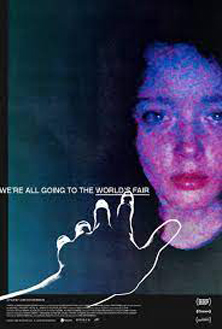
We’re All Going to the World’s Fair (2021)

It’s definitely an immersive experience and most definitely a horror film.

Writer-director Jane Schoenbrun has found a fresh fear angle in We’re All Going to the World’s Fair, forging sinister and frightening links in a story told largely online.

Casey (Anna Cobb) is the personification of teen restlessness. With establishing shots revealing a dreary anonymous urban nowhere, little wonder that she seeks stimulation and community on the web.

And so the web snares another fly as bored blogger Casey creates laptop videos of herself charting her progress through a horror-themed Online Role Playing Game called The World’s Fair.

To enter the game, a player must bleed. Not sure what kind of port you use for upload.

It’s a plot that cooks over a slow fire, but WAGttWF hums with a steadily climbing anxiety level. Our concern for Casey’s welfare deepens as we realize she’s not the only one playing, and the tone of her video posts get darker.

Casey mentions her father’s rifle. She knows where it is.

All kinds of red flags and warning bells go off, but Casey proves capable of mastering her game emotions, even if her opponent (Michael J. Rogers) does not.

Rogers portrays one of those super creepy concern troll that lurks under every virtual bridge. Switching to his perspective, Schoenbrum daringly gives us a nervous glimpse into his painfully shameful world—and that’s more than enough.

We’re All Going to the World’s Fair is a minefield of a movie about a very real war between the sexes. You read about it every day: A lonely wretch goes bananas and kills people because they are psychologically incapable of real-life interaction.

These are the ones I’m warning you about. They are a cause for concern.

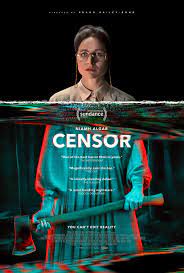
Censor (2021)

To anyone who dares spread the rumor that horror movies are responsible for the moral decay of society, here is a provocative feature for your consideration.

Set against England’s Video Nasty outrage of the mid-’80s, Censor takes us inside the head of Enid Baines (Niamh Algar), an efficient and organized member of the government agency in charge of rating violent and disturbing films of the day, like Driller Killer and Deranged.

Enid is quite good at her job but her personal life hasn’t recovered from the childhood trauma of losing her sister Nina in the woods, and she continues to harbor hopes that she will turn up one day.

When she’s assigned a Nasty called Don’t Go in the Church, something shifts in Enid’s memories as the movie seems to be a re-creation of the day her sister disappeared, a haunting mystery that was never solved, and the details of which she can’t remember.

Her parents want her to move on with her life and meet a nice fellah, but Enid is determined to track down the cult filmmaker who could be the source of everything that’s gone wrong in her life.

Welsh writer-director Prano Bailey-Bond has fashioned a deeply drawn character in Enid, and the performance by Algar just keeps getting richer, even as her world gets darker, infected by the barrage of torture and cruelty she witnesses on a daily basis.

Bailey-Bond does a first-rate job of establishing time and place, when England was under a media-fueled frenzy of lurid details from “hardcore” horror films dubbed “Video Nasties.”

Enid’s office, with its dark little viewing rooms, becomes equally lurid, as screams and chopping sounds fill the halls.

Job pressures take their toll on Enid, a thoroughly professional woman with a complicated, compartmentalized life. Like Cassandra Thomas in Promising Young Woman, she has answered a calling and takes pride in her work.

Unfortunately, Enid, an otherwise intelligent and perceptive woman, ignores the warning issued by more than one character, that being, “Evil is contagious.”

In my estimation, Censor is one of the best horror films of the year.

The Deep House (2021)

Why would anyone want to explore a haunted house at the bottom of a lake? Talk about looking for trouble. The Deep House follows Ben (James Jagger) and Tina (Camille Lowe), a couple of thrill-seeking social media climbers that specialize in visiting creepy-ass abandoned buildings.

They don’t get much creepier than an eerily preserved house on the floor of a deep French lake, so they gather their diving gear and make a splash, guided to the secret spot by a chainsmoking local (Eric Savin).

Their life aquatic isn’t pleasant, to say the least. They find the house and Tina doesn’t like the atmosphere one bit. When they discover buoyant corpses and evidence of human sacrifice things really go off the rails.

Written and directed by Julien Maury and Alexandre Bustillo, The Deep House will make you uncomfortable in interesting new ways. The prospect of running out of air surfaces early in the film, as Tina practices holding her breath in the bathtub prior to arrival.

If the idea of an empty air tank under hundreds of feet of water while being chased through a submerged spook-house by swimming ghouls doesn’t freeze your blood, then you’re a better man than I am, Gunga Din.

Furthermore, Ben is anxious to become media famous, while Tina has a stubborn streak of common sense that often runs counter to her partner’s ambition, a situation that could spell doom for both of them.

Ben has a camera drone that provides aerial views and also follows the couple into the lake, so visually they’ve got all their angles covered. And we can see what’s lurking around the corner.

As soon as the viewer forgets that Ben and Tina are underwater, something floats by and we get a fresh wave of panic.

There’s no big moral lesson in The Deep House. What Ben and Tina find in the house at the bottom of the lake is something that should have stayed there. Is that so hard to wrap your head around?

Again, why go out of your way to get metaphysically mangled? Good movie, though.

Demonic (2015)

A detective (Frank Grillo) and a police psychiatrist (Maria Bello) try to piece together what happened after a team of amateur ghostbusters bungle a seance in a haunted house, in Demonic.

Probably happens all the time.

The cops grill John (Dustin Milligan), the only survivor, in an attempt to locate his missing girlfriend Michelle (Cody Horn) and ghost team leader Bryan (Scott Mechlowicz).

The rest of Bryan’s crew are spread out around the house in various stages of decomposition after persons unknown went on a chopping spree.

The story unfolds via John’s remembrances and footage recovered by forensic specialists, so the narrative bounces from the current crime scene to the week before, when the paranormal investigators set up shop in a rambling manor house somewhere in Louisiana swampland.

There are jump scares aplenty and a decent amount of escalating tension, but not much in the way of blood and guts. Gaping plot holes abound (Really? The detective has no other recourse but to shoot his only suspect while the latter is holed up in a grocery store?) and no one associated with the film will win any acting awards.

Even so, director-cowriter Will Canon keeps his spooks flying and manages to perpetrate a few decent plot twists to keep our attention from wandering too far.

Demonic is not required viewing, but you could do a lot worse. I should know.

Sator (2019)

Filmmaker Jordan Graham’s docu-horror Sator is an odd hybrid creature that really digs in its claws. Graham is responsible for every detail, including building a desolate cabin in the woods near Santa Cruz, which explains why the movie spent six years in preproduction.

Sator is partially the (real) story of Graham’s grandmother Nani (June Peterson) who appears in the movie as herself, discussing her history of channeling a guardian spirit called Sator. She’s written hundreds of pages inspired by the woodland entity that, she claims, controls the rural world that surrounds her.

Graham utilizes these interviews with Nani to extrapolate an eerie, dreary tale about her grandson Adam (Gabe Nicholson), a solitary forest dweller who (very) slowly gets drawn in by the machinations of Sator. Or perhaps he’s afflicted with the same mental illness that consumed his mother and grandmother. Or both.

On one of his periodic visits, his brother Pete (Michael Daniel) asks Adam if he’s hearing voices. He replies in the affirmative, as if this is all familiar territory to these damaged siblings. When Adam’s dog disappears, he is effectively untethered and falls even harder.

Sator is a humble, terrifying slice of folk horror that succeeds because Graham has left nothing to chance. It’s clearly a labor of love that generated its own momentum, and Graham took the time to carefully blend the real with the unreal. Each frame is a brooding still-life, with the encroaching nature photography especially menacing, as if there truly were a malevolent figure lurking behind the nearest shrub. Watching. You.

Graham’s visual style can best be described as Nature Noir, with overhanging trees choking off any trace of light in the lives of this blighted family. Graham’s camera shifts from color to black and white, following a hopeless trajectory of impending doom.

Not all genre devotees will have the patience for Sator, a movie floating in foreboding, but with little in the way of dialogue and action. I’m recommending that you stay and watch.

If you have the bandwidth to soak up even a fraction of the dread depicted onscreen, it should prove a transformative experience. Good luck, whatever you decide.