Ouija: Origin Of Evil (2016)

Prolific genre dynamo Mike Flanagan (Haunting of Hill House, Oculus, Dr. Sleep) created this prequel to Ouija (2014), and consensus opinion holds that Ouija: Origin of Evil, is far superior to its predecessor, though that may have more to do with the “meh” quality of the original material, rather than an auteur’s magic wand.

We travel back to the year 1967, where widowed mother Alice (Elizabeth Reaser) makes a modest living as a phony fortune teller, aided in her deceptive practices by daughters Lina (Annalise Basso) and Doris (Lulu Wilson).

Alice and eldest daughter Lina consider adding a Ouija board to their seance shtick, but all too quickly this occult stepping stone gets a grip on Doris, the youngest, resulting in a once-innocent child playing host to a number of spiritual entities, good and bad, including her late father (good) and a fiendish Nazi doctor (bad).

Flanagan and cowriter Jeff Howard weave together enough plot points for seven sweaters, but don’t sweat the details. Ouija: Origin of Evil is trademark Flanagan territory, as a fractured family faces a perilous paranormal presence coming from inside the house.

The technicians Flanagan puts to work on his projects are first-rate, intuitively establishing the tone, time, and terroir in which his particular domestic terror can take hold of hearts and spines.

Here, art director Alberto Gonzalez-Reyna and cinematographer Michael Fimognari mute the sunny ’60s California scenery in dark shades of green and gold, so wardrobe colors appear especially vivid and blooming—a keen counterpoint to the carnage being carried on behind closed doors at the local fortune teller’s house!

Despite being a minor entry in Mike Flanagan’s filmography, Ouija: Origin of Evil is a compelling and highly watchable film in its own right, and needn’t be seen in the company of any other Ouija entries in the hopes of additional illumination.

Abandoned (2022)

I’ve spent enough hours surfing for movie options that I can read a plot summary in about three seconds flat.

Thanks to several years of immersive research, I can now safely testify that approximately 70 percent of ALL horror entertainment must include a struggling couple with kids (living or recently deceased) relocating to a house of questionable repute in search of a fresh start.

Usually for such an egregious error in judgment, the hopefully healing family gets placed in a potentially paranormal hot seat, somehow stemming from one of the parent’s festering trauma.

Abandoned, which benefits from a thoroughly committed Emma Roberts as a new mom with a vicious case of postpartum depression, is another such film. Director Spencer Squire digs deep into the tortured psyche of Sara (Roberts), but doesn’t find anything new or interesting to report.

Sara and husband Alex (John Gallagher Jr) get a sweet deal on some rural acreage that comes with a bonus room that the previous owner only used for murder and suicide.

Their infant son Liam spends most of his screen (scream?) time lustily crying his lungs out, so we definitely sympathize with the rapidly disintegrating Sara.

The fragile lass gets saddled with a wailing infant all damn day, and has nothing better to do than figure out the dark history of the house while suffering a nervous breakdown.

Meanwhile, her veterinarian hubby is facing his own challenges putting down a pen of infected pigs, necessitating many hours spent out of the house, leaving Sara and little Liam to deal with a creepy neighbor (Michael Shannon), voices in the walls, and a bunch of missing toys (resulting in even more loud lamentations).

Alex euthanizing sickly swine is supposed to provide some kind of narrative parallel to Sara’s mentally unstable parenting style, but in the end, she accepts her crybaby and bravely snatches the little nipper back from a pair of feral kids.

Or maybe they’re ghosts, I dunno.

Even with Roberts giving it her deranged best, Abandoned never rises above the level of reheated leftovers, sadly lacking in flavor and originality. But if you’re not in a hurry it might inspire memories of better meals. I mean, movies.

Preferably ones not ruined by the presence of shrieking children.

Shining Vale (2022-23)

When I was a wee sprout, and the family hive mind turned to televisual entertainment options, I invariably lobbied for something “scary” or something “funny.”

My conservative-leaning, middle-class family would not have tolerated a moment of Shining Vale, and, truth be told, most of the adult humor would have been lost on me.

Shining Vale ran for two seasons on Starz, and was created by Jeff Astrof (The New Adventures of Old Christine, S#!* My Dad Says) and Sharon Horgan (Catastrophe, Bad Sisters). Over the course of 16 half-hour episodes, we get cozy with the Phelps family, possibly the most dysfunctional brood since the Bundys showed up on Fox in 1987.

Pat Phelps (Courteney Cox) is in a dark place. She wrote a tawdry, best-selling lady porn novel 14 years before, but the follow-up hasn’t been forthcoming, and her agent Kam (Merrin Dungey) is giving her an ultimatum: deliver the book or return the advance money.

When Pat has a torrid affair with a handyman, her stubbornly optimistic husband Terry (Greg Kinnear) packs the whole family off to a huge haunted house in rural Connecticut for a fresh start, much to the dismay of teenaged daughter Gaynor (Gus Birney).

“Mom boned some rando and now we have to move,” she grumbles. Though a freewheeling sexpot herself, Gaynor becomes the unwilling head of the household, after Mom and Dad lose their marbles.

Her younger brother Jake, a plus-sized introvert, is mostly concerned with gaining levels in his Virtual Reality game, and is slow to realize that change is afoot.

“Why did we move to a hotel?” he asks, upon arrival at the dilapidated Victorian mansion they will now call home.

Jake is also the butt of (fairly benign) fat kid jokes, but gets comic revenge by farting most foul at the worst possible moments. Seemingly an innocent, he gets his own demon adversary courtesy of VR.

Once the family is settled, Pat makes instant contact with the spirit of Rosemary (Mira Sorvino), the former owner of the house who went mad and hacked up her own family with an axe.

Rosemary does a little ghost-writing on Pat’s unfinished manuscript, and an uneasy partnership is formed when Kam digs the new, darker direction the book is taking.

This is all just tip of the iceberg stuff, as Pat, Terry, and the kids go through individual transformations of various magnitudes, while dealing with ghosts, cults, demonic possession, hereditary mental illness, and infidelity in a weird little town that features homegrown businesses like The Lucky Wiccan.

As for the title of the series, yes, there are many references to The Shining. For crying out loud, it’s about a writer trying her best not to chop everyone up with an axe.

For my money, Shining Vale is the funniest and finest-written domestic horror series since The Addams Family. The cast is flawless. You’re welcome.

But what happened to Season 3?

The Secret Of Crickley Hall (2012)

Sounds like a Hardy Boys Mystery that never made it to the editing stage, but The Secret Of Crickley Hall is a cracking good BBC miniseries (three one-hour episodes) based on the book by James Herbert.

Written and directed by Dr. Who alum Joe Ahearne, the story straddles past/present timelines, spilling the dramatic details of the Caleigh family, who are hoping for a fresh start in the North of England after the disappearance of their son.

The idea of turning the page on tragedy seems highly unlikely at this location, as Crickley Hall turns out to be a former orphanage that was overseen by seriously damaged WW I veteran Augustus Cribben (Douglas Henshall) and his seething sister Magda (Sarah Smart).

In keeping with the popular paranormal theory that those who’ve experienced loss are more sensitive to the plight of the deceased (The Changeling, et al), motivated mom Eve Caleigh (Suranne Jones), intuits that her still-missing child is somehow connected with the orphans who died in a flood at Crickley Hall during WW II.

This leads to a parallel narrative from the past about Nancy Linnet (Olivia Cooke), a determined young teacher hired to educate the wayward waifs of Crickley Hall. Instead, she uncovers terrible abuses visited upon the children by the cruel Cribben siblings, who unfortunately remain above suspicion in their community.

With a few splashes of redemption, revenge, and romance, and featuring a realistically frightening ghost, The Secret Of Crickley Hall is well-above-average haunted house hoopla handled by a cast of top drawer talent that includes David Warner and Donald Sumpter in crucial character roles.

Ghosts may or may not be scarier in the English countryside, but their tales fit this bleak territory like a black glove.

Recommended!

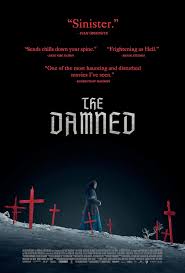
The Damned (2024)

Cinema doesn’t get more international than The Damned, a UK-Belgium-France-Iceland coproduction, filmed in the furthest reaches of Iceland’s Westfjord’s region, as convincing a frozen hellscape as you’re likely to find this side of Ice Station Zebra.

The Damned takes place in the latter part of the 19th century in a remote arctic fishing camp, where a small but determined band of anglers grind out a meager existence wrangling fish from the unforgiving sea.

The recently widowed Eva (Odessa Young), the owner of the fishing boat (and possible Vermeer model), calls the shots around the camp, though she often appears lost and childlike in the presence of her crusty crew.

One particular day, they spy a ship foundering on the rocks, and after some debate, decide that they can’t rescue survivors due to their own lack of food and supplies.

It’s this weighty decision that places the crew in metaphysical danger, as superstitions about vengeful drowned sailors take root in the hearts and minds of the simple fisher folk.

Devotees of the winter horror sub-genre will be right at home amongst the wind, snow, and angry tides, as reason gives way to fear and guilt in the face of powerful elemental forces, all captured by Eli Arenson’s breathtaking cinematography. Skating effortlessly between warm firelight intimacy and the brutal splendor of the Icelandic tundra, the camerawork underscores nature’s icy indifference to human ambition.

Director Thordur Palsson allows the chilly isolation to exacerbate the dread that haunts the crew until something has to give—in this case, sanity. The Damned delivers demons that we didn’t expect, in a winter wonderland of lost souls on thin ice.

Stoke the fire and get another blanket in case of the shivers.

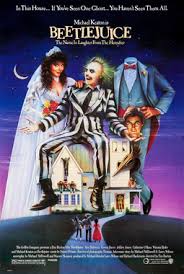
Beetlejuice (1988)

I found it inconceivable that Mrs. Sharky hadn’t seen Beetlejuice! I mean, if we go to the sequel, she’ll be lost!

The original Beetlejuice holds up extremely well, and it’s a shiny example of filmmaker Tim Burton at his most creatively unfettered, before the weight of pleasing soulless studio executives damaged his goods.

The man who gave the world Pee Wee’s Big Adventure, Edward Scissorhands, and Sleepy Hollow was firing on all cylinders, as yet unburdened with hallucinatory tasks like unsuccessfully updating Alice in Wonderland and Charley and the Chocolate Factory for new generations.

Burton casts a wild net in Beetlejuice, introducing us to Barbara Maitland (Geena Davis) and her husband Adam (Alec Baldwin), a recently deceased “normal” couple, who end up trying to haunt their own house to scare away the obnoxious family that moves in after their funeral.

The incoming Deetz family is fronted by brash, no-talent artist Deelia (Catherine O’Hara, who is wonderful),along with her fretful yuppie husband Charles (Jeffrey Jones), and darkling daughter Lydia (Winona Ryder), who has the ability to see the Maitlands and sympathizes with their plight.

The fledgling ghosts, after failing to frighten away the interlopers, summon the titular evil spirit (Michael Keaton) to handle the eviction process. Keaton is the the straw that stirs the drink, a Pu-Pu platter of perversion and patter, rightfully stealing every scene in sight.

In a movie about the importance of family—chosen and blood—we get three levels of domestic possibilities. The Maitlands, though dead, represent the most nurturing option for Lydia, while her parents are usually too distracted with their own devices to pay any attention.

But even the Deetz clan is preferable to Beetlejuice and his quest to take Lydia for his child bride so he can return to the land of the living. Yikes!

Burton earns an advanced degree in visual arts with his depiction of the afterlife, an impenetrable bureaucracy with frazzled, overworked caseworkers like Juno (Sylvia Sydney), in charge of crowded offices filled with confused corpses in various stages of dumbfounded decay.

The contrast between an increasingly bizarre real world, brought on by the arrival of the Deetz family and their awful Boho sensibilities, with a limbo full of mud-colored, take-a-number waiting rooms, helped to establish Burton’s outré credentials.

He also shows an uncanny eye for fashion, giving Lydia striking looks in both black and red. Burton definitely had a hand in Ryder’s ascent as a teen icon that learned to act and stayed forever.

The Vincent Price-loving Burton has honed a visual aesthetic of fascinating grotesquerie much like spiritual forefathers Edward Gorey and Charles Addams. And Beetlejuice is his master’s thesis, a riotous dark comedy that’s still cherished five decades later.

OK, bring on the sequel.

The Skeleton Key (2005)

Yes, the ending of The Skeleton Key is kind of a bummer. Think of it as social justice from beyond the grave.

The luminous Kate Hudson headlines as Caroline, a big-hearted hospice care worker hired to look after catatonic Ben Devereaux (John Hurt), a senior citizen sucking his last few breaths in a decaying plantation house somewhere in the Louisiana bayou.

Caroline’s routine is not made any easier by the presence of Ben’s overbearing wife Grace (Gena Rowlands), who rules the swampy mansion with an iron will in service to an arcane agenda.

Director Iain Softley (Hackers, Backbeat) and writer Ehren Kruger (The Ring, Scream 3) successfully stitch-up a scary Southern gothic, placing the very curious Caroline smack-dab in the middle of a mystery that will test her to the limits, and then some.

Softley deftly guides his camera through keyholes and tumbling tumblers as Caroline unlocks the secrets of a blighted house, mostly kept in the attic. It could be argued that she makes a few too many discoveries for her own good.

John Hurt has no dialogue, yet his face is required to reveal multiple layers of unexpressed anguish, as a man who literally hasn’t a clue how he got here. Gena Rowlands, who recently passed away, is highly animated as a mad matriarch wielding sorcerous formulas to prolong her already very long life.

As previously noted, the finale of The Skeleton Key is decidedly downbeat—until we consider the context of the tragic events that caused the curse. Then, maybe, it’s not so bad.

While you sort out your feelings, please enjoy this crackerjack feature.

Ghostwatch (1992)

I watched Late Night with the Devil, but it didn’t bring me any joy. A far more effective version of hell breaking loose on the telly can be found in Ghostwatch a BBC mockumentary that originally aired on Halloween night, 1992.

Apparently Ghostwatch was so realistic that many citizens were fooled into thinking something truly paranormal was unfolding before their astonished eyes, and network censors vowed never to rerun it on the BBC, accusing the creators of “a deliberate attempt to cultivate a sense of dread.”

Cool beans! Sign me up!

The made-for-TV movie was written by Steven Volk and directed by Lesley Manning, and it follows a large team of 1990s-style BBC reporters and crew onsite at a very normal looking home in Foxhill, that’s been the scene of serious poltergeist activity.

We meet the unfortunate inhabitants of the house, Pamela Early (Brid Brennan), and her two traumatized daughters, Suzanne (Michelle Wesson) and Kimmy (Cherise Wesson).

From the studio, the veteran presenter (Michael Parkinson), a stodgy old skeptic, coordinates the various segments, including live reports from the haunted house, interviews with the beleaguered family, and assorted talking heads adding their two cents worth to the proceedings.

What elevates Ghostwatch is its organic flow from spooky fun to impending danger to an unearthly tele-event, as a very compelling guest crashes the “live broadcast” for a few announcements and a guest editorial.

The pacing is superbly handled and the characters behave as real humans probably would in the presence of a particularly evil entity.

That’s a heavy compliment. You should watch.

Night Swim (2024)

“I’ve always wanted a pool.”

Kurt Russell’s kid, Wyatt Russell, stars as an ailing baseball player who lucks into a house with a magic swimming pool.

Unfortunately, his family may not survive a comeback.

I went into Night Swim under the impression that it was a goofy monster-in-the-drain romp, accompanied by a heavy body count, but writer-director Bryce McGuire threw me a curveball.

Instead, it’s a movie about hope and how misplaced faith in miracles can be a dangerous thing. It also does a very credible job of capturing the joy and terror of owning a backyard pool.

A swimming pool used to be a mighty source of entertainment for the entire family, with a few short breaks for potato chips and kool-aid. Got a jar of change? Kids will dive after dimes all goddamn day.

A child’s introduction to liquid immersion is a unique feeling that goes back to the womb. Weightless, wet, wonderful, intoxicating, and frightening—it’s a different dimension that can play tricks on our senses.

McGuire makes fertile use of those familiar sensations, shooting every scrap of action from multiple angles for an extra slow and scary fun slide into the dark tank.

The title taps into the curious dread that comes with nocturnal aquatics, the feeling of not knowing how deep the deep end goes, and the uncertain possibility that you’re not alone in the pool.

Of course, it wouldn’t be a Hollywood film about a swimming pool without the ancient game of Marco Polo being involved. Do they really play this antique pastime in the 21st century?

I’m skeptical.

Night Swim also includes the obligatory Camel Fight sequence, and sure enough, people escape death by a hair’s breadth. Having once been pinned to the bottom of a pool during a losing Camel Fight, I can confirm that this is the sort of horseplay that can ruin everyone’s good time.

No one wants to see your stupid lungs explode.

The Haunting Lodge (2023)

A beleaguered Georgia landowner summons a husband-wife team of investigators to document possible paranormal parties driving away his customers at a remote hunting lodge.

The hunters are scared of ghosts that noisily walk around at night, and whose presence is felt by virtually everyone who stays there.

Filmmakers Kendall and Vera Whelpton set up shop in the antler-festooned farmhouse, promptly noting atmospheric changes on their EMF readers, and seemingly making contact with an entity that flashes lights in response to questions.

Eventually the Whelptons bring in a rather theatrical psychic, Jill Morris, who makes her own connections into the spirit realm that causes a minor metaphysical ruckus.

Keep in mind, The Haunting Lodge is a DOCumentary and not a MOCKumentary.

The Whelptons maintain that what we are watching is a genuine event, a legitimately filmed paranormal happening.

Therefore, the doors opening and closing by themselves, accompanied by the sounds of booted feet marching down the hallway, are real ghosts.

And there are a few glimpses of beings (?) that appear and move digitally through the darkness.

With plenty of “Did you see that?” moments, the footage allows disbelief to be temporarily and precariously suspended.

Actually, it doesn’t matter if you believe what you see here. It’s the storytelling equivalent of saying, “I swear! It’s true! It happened to my Mom’s cousin’s sister!”

In any case, The Haunting Lodge clocks in at a lean 67 minutes, so it’s not much of a time investment.