Vampires vs The Bronx (2020)

And they’d have gotten away with it too, if it weren’t for those meddling kids. It’s a long-standing tradition that the biggest threat to imminent world domination is nosy teenagers.

Writer-director and Saturday Night Live alum Oz Rodriguez has a blast with villainous bloodsuckers disguised as real estate developers in Vampires vs The Bronx, a fast-paced, family fang feature from Netflix.

All over The Bronx businesses are closing down or getting bought out by Murnau Properties, a real estate firm with a logo depicting Vlad The Impaler. Gotta say one thing for those vampires, they’re a subtle bunch.

The nerds that save the day are a charismatic crew. Miguel, better known as Lil Mayor (Jaden Michael) is the golden boy, a community organizer/hustler who wants nothing more than to save his beloved Bodega from the wrecking ball.

Along with his friends Luis (Gregory Diaz) and Tommy (Gerald Jones), Miguel stumbles onto a vampire-driven plot to gentrify the neighborhood, but finds that it’s hard to get people to believe your story when the newcomers are affluent white folks throwing money around.

Besides, who’s going to listen to some stupid kids?

Jordan Peele correctly identified Class War Horror as a hot topic, and Rodriguez makes the most of his turn at bat. Cleverly setting the threat of Caucasian expansion in a comic-horror milieu, Rodriguez leaves us with no hard ethical decisions to make. Real estate developers bad. Neighborhood scalawags good.

Now let’s all forget our differences and drive out the suckheads!

The cast is 100 percent delightful (including Method Man as a priest!), the action is frequent and not too messy. Naturally, there will be valuable lessons for everyone. It’s not every day we get a vampire adventure fit for all ages, so get it while it’s hot.

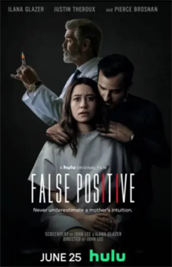
False Positive (2021)

Thinking of starting a family? Maybe give this one a miss if you’re on the fence. False Positive is possibly the cringiest horror movie about childbirth since David Cronenberg’s The Brood.

Writer-director John Lee and writer-actress Ilana Glazer (no romantic comedy debut for this Broad City veteran) have delivered a bouncing bloody shocker about an expectant mother who becomes highly suspicious of both her baby doctor and her baby daddy.

Advertising exec Lucy (Glazer) and surgeon Adrian (Justin Theroux) are an affluent New York couple unable to conceive their own bundle of joy.

As luck would have it, Adrian’s old friend and mentor Dr. John Hindle (Pierce Brosnan, in a deviously dark comic role) is one of the best fertility doctors on the planet! Lucy soon finds herself cooling her heels in the stirrups at Hindle’s posh clinic.

“It’s the one thing as a woman I’m supposed to be able to do,” Lucy complains. “And I can’t do it.”

From this seed of insecurity comes a forest of paranoia.

After a few uncomfortable treatments Lucy successfully gets a bun in the oven, as well as a case of cold feet. She just can’t shake the feeling that people are conspiring against her, particularly Adrian and Hindle, who seem to have their own scientific agenda for the little nipper(s).

Lucy’s concerns are dismissed with buckets of condescension by everyone, who blame the effects of Mommy Brain, a catch-all for the doubts and dark thoughts that come with the arrival of the stork.

When she’s given the choice between birthing twin sons or a single girl, Lucy opts for the latter. Adrian and Hindle openly express hostility with her decision.

By this point, it’s Mom Vs The World, and Lucy is no shrinking violet. Her attempts to gain control of her “birth story” by consulting an African midwife (Zainab Jah) are disastrous, however. The viewer is left to sort out Lucy’s eventual freakout and rampage, and whether or not her women’s intuition has any grounds in reality.

The short answer? Both are possible and plausible. The long answer? Buckle up, Buttercup. Even when she transforms into an avenging fury, our sympathies remain firmly in Lucy’s corner as she lashes out at the sinister men in her life.

Ilana Glazer is a dramatic bulldozer (and rather frightening) as a furious mom driven to extreme measures to keep her body and her baby beyond the reach of the patriarchy.

You’ve come a long way, Rosemary’s Baby.

Things Heard and Seen (2021)

Originally published in Mystery and Suspense, July 4, 2021

The enchanting Amanda Seyfried does her doggone best as an unobservant wife coming to grips with her husband’s dark side in the Netflix production Things Heard and Seen. She is typically radiant, even in sweatshirt and jeans, and shows plenty of intestinal fortitude

Still, one wonders how bright she can be since her scheming husband George (James Norton) is about 96 percent dark side.

Based on the novel All Things Cease to Appear by Elizabeth Brundage, Seyfried plays Catherine Claire, an urban sophisticate from Manhattan who packs up her life and daughter and relocates to a small, upstate town called Chosen, when her hubby lands a gig teaching art history at a nearby college.

Their new home is a former dairy farm, and Catherine throws herself into making the place livable, but confesses to a friend on the phone that she feels isolated in the close-knit academic hamlet. George, meanwhile, hits on a visiting student from Cornell (Natalia Dyer).

No surprise, George is a lying, cheating, sociopath, a fact that becomes painfully obvious to everyone except Catherine, and eventually even she grows wise to his machinations and gaslighting.

Things get paranormal as both Catherine and her daughter Franny sense the haunting presence of the previous lady of the house, who was murdered by her own husband. Apparently it’s a tradition that dates back to house’s construction.

To further complicate matters, the sons of the deceased woman show up and ask Catherine for jobs as farm hands! Catherine ends up making out with older brother Eddie (Alex Neustaeder) after gradually realizing her husband is an amoral monster.

There are loose ends a-plenty (you could knit a sweater), but none more clumsy than George’s obvious malevolence. He complains about Franny being scared of a real ghost and needing to sleep with her parents, thus denying him the opportunity to have relations with his comely wife.

There’s a chance that poor George is under the influence of several generations of wife-killers on this Dairy of the Damned, but like Jack Torrance, he doesn’t offer much in the way of resistance.

I confess to loving the ludicrous Biblical ending, which is straight out of a Wendy Webb novel. The last we see of villainous George is on a sinking sailboat to hell before the scene morphs into a George Innes painting that ties together a few of those loose ends I mentioned earlier.

I think writer-directors Shari Springer Berman and Robert Pulcini crafted themselves a batty, but entertaining thriller. If you can accept a few gaping plot holes, Things Heard and Seen is definitely worth a gander.

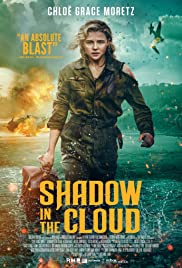
Shadow in the Cloud (2020)

Who knew there was a Palm Springs Film Festival?

In any case, Roseanne Liang distinguished herself there as a “Director To Watch” based on critical reception to her Weird War horror-drama Shadow in the Cloud, currently showing on Hulu.

Set during the waning days of the Second World War, protagonist Maude Garrett (Chloe Grace Moretz) is a plucky pilot who’s managed to fast-talk her way onto a departing B-17, also known as a Flying Fortress, with some top secret cargo.

Maude is an attractive woman, so the male crew wastes no time in bitching about her presence on the plane, that is, when they’re not making lewd suggestions to her over the com-link.

Eventually their suspicions are justified, as Maude proves to be a stowaway with a baby tucked into her carry-on bag. Unfortunately, she’s not the only surprise passenger.

The crew’s original mission of tracking Japanese naval positions comes up now and then, but the real guts of the movie focus on Maude defying gravity in a slugfest with a nasty gremlin, a sabotage-minded creature that’s taken a fancy to her bambino.

Apparently, a top-secret mission wasn’t spicy enough. Let’s throw a monster in the mix! This is always a good idea.

Seriously though, the vertiginous scenes of a kick-ass mom rasslin’ on the wings of an airplane with a savage little monster sent my blood pressure through the ceiling. If you factor in a high-altitude juggling act with a baby stashed in a satchel, it’s practically panic inducing.

At this point in the film’s trajectory, Shadow in the Cloud abandons any pretense of earnest storytelling in favor of white-knuckle action, and I’m okay with that.

Moretz shines bright as Alpha Female on a Plane, protecting her identity, her child, and indeed, most of the sexist dickheads aboard.

All in a day’s work for a single mother with superior survival skills.

Shadow in the Cloud awkwardly jumps a few genre fences but the engine maintains a full head of steam screaming into Thrillsville Station.

I’m going to join with the good citizens of Palm Springs in their enthusiasm for the emerging talents of Roseanne Liang. *Golf clap*

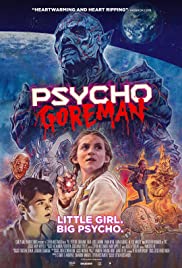
Psycho Goreman (2020)

Originally published in Mystery and Suspense, May 22, 2021

Surely there is a universe where Psycho Goreman would be considered family friendly entertainment. 

You know, like E.T.? Maybe? Sorta?

The latest spectacle by Canadian makeup artist-turned-filmmaker Steven Kostanski, (see also 2016’s cosmic-horror blood bath The Void), Psycho Goreman is indeed the story of a family, but they’re not very friendly.

More like a Dysfunctional Family Circus, as conceived by Spielberg in a rare subversive mood. 

Let’s start with Dad. Greg (Adam Brooks) is one of the worst fathers ever committed to celluloid. A lazy, resentful nitwit, he’s married to Susan (Alexis Kara Hancey), the primary breadwinner, who does her best to keep the clan operational. 

Daughter Mimi (Nita-Josee Hanna) is a hotheaded Narcissist, and calls all the shots in this house. Her long-suffering brother Luke (Owen Myre) is an occasional co-conspirator, but more often than not, an easily bullied opponent.

The balance of power is further tipped in Mimi’s favor when Luke finds an ancient amulet that contains a monstrous alien warlord (Matthew Ninaber), imprisoned several millennia beforehand for trying to conquer the galaxy. 

Luke discovers the artifact while digging his own grave. Mimi reminds him that he lost their most recent game of Crazy Ball, so he gets buried alive. 

Side Note: Crazy Ball is an unfathomable form of dodge ball that is the most sacred game in Mimi and Luke’s world, as well as their primary activity. And rules are rules. 

Since she won at Crazy Ball (she always does), Mimi takes ownership of the talisman and thus controls the most powerful being in existence.

“Do you have a name, monster man?” Mimi asks the towering gargoyle.  

“My enemies sometimes refer to me as the archduke of nightmares,” the giant says, in a basso profundo arch-villain voice. 

“Well, that sucks.” Mia replies unfazed. “Never mind, we can workshop this.” The kids subsequently dub him Psycho Goreman (or PG), after watching him dismember a street gang. 

Psycho Goreman writer-director Kostanski artfully creates hilarious rubberized havoc in the style of Japan’s Tokosatsu movement—better known as Campy Superhero Versus Monster TV Shows (e.g., UltramanMighty Morphin Power Rangers)—that dates all the way back to the middle 20th century. 

And much like the juvenile delinquents over at Troma Entertainment (Toxic Avenger etc.), Kostanski loves blood, guts, and sick monster suits. Yet somehow the action here never degenerates into mere schlock, and we find ourselves rooting for a vicious villain against the forces that come his way. 

As PG faces off against a barrage of interstellar assassins and vengeful demigods that want him out of the picture, we see an evil soulless creature learn just a little bit about love and human compassion. This observation applies principally to Mimi, but also to PG, who comes to appreciate terrestrial pleasures like magazines, hunky boys, and television from his prepubescent captors. 

Slick fight choreography, brilliant character designs, and outrageous dialogue keep our higher senses engaged, while our lizard brains wallow in vivid onscreen pandemonium.  

Sprinkled into all the frenetic mayhem is a sneaky anti-moralist message, one that’s the exact opposite of heroic, as Mimi decides that all the responsibility and power is kind of a pain. 

Eventually, she gives PG his freedom so he can continue his mission to destroy the universe. 

Except for the part Mimi and her family live in. So heartwarming. So wrong. 

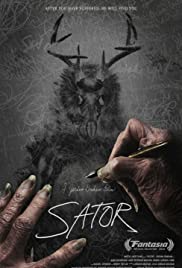
Sator (2019)

Filmmaker Jordan Graham’s docu-horror Sator is an odd hybrid creature that really digs in its claws. Graham is responsible for every detail, including building a desolate cabin in the woods near Santa Cruz, which explains why the movie spent six years in preproduction.

Sator is partially the (real) story of Graham’s grandmother Nani (June Peterson) who appears in the movie as herself, discussing her history of channeling a guardian spirit called Sator. She’s written hundreds of pages inspired by the woodland entity that, she claims, controls the rural world that surrounds her.

Graham utilizes these interviews with Nani to extrapolate an eerie, dreary tale about her grandson Adam (Gabe Nicholson), a solitary forest dweller who (very) slowly gets drawn in by the machinations of Sator. Or perhaps he’s afflicted with the same mental illness that consumed his mother and grandmother. Or both.

On one of his periodic visits, his brother Pete (Michael Daniel) asks Adam if he’s hearing voices. He replies in the affirmative, as if this is all familiar territory to these damaged siblings. When Adam’s dog disappears, he is effectively untethered and falls even harder.

Sator is a humble, terrifying slice of folk horror that succeeds because Graham has left nothing to chance. It’s clearly a labor of love that generated its own momentum, and Graham took the time to carefully blend the real with the unreal. Each frame is a brooding still-life, with the encroaching nature photography especially menacing, as if there truly were a malevolent figure lurking behind the nearest shrub. Watching. You.

Graham’s visual style can best be described as Nature Noir, with overhanging trees choking off any trace of light in the lives of this blighted family. Graham’s camera shifts from color to black and white, following a hopeless trajectory of impending doom.

Not all genre devotees will have the patience for Sator, a movie floating in foreboding, but with little in the way of dialogue and action. I’m recommending that you stay and watch.

If you have the bandwidth to soak up even a fraction of the dread depicted onscreen, it should prove a transformative experience. Good luck, whatever you decide.

Hunter Hunter (2020)

Originally published in Mystery and Suspense, April 25, 2021

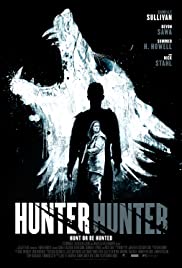
A backwoods survivalist pursues a rogue wolf that threatens his family—and finds something infinitely worse, in Shawn Linden’s Hunter Hunter. 

Somewhere in the wilds of Manitoba, Joseph Mersault (Devon Sawa), his wife Anne (Camille Sullivan), and daughter Renee (Summer Howell), grind out a primitive existence by trapping critters and selling their pelts. 

While this lifestyle is ideal for Joseph, a laconic hunter and woodsman, Anne is tired of hauling furs to the store to bargain for food, and communicating with her husband via Walkie Talkie. Most of all, she wants Renee to go to school and have real friends.

Joseph has been arduously training his daughter to be self-reliant in nature, so Anne’s pitch for a return to civilization doesn’t mesh with his mission. 

“We don’t run from our problems,” he reminds her. 

“You’re scared of people,” she counters.

“This is our home,” Joseph declares. “And nothing pushes us out of our home.”

Future plans are put on hold when Joseph finds carcass evidence of a vicious wolf stealing from their trap lines. As expected, Joseph, the seasoned hunter, disappears into the forest primeval to track the animal and kill it. A solid plan except for one detail: He doesn’t return. 

“Joseph, are you there?” Anne despondently asks her Walkie Talkie, as hours turn into days.

In his absence, Anne nervously tries to put food on the table, relying on Renee’s advice on skinning a fawn for their evening meal. Eventually, Anne hears someone calling for help in the darkness. Instead of the long-missing Joseph, she comes upon Lou (Nick Stahl), a badly injured stranger. Anne loads Lou onto her sled, brings him back to the cabin, and nurses his wounds. 

Renee doesn’t see the point. “He’s a stranger. Dad says we’re not supposed to trust strangers.”

“We’re helping him because that’s what you do when you find someone who needs help,” her mother explains.

But where’s Joseph? And who is Lou?

Writer-director Shawn Linden brings the great outdoors down around the viewer like a shroud. He employs his camera as a stealthy tracker shadowing Joseph, Anne, and Renee through the woods blurring the line between stalker and quarry.

Linden is unsentimental and straight forward in his depiction of frontier living, which includes knowing the correct way to skin and dress prey, so that it won’t ruin the food that’s necessary for survival. 

Anne is not as skilled as her husband and daughter, but she understands necessity.

Hunter Hunter maintains a heady tension for the duration of the film, which builds to a shockingly bloody conclusion. Anne’s final confrontation with the dangerous predator is not as a hunter, but a terrible avenger, and it will leave a mark on your psyche. 

The Block Island Sound (2021)

Originally published in Mystery and Suspense, April 4, 2021

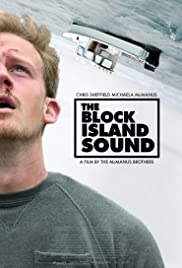
Can a Rhode Island fishing family avoid ending up as Catch of the Day? That is the question posed in The Block Island Sound, an ominous maritime mystery conceived by Matthew and Kevin McManus, previously noted for writing several episodes of Netflix true-crime mockumentary American Vandal. 

This is a movie that only reluctantly divulges information, and the dangling possibilities we’re left with are not the least bit comforting. If you dig ambivalence and an atmosphere of constant dread, you’ll be hooked like a mackerel in no time. 

Consequently, viewers who prefer plausible scenarios may not have the patience to navigate these treacherous waters.

Tom Lynch (Neville Archambault), a hard-drinking boat captain, and his son Harry (Chris Sheffield), make their livings pulling fish from the Atlantic Ocean that surrounds their Block Island home. 

About the same time that Tom starts sleepwalking and blacking out, dead fish wash up on the beaches in record numbers. Tom’s daughter, Audry (Michaela McManus), a single mom who works for the EPA, arrives on the island—with her own kid (Matilda Lawler) in tow—to investigate the phenomenon.

It doesn’t take Audry long to notice that something is amiss with both the marine life and her pappy. Her daughter Emily wakes up screaming with Tom looming over her in the darkness. Tom subsequently disappears at sea and his boat is found abandoned. 

Be advised that the Brothers McManus do their best to distract and mislead the viewer by dropping plenty of red herrings, such as having the local police chief (Willie Carpenter) suggest to Harry that his father was no stranger to booze cruises.

When Harry experiences his own black-out symptoms, Audry and her less-pleasant sister Jen (Heidi Niedermeyer) discuss the notion that madness may run in the family—and that something will have to be done about it. 

The middle section of The Block Island Sound takes a tonal detour, concerning itself with the mundane details of mourning the family patriarch, and the further disintegration of Harry. The formerly stoic fisherman has become extremely agitated by nocturnal visits from the recently deceased Tom, commanding him to bring domestic and wild animals to the boat, and not in a nice, orderly, Noah’s Ark manner. 

Like his father before him, Harry awakens out at sea with nary a clue. Audry and Jen worry about their brother’s erratic behavior but are at a loss for solutions.

Whenever Harry starts doubting his own sanity, his drinking buddy Dale (Jim Cummings) appears to aggregate all the weird stuff that’s happening right under their noses on Block Island. Top-secret experiments, the presence of nearby wind turbines, sea monsters, government agents, weather anomalies, all get a day in conspiracy court. 

Later, Audry meets Kurt (Jeremy Horn), a reclusive local who shares her brother’s time-loss affliction. He in turn points her in a completely different direction, and urges Audry to grab her family and leave the island.

Instead, everyone ends up on the boat.  

Strangely enough, the closest thing to a reasonable explanation comes when Audry reassures Emily about the necessity of environmental research.

“Most of the fish we take out of the water, we put right back in just a few days later,” Audry tells her daughter. “We’re studying them so we can get to know them better. So we can help them better.

Emily protests that some fish don’t survive the experience.

“By taking some brave fish out of the water and learning about them, we can eventually help all the other fish,” Audrey concludes. “It’s a good thing we’re doing.”

Evidently, we’re not the only ones conducting experiments in the universe. As mentioned, the exact nature of the menace, whether aquatic, extra-terrestrial, or weirdly scientific, is never specified. 

But the implications offered by The Block Island Sound are more than enough to take seafood off the menu for a while.   

Synchronic (2020)

Originally published in Mystery and Suspense, March 18, 2021

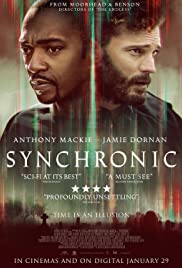
A pair of paramedics discover that the new designer drug that’s sweeping town has troubling side effects, namely, the possibility of getting lost somewhere in time.

Talk about a buzz kill.

Steve (Anthony Mackie) and Dennis (Jamie Dornan) are EMT BFFs who spend their professional hours hip-deep in medical emergencies, usually bouncing around in the back of a New Orleans ambulance. While cleaning up the aftermath of a messy party, the paramedics notice wrappers from a newly synthesized party drug called Synchronic. Instead of getting high, imbibers vanish, and either don’t come back intact, or they return as part of a wall or other solid object. 

Sometimes they’re gone entirely. 

Meanwhile, Steve gets an unwelcome brain tumor diagnosis and decides to experiment with the drug to locate Dennis’s gloomy daughter Brianna (Ally Ioannides) who’s disappeared after a Synchronic session gone bad. Through copious trial and error, he finds that Synchronic results in a localized time trip of seven minutes, and in order to return whole, you must be in the exact spot you took off from.

Needless to say, there were no instructions on the label.

We’re invited along to experience the mind/time-altering effects with Steve, as he visits the Big Easy during the Ice Age (thoughtfully bringing fire to early man), and nearly gets stabbed by a freaked-out conquistador during the years of Spanish conquest. Imagine Steve’s surprise, as a modern day African American, when he finds himself in pre Civil War New Orleans, nearly getting lynched and sacrificed in a voodoo ceremony on successive trips. 

With a limited supply of Synchronic, Steve is forced to take risky chances calculating his return trajectory with (hopefully) another living being. 

“People like us, who believe in physics, know that the distinction between the past, present, and future is only a stubbornly persistent illusion,” Steve intones, dutifully quoting Einstein.

Certainly Steve’s nobility and the convenience of a fatal illness help propel the storyline to its poignant conclusion, but Mackie carries the role of reluctant action hero to a nerve-wracking finale, and we’re with him every last step.

Synchronic is a superb piece of budget sci-fi filmmaking by Justin Benson and Aaron Moorhead, who also made the similarly time-trap themed The Endless, itself a movie that deserves more attention.

Benson and Moorhead make time travel a truly frightening prospect, tying it to a party drug in pill form that shreds dimensions. The scenes in which Steve trips look like they take place in an unstable and menacing parallel world, because … they do.  

Writer Benson always brings fully formed characters to the crisis, and in Synchronic, the best-buddy friendship of Steve and Dennis really fleshes out the time-ripping action sequences. Theirs is a comically dysfunctional relationship, but the bond is strong even when they come to blows. 

“I found out I was dying. My brain… has a tumor. And all those things just seem trivial,” he eloquently tells his friend. “That there’s meaning in the things I do have, and I want to spend the time I have preserving them. … When you’re staring down at the end you realize there are far worse things than death.”

Like banishment to a less-civilized world, for example.

The Dark and the Wicked (2020)

Originally published in Mystery and Suspense, February 7, 2021

“There’s nothing worse than a soul left alone in the end.”

Texas filmmaker Bryan Bertino wrote the screenplay for The Strangers, a movie that made us feel unsafe in our own homes. In The Dark and the Wicked, Bertino gets downright metaphysical, worrying us about the state of our immortal souls.

The setting is a blighted patch of Texas prairie, but Bertino grazes the same bleak spiritual tundra as Ingmar Bergman, suggesting that a human soul bereft of love is vulnerable to attack by dark forces.

Somewhere in a particularly lonesome part of Texas, an old man (Michael Zagst) lays dying in his bed, wheezing out air supplied by an oxygen tube. A nurse (Lynn Andrews) sits nearby knitting and observing his tortured breathing. The old man’s wife (Julie Oliver-Touchstone) chops vegetables in the kitchen staring vacantly out a window at the grim landscape of the family farm. Their two children, Louise (Marin Ireland), and Michael (Michael Abbott Jr), now grown, have returned to lend comfort to Mother and watch over their fading papa. 

How did everything go so wrong? And how are they getting worse? The Dark and the Wicked never says for sure. Instead, we are left with symptoms pointing to a malady beyond the reach of medicine.

“You shouldn’t have come,” Mother hisses at her offspring.

With wolves howling in the distance (and getting closer all the time), there is no comfort or joy in the family reunion. Bertino illustrates this through dispassionate editing choices, settling on objects or desolate scenery for every shot with a person in it, as if the presence of human beings means nothing in this dreary place. But there is a growing menace in the household that can’t be ignored. Louise sees her comatose father in the shower, and Michael spies his mother floating in the air through a window.

It falls to the sympathetic nurse to try and articulate all the bad mojo.

“I think there are things in this world, horrible things, wicked. And they come for whoever they want,” she cautions Michael, explaining that a soul needs love to keep it safe. “I can smell the fear in y’all. I can feel it in this house.” she murmurs.

As previously stated, love, warmth, and comfort are in short supply around these parts. Louise and Michael are both clearly guilt-ridden about ignoring their parents for so long, and the guilt gets snowballed into a bad situation.  Rather than delve into the specifics of sin, The Dark and the Wicked drops clues, frightful images, and ghostly visitors that haunt the siblings till it becomes unbearable.

Save your pity for the one left alone.