Frogs (1972)

Ray Milland won a Best Actor Oscar courtesy of his spirited dip into dipsomania in Billy Wilder’s Lost Weekend (1946), so let’s cut him some slack for Frogs, an unintentionally hilarious stinker from American International Pictures.

First things first: At no point in the film is anyone eaten by a giant frog. The poster is complete bullshit.

Since it’s a horror movie with an environmental message, Milland is cast as Jason Crockett, a venomous industrialist in a wheelchair ruling over a polluted private island plantation, fussed over by his feckless family intent on currying the old man’s financial favor.

Keeping Milland company is a naked-lipped Sam Elliott playing Pickett Smith, a hippie nature photographer in a canoe accidentally swamped by Clint Crockett (Adam Roarke), one of the patriarch’s progeny of sycophants and spoiled brats.

The exception is Karen Crockett (Joan Van Ark from Knot’s Landing), a lovely and luminous free spirit, who naturally gravitates to Smith, the stranger in the group, and the only other decent human being for miles.

It seems the senior Crockett wants his island free of frogs, and presumably snakes, spiders, gators, gulls, geckos, skinks, skunks, squirrels, and any other member of the animal kingdom that dares show its face.

“I still believe man is master of the universe,” he sneers at Smith.

Crockett instructs his minions to spray pesticides on the flora and fauna surrounding the estate. The flora and fauna don’t care for this one bit and mount a counter attack.

There is not a single sequence in the movie that isn’t punctuated (padded) with additional nature footage of creeping critters hopping and slithering closer to the Crockett house. Frogs are lobbed haphazardly into frame by production assistants, occasionally piling up in abundance, and photographed from menacing low angles to show they clearly mean business.

Directed by TV veteran George McCowan, Frogs boasts some of the most howlingly cheap and awful death scenes ever, rivaling poor Bela Lugosi wrestling an inanimate octopus in Ed Wood’s Bride of the Monster.

I was reminded of this as I watched Stuart Martindale (George Skaff), a bald guy in a velour suit, forced to grapple with an unconscious crocodile.

A snapping turtle claims one victim! Another gets lost in the swamp chasing butterflies, and after what seems like several weeks of wandering and weeping, finally succumbs to a surfeit of snake bites.

Yet another of Crockett’s foppish relatives ends up poisoned in a closed greenhouse thanks to a bunch of reptiles shattering multiple bottles of industrial strength pesticide, as is their wont.

The best/worst demise, undoubtedly belongs to Michael Martindale (David Gilliam), which involves being cocooned by moss and having spiders spilled upon his person, including one right in the mouth.

As for Ray Milland, the conservative think-tank commander goes down with the ship, deserted by everyone including his dog. He is seen taking his final agonizing breath amidst another barrage of tossed toads, glaringly accompanied to the grave by Les Baxter’s shrieking, atonal score.

What a sorry way to croak!

Frogs isn’t so bad it’s good. But the low-rent laughs are all over the place, just like the titular terrors who pounce on Crockett’s star-spangled birthday cake, ruining his crappy family celebration.

Remember: Environment good! Old rich white men bad! Too bad this populist message didn’t help George McGovern in ’72.

Die Alone (2024)

Screen history repeats itself, as Carrie-Anne Moss is once again paired with an amnesia victim (Douglas Smith) searching for answers in Die Alone, a Canadian post-apocalypse drama crawling with a verdant variety of zombies that have gone to seed.

Writer-director Lowell Dean makes sensible use of Saskatchewan’s panoramic grasslands to anchor the action, following a few hardy survivors stumbling through a barren landscape largely stripped of humanity thanks to a plant-based virus that’s amped up the vegetation to lethal levels.

Ethan (Smith) and Emma (Kimberly Sue Miller) are a young couple on the run when the environmental shit hits the fan. Despite making a plan to meetup at a remote cabin in case they get separated, Ethan’s trauma-induced amnesia keeps getting in the way, and the two predictably lose track of each other.

Luckily clueless Ethan gets rescued by rugged survivalist May (Moss), who agrees to help him locate his lost love and provide reasonable room and board in exchange for farm labor.

Instead of gratitude, Ethan steals May’s truck and goes off to search for Emma on his own, but the absent-minded protagonist requires frequent rescuing. That means many scenes begin with Ethan regaining consciousness in different locations, usually covered in blood, sweat, and ears.

The zombie community is represented by hungry humanoids that have been reclaimed by the earth, each with its own distinctive look fusing foliage and fashion. The makeup department deserves the donuts for creating such intriguing new creatures.

Strangely, Dean mostly employs the undead as set dressing, rather than as a serious threat, limiting their fright potential to a precious few moments.

But it’s not a dealbreaker.

That Die Alone succeeds as a movie is largely due to the unbreakable strength of its central relationships and the filmmaker’s fully developed arsenal of appreciation for those that came before him.

Cinema nerds will eagerly recognize shots paying tribute to everyone from John Ford to Terrence Malick to Sam Raimi. Dean’s script, though maddeningly fractured and episodic, leads to a crushing finale that I’m still chewing on like old Milk Duds.

Be like the cows. Keep chewing. It’s making more sense all the time.

The Gorge (2025)

So many genres, so little time.

When the creative team in charge of a film project gets carried away trying to please each and every imagined audience member, the results are usually a load of crap.

The Gorge, written by Zach Dean and directed by Scott Derrickson, seemingly utilizes this kitchen-sink approach, tossing a zesty, messy melange of romance, action, horror, and conspiracy theory that’s a just a tad over two hours in length.

And somehow it works pretty damn well as a super-engaging popcorn flick!

Levi (Miles Teller) and Drasa (Anya Taylor-Joy) are two highly trained snipers from different countries assigned guard duty at opposite watch towers on either side of the enormous and mysterious titular gorge.

The mercenaries are armed to the hilt and instructed not to contact each other, but the need for company proves too much for Levi and Drasa, and soon they’re flirtatiously firing rounds, demonstrating their skill and accuracy, while a Ramones record plays.

“I guess this qualifies as a Meet Cute,” I whisper to Mrs. Sharky.

Though separated by a chasm that occasionally spits out monstrous hybrid humanoids called Hollow Men, the hired guns overcome logistical challenges and use a zip line to hook up and become not just a couple, but an elite and capable survival team.

This comes in handy when their military handler (Sigourney Weaver) decides they can no longer be trusted.

Once the protagonists figure out that this version of the future has no future, their decision to join forces is logical and inevitable. Besides, they’re a hot couple, and Drasa is clearly the aggressor, eventually rescuing Levi from an unexpected plummet into the abyss.

Through waves of decent monster attacks and fabulous fire fights, we actually grow fairly attached to Levi and especially the badass Drasa, which helps keep the viewer grounded during the mood shifts and infrequent talky interludes.

The Gorge is also a very impressive example of world-building, an important component to any successful popcorn operation. The mise-en scene has been carefully considered providing a foundation of future realism that looks like it was designed by the prison industrial complex.

No wonder no one want to hang around!

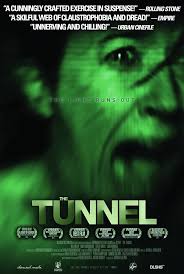
The Tunnel (2011)

An investigative reporter and a film crew descend into the darkness looking for a story—and find a doozy.

The Tunnel is a supremely creepy Australian found footage/creature feature that takes place in a vast network of subway tunnels beneath the streets of Sydney. Natasha Wagner (Bel Delía) is an ambitious journalist with water on the brain.

Specifically, Natasha wants to know why the city government abandoned a plan to recycle millions of gallons of water located in an old underground reservoir, so she picks up a map and convinces her trusty team of techs to have a look around down there and roll cameras.

Instead of civic corruption, Natasha, cameraman Steve Miller (Steve Davis), sound guy Jim “Tangles” Williams (Luke Arnold), and unit producer Pete Ferguson (Andy Rodoreda) uncover evidence of homeless folks living in the tunnels, as well as a fearsome predator that’s decimating their numbers.

Director Carlo Ledesma keeps the pace breathless and chaotic, dumping the cast in a very dark place. Fading sources of illumination prove particularly vexing to the trapped investigators, who have deduced that whatever manner of beast is stalking them, it’s frightened of light.

As is the case with media outlets these days, the whole case gets shut down at the behest of powerful interests, despite a few pesky survivors with some questionable footage.

And they never did find poor Tangles!

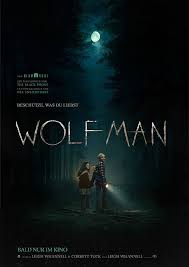
Wolf Man (2025)

The most impressive thing about Leigh Whannell’s Wolf Man is that it got made.

Whannell, the Australian horror maestro who introduced us to the Saw and Insidious franchises, clearly has serious show biz clout to get this turkey green-lighted.

This was obviously a “troubled” production.

Blake (Christopher Abbott) is a stay-at-home dad married to busy magazine writer Charlotte (Julia Garner). While Charlotte earns bucks, Blake looks after their daughter Ginger (Matilda Firth), until he’s notified that his father Grady (Sam Jaeger) has been declared officially dead, after being reported missing for several years.

Now the owner of the family farm, Blake drags his dubious brood out to the Middle of Nowhere, and in real time they are attacked by a strange creature (see the film’s title), and spend the evening running and hiding from same.

Meanwhile, Blake, the dutiful husband and father, begins to change into something remarkably similar to the beast that’s stalking them.

Wow. Didn’t see that one coming.

There is little dialogue, which lends itself to Mystery Science Theater ad-libbing during the howlingly bad action sequences, such as Blake gnawing on his own arm, and two guys in simian rubber masks wrestling on a dark floor.

What are we watching?

Wolf Man is simply godawful, and since Whannell directed and cowrote this mess, he gets the lion’s share of the blame.

It’s a complete waste of Julia Garner’s talents, and hopefully won’t interfere with her trajectory as one of Hollywood’s best young actresses. She’s given very little to do besides wander through the night with a flashlight.

I’ve said this before when reviewing werewolf movies and it certainly applies to Wolf Man: If you can’t come up with better transformation effects than The Howling or American Werewolf In London—both of which were made 43 years ago!—then don’t bother.

The Secret Of Crickley Hall (2012)

Sounds like a Hardy Boys Mystery that never made it to the editing stage, but The Secret Of Crickley Hall is a cracking good BBC miniseries (three one-hour episodes) based on the book by James Herbert.

Written and directed by Dr. Who alum Joe Ahearne, the story straddles past/present timelines, spilling the dramatic details of the Caleigh family, who are hoping for a fresh start in the North of England after the disappearance of their son.

The idea of turning the page on tragedy seems highly unlikely at this location, as Crickley Hall turns out to be a former orphanage that was overseen by seriously damaged WW I veteran Augustus Cribben (Douglas Henshall) and his seething sister Magda (Sarah Smart).

In keeping with the popular paranormal theory that those who’ve experienced loss are more sensitive to the plight of the deceased (The Changeling, et al), motivated mom Eve Caleigh (Suranne Jones), intuits that her still-missing child is somehow connected with the orphans who died in a flood at Crickley Hall during WW II.

This leads to a parallel narrative from the past about Nancy Linnet (Olivia Cooke), a determined young teacher hired to educate the wayward waifs of Crickley Hall. Instead, she uncovers terrible abuses visited upon the children by the cruel Cribben siblings, who unfortunately remain above suspicion in their community.

With a few splashes of redemption, revenge, and romance, and featuring a realistically frightening ghost, The Secret Of Crickley Hall is well-above-average haunted house hoopla handled by a cast of top drawer talent that includes David Warner and Donald Sumpter in crucial character roles.

Ghosts may or may not be scarier in the English countryside, but their tales fit this bleak territory like a black glove.

Recommended!

The Damned (2024)

Cinema doesn’t get more international than The Damned, a UK-Belgium-France-Iceland coproduction, filmed in the furthest reaches of Iceland’s Westfjord’s region, as convincing a frozen hellscape as you’re likely to find this side of Ice Station Zebra.

The Damned takes place in the latter part of the 19th century in a remote arctic fishing camp, where a small but determined band of anglers grind out a meager existence wrangling fish from the unforgiving sea.

The recently widowed Eva (Odessa Young), the owner of the fishing boat (and possible Vermeer model), calls the shots around the camp, though she often appears lost and childlike in the presence of her crusty crew.

One particular day, they spy a ship foundering on the rocks, and after some debate, decide that they can’t rescue survivors due to their own lack of food and supplies.

It’s this weighty decision that places the crew in metaphysical danger, as superstitions about vengeful drowned sailors take root in the hearts and minds of the simple fisher folk.

Devotees of the winter horror sub-genre will be right at home amongst the wind, snow, and angry tides, as reason gives way to fear and guilt in the face of powerful elemental forces, all captured by Eli Arenson’s breathtaking cinematography. Skating effortlessly between warm firelight intimacy and the brutal splendor of the Icelandic tundra, the camerawork underscores nature’s icy indifference to human ambition.

Director Thordur Palsson allows the chilly isolation to exacerbate the dread that haunts the crew until something has to give—in this case, sanity. The Damned delivers demons that we didn’t expect, in a winter wonderland of lost souls on thin ice.

Stoke the fire and get another blanket in case of the shivers.

Hush (2016)

Tonight! The War Between the Sexes! Right here on Pay Per View! Let’s give it up for Hush!

Writer-director Mike Flanagan (Haunting of Hill House, Fall of the House of Usher, Midnight Mass, Oculus) and his wife, writer-actress Kate Siegel constructed this lean, mean thriller about a deaf-mute author fighting for her life against a sadistic killer.

Hush also makes sense as an anxiety inducing metaphor about unwanted male attention, as Maddie Young (Siegel), a best-selling author, can’t even have a reasonable expectation of privacy IN THE MIDDLE OF A FRIGGIN’ FOREST!

Maddie lives in a nice house (with lots of doors and windows) somewhere in the deep woods. A bout with meningitis at age 13 has left her without speech and hearing, but she has a crafty writer’s brain that never stops ticking, as we squeamishly witness her reviewing potential escape options that never materialize.

The plucky scribe finds herself trapped in her bucolic hacienda by a masked madman (John Gallagher Jr) with a crossbow, who just recently finished an evisceration job on Maddie’s neighbor (Samantha Sloyan).

Who? Why? Not important. Perhaps Cupid’s in a real bad mood today. Flanagan and Siegel play the cat-mouse game to the hilt, which usually ends up plunging into someone’s neck or torso.

Nosey neighbors don’t fare well in Hush, but the timely arrival of a cat named Bitch provides Maddie with enough of a diversion to go on the offensive against toxic masculinity. The killer reminds Maddie that he’s enjoying himself, and that he can take her whenever he wants.

The maniac clearly derives grim pleasure in cutting off her limited means of communication (he also collects cell phones) and watching Maddie react to the mounting stressors he places upon her.

The entire movie is gaze-oriented. Maddie is either keeping track of her assailant roaming around in her yard (he makes no effort at stealth or concealing his identity, which makes the situation even more dire)—or the killer is feverishly observing Maddie as she tries to hide and barricade herself inside a house with too many access points.

As I mentioned, Hush is all killer, no filler. No competing storylines, no comedy relief, no shaky camera tomfoolery. Just two people (one of whom can’t call for help) airing their differences. To the death.

This is what happens when you don’t respect boundaries.

Heretic (2024)

This is a different Hugh Grant, though there is a passing resemblance to the rom-com Don Juan with the aw-shucks manner.

Written and directed by Scott Beck and Bryan Woods, Heretic is another film set during a storm that makes the most of its few sets and small cast. Sister Paxton (Chloe East) and Sister Barnes (Sophie Thatcher) are young Mormon missionaries on bicycles visiting the home of Mr. Reed (Grant), a seemingly absent-minded scholar with an interest in religion and spiritual knowledge.

An approaching deluge induces the girls to accept Mr. Reed’s hospitality and enter his surprisingly roomy cottage. He mentions that his wife is in the kitchen making blueberry pie!

The front door closes and the camera backtracks down the foot path that approaches the house. It seems like a long way from the road.

Trap sprung.

Mr. Reed proves to be a highly intelligent and extremely well-read individual, who goes from asking questions about Mormonism to lecturing the girls on his own personal quest for the “one true religion.”

At times, he is a professor impressively expounding on several subjects at once to a class of freshmen, and Barnes and Paxton soon find themselves in over their heads as the subject matter becomes increasingly uncomfortable.

The time passes in conversation and the smell of blueberry pie fills a cozy sitting room that begins to look suspiciously normal.

Beck and Woods do a masterful job of gradually goosing up the tension without turning Mr. Reed into Dracula. Can this old duffer even be considered a physical threat?

Reed mostly remains reasonable, but the red flags are starting to pile up. Cell phones don’t work and the front door is on a time lock that won’t open till morning (!), so if the girls want to leave (and they’re always welcome to), they’ll have to exit through the back of the house.

Credit must be given to Chloe West and Sophie Thatcher for instilling their characters with brains and backbones, the ability to think and reason even when their situation hits nightmare territory.

As for Grant, the charmingly awkward Brit with the hots for Andie McDowell is a faded lobby poster, but he can still badger and beguile a captive audience. The ingratiating tendencies and ability to spin complex thoughts into amusing, provocative word bubbles remains intact in Heretic, and Grant digs deep to reach a rich vein of menace.

Trim Season (2023)

Though it has a few decent moments, Trim Season is mostly a harsh toke.

Director Ariel Vida definitely has a gift for visual flair but largely ignores storytelling in favor of making sure that the color red is fully represented in as many shots as possible.

A group of broke stoner girls and one trans man get a good paying gig trimming bud at a pot farm in Northern California.

Nothing wrong with that, I’ve done it myself. The isolation, drugs, little sleep, and sketchy authority figures make it a ripe scenario for any number of horror options.

The trimmers are introduced to Mona (Jane Badler), the mysterious and commanding owner of the operation, and quickly find her to be a firm enforcer of rules as well as their provider of weed and employment.

Emma (Beth Million) is our chief protagonist among the reefer recruits, but like most of the cast, she does little to distinguish herself, leaving Badler to dominate the action, as a sort of hippie Elizabeth Bathory, smoking her own strain of crimson cannabis.

I appreciated Vida’s gender tweaking throughout, as the girls are clearly protective of Dusty (Bex Taylor-Klaus), a vulnerable trans man, who would rather not talk about his past, but has an instant connection with Mona’s shy son, Christopher (Corey Hart).

Trim Season squanders much of its potential, however, thanks to stock characters, a wayward script, and careless plot developments: Why make a point of having Lex (Juliette Kenn De Balinthazy) being impervious to pain if it doesn’t come into play in any meaningful way?

It doesn’t help that when Mistress Mona flexes her witchy powers, she waves her hands in the air, remotely guiding her victims to off themselves like awkward, staggering marionettes. Instead of the intended dread, the results are comical, at best.

Also, note to the art department. The scenes featuring the girls trimming buds around the table are marred by the presence of weird, bulbous styrofoam cannabis. Is that the best we can do?

As I mentioned, this particular plot could have yielded some top-shelf terror. Sadly, Trim Season wouldn’t get a fly high.