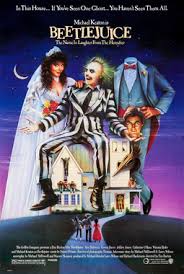
Beetlejuice (1988)

I found it inconceivable that Mrs. Sharky hadn’t seen Beetlejuice! I mean, if we go to the sequel, she’ll be lost!

The original Beetlejuice holds up extremely well, and it’s a shiny example of filmmaker Tim Burton at his most creatively unfettered, before the weight of pleasing soulless studio executives damaged his goods.

The man who gave the world Pee Wee’s Big Adventure, Edward Scissorhands, and Sleepy Hollow was firing on all cylinders, as yet unburdened with hallucinatory tasks like unsuccessfully updating Alice in Wonderland and Charley and the Chocolate Factory for new generations.

Burton casts a wild net in Beetlejuice, introducing us to Barbara Maitland (Geena Davis) and her husband Adam (Alec Baldwin), a recently deceased “normal” couple, who end up trying to haunt their own house to scare away the obnoxious family that moves in after their funeral.

The incoming Deetz family is fronted by brash, no-talent artist Deelia (Catherine O’Hara, who is wonderful),along with her fretful yuppie husband Charles (Jeffrey Jones), and darkling daughter Lydia (Winona Ryder), who has the ability to see the Maitlands and sympathizes with their plight.

The fledgling ghosts, after failing to frighten away the interlopers, summon the titular evil spirit (Michael Keaton) to handle the eviction process. Keaton is the the straw that stirs the drink, a Pu-Pu platter of perversion and patter, rightfully stealing every scene in sight.

In a movie about the importance of family—chosen and blood—we get three levels of domestic possibilities. The Maitlands, though dead, represent the most nurturing option for Lydia, while her parents are usually too distracted with their own devices to pay any attention.

But even the Deetz clan is preferable to Beetlejuice and his quest to take Lydia for his child bride so he can return to the land of the living. Yikes!

Burton earns an advanced degree in visual arts with his depiction of the afterlife, an impenetrable bureaucracy with frazzled, overworked caseworkers like Juno (Sylvia Sydney), in charge of crowded offices filled with confused corpses in various stages of dumbfounded decay.

The contrast between an increasingly bizarre real world, brought on by the arrival of the Deetz family and their awful Boho sensibilities, with a limbo full of mud-colored, take-a-number waiting rooms, helped to establish Burton’s outré credentials.

He also shows an uncanny eye for fashion, giving Lydia striking looks in both black and red. Burton definitely had a hand in Ryder’s ascent as a teen icon that learned to act and stayed forever.

The Vincent Price-loving Burton has honed a visual aesthetic of fascinating grotesquerie much like spiritual forefathers Edward Gorey and Charles Addams. And Beetlejuice is his master’s thesis, a riotous dark comedy that’s still cherished five decades later.

OK, bring on the sequel.

The Skeleton Key (2005)

Yes, the ending of The Skeleton Key is kind of a bummer. Think of it as social justice from beyond the grave.

The luminous Kate Hudson headlines as Caroline, a big-hearted hospice care worker hired to look after catatonic Ben Devereaux (John Hurt), a senior citizen sucking his last few breaths in a decaying plantation house somewhere in the Louisiana bayou.

Caroline’s routine is not made any easier by the presence of Ben’s overbearing wife Grace (Gena Rowlands), who rules the swampy mansion with an iron will in service to an arcane agenda.

Director Iain Softley (Hackers, Backbeat) and writer Ehren Kruger (The Ring, Scream 3) successfully stitch-up a scary Southern gothic, placing the very curious Caroline smack-dab in the middle of a mystery that will test her to the limits, and then some.

Softley deftly guides his camera through keyholes and tumbling tumblers as Caroline unlocks the secrets of a blighted house, mostly kept in the attic. It could be argued that she makes a few too many discoveries for her own good.

John Hurt has no dialogue, yet his face is required to reveal multiple layers of unexpressed anguish, as a man who literally hasn’t a clue how he got here. Gena Rowlands, who recently passed away, is highly animated as a mad matriarch wielding sorcerous formulas to prolong her already very long life.

As previously noted, the finale of The Skeleton Key is decidedly downbeat—until we consider the context of the tragic events that caused the curse. Then, maybe, it’s not so bad.

While you sort out your feelings, please enjoy this crackerjack feature.

Oddity (2024)

Irish filmmaker Damian McCarthy made a bit of a splash with his debut, Caveat (2020), an indie-horror shocker that more than recouped the measly 250,000 pounds spent on its production.

Oddity is McCarthy’s second film, and the raw talent revealed in Caveat gains both power and polish, anchored by an incendiary performance by Carolyn Bracken, as twin sisters Dani and Darcy Timmins—the former a murder victim, the latter a blind collector of cursed objects.

Darcy decides that her sister’s murder at the hands of an escaped mental patient (Tadhg Murphy) is just a little too coincidental, considering her sister’s husband Ted (Gwilym Lee) is a psychiatrist at the nearby asylum from whence the killer came!

As if that weren’t enough to put a bee in her bonnet, Darcy discovers that Ted has a new girlfriend (Caroline Menton) less than a year after her sister’s brutal death by bludgeoning.

Through a magic ritual involving the glass eye of the alleged killer, Darcy figures out who the real culprits are and rebrands herself as an instrument of vengeance.

The obvious care and attention to detail provided by writer-director McCarthy is a pleasure to behold—the atmosphere of the mostly single set of a remote country house successfully develops layers of menace with each scene.

The narrative is bone simple, as Darcy arranges a sinister fate for the conspirators responsible for her twin’s demise, disguised as a bizarre housewarming gift: a life-sized wooden man that appears to be distressingly ambulatory.

The actual business of the revenge plot isn’t terribly intricate, but McCarthy consistently avoids the obvious choices, and the viewer is all the better for it.

Oddity is a first-rate horror experience that belies the lack of a body count, and indicates that Damian McCarthy is emerging as a confident comer in modern genre filmmaking.

Don’t believe me? See for yourself!

Ghostwatch (1992)

I watched Late Night with the Devil, but it didn’t bring me any joy. A far more effective version of hell breaking loose on the telly can be found in Ghostwatch a BBC mockumentary that originally aired on Halloween night, 1992.

Apparently Ghostwatch was so realistic that many citizens were fooled into thinking something truly paranormal was unfolding before their astonished eyes, and network censors vowed never to rerun it on the BBC, accusing the creators of “a deliberate attempt to cultivate a sense of dread.”

Cool beans! Sign me up!

The made-for-TV movie was written by Steven Volk and directed by Lesley Manning, and it follows a large team of 1990s-style BBC reporters and crew onsite at a very normal looking home in Foxhill, that’s been the scene of serious poltergeist activity.

We meet the unfortunate inhabitants of the house, Pamela Early (Brid Brennan), and her two traumatized daughters, Suzanne (Michelle Wesson) and Kimmy (Cherise Wesson).

From the studio, the veteran presenter (Michael Parkinson), a stodgy old skeptic, coordinates the various segments, including live reports from the haunted house, interviews with the beleaguered family, and assorted talking heads adding their two cents worth to the proceedings.

What elevates Ghostwatch is its organic flow from spooky fun to impending danger to an unearthly tele-event, as a very compelling guest crashes the “live broadcast” for a few announcements and a guest editorial.

The pacing is superbly handled and the characters behave as real humans probably would in the presence of a particularly evil entity.

That’s a heavy compliment. You should watch.

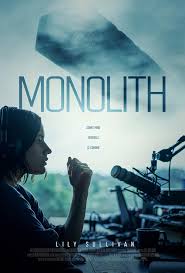
Monolith (2022)

An investigative journalist (Lily Sullivan) has suffered a career setback. Hoping to salvage her reputation with a new podcast about unexplained phenomenon, she retreats to her parents’ posh pad in the Australian wilderness to brainstorm some ideas.

“I need a story,” she tells her boss on the phone. To paraphrase Apocalypse Now, for her sins, they gave her one.

Monolith, written by Lucy Campbell and directed by Matt Vesely, is confined to one location, with a single actress interacting with other characters online and over the telephone.

The journalist, at first reluctantly, and then with single-minded vigor, pursues a juicy conspiracy story revolving around the mysterious distribution of “black bricks” that exert a kind of power over those who receive them.

As she assembles and submits episodes of her podcast, her listeners begin to take notice, and soon her inbox is full of testimony from people who’ve had experiences with these bricks, the effects of which include visions, loss of appetite, cognitive decline, and occasionally a fatal illness.

As often happens with conspiracy cases, the reporter gets swept up and goes down a very deep, dark rabbit hole, that originates surprisingly close to home.

Lily Sullivan dramatically carries Monolith and she’s quite up to the task, as her increasingly odd situation requires a fully stocked arsenal of emotional firepower. She threatens, cajoles, pleads, and does a remarkable job inhabiting what appears to be a nervous breakdown of some sort, that also could be a fight for her very soul.

Sullivan’s transformation from a sulky ego-driven internet personality to an obsessed participant in her own developing story, is astonishing and completely believable.

Well worth the watch, in my opinion.

Night Swim (2024)

“I’ve always wanted a pool.”

Kurt Russell’s kid, Wyatt Russell, stars as an ailing baseball player who lucks into a house with a magic swimming pool.

Unfortunately, his family may not survive a comeback.

I went into Night Swim under the impression that it was a goofy monster-in-the-drain romp, accompanied by a heavy body count, but writer-director Bryce McGuire threw me a curveball.

Instead, it’s a movie about hope and how misplaced faith in miracles can be a dangerous thing. It also does a very credible job of capturing the joy and terror of owning a backyard pool.

A swimming pool used to be a mighty source of entertainment for the entire family, with a few short breaks for potato chips and kool-aid. Got a jar of change? Kids will dive after dimes all goddamn day.

A child’s introduction to liquid immersion is a unique feeling that goes back to the womb. Weightless, wet, wonderful, intoxicating, and frightening—it’s a different dimension that can play tricks on our senses.

McGuire makes fertile use of those familiar sensations, shooting every scrap of action from multiple angles for an extra slow and scary fun slide into the dark tank.

The title taps into the curious dread that comes with nocturnal aquatics, the feeling of not knowing how deep the deep end goes, and the uncertain possibility that you’re not alone in the pool.

Of course, it wouldn’t be a Hollywood film about a swimming pool without the ancient game of Marco Polo being involved. Do they really play this antique pastime in the 21st century?

I’m skeptical.

Night Swim also includes the obligatory Camel Fight sequence, and sure enough, people escape death by a hair’s breadth. Having once been pinned to the bottom of a pool during a losing Camel Fight, I can confirm that this is the sort of horseplay that can ruin everyone’s good time.

No one wants to see your stupid lungs explode.

Godzilla X Kong: The New Empire (2024)

This is what I get for not staying in touch.

It’s been quite a spell since I sat down with Godzilla. And King Kong? Forever.

This is the fourth (!) Godzilla-Kong film in the Monsterverse series that started 10 years ago with Godzilla. Since then, both creatures have been busy with their lives.

Godzilla appears in times of emergency to battle renegade monsters on behalf of humanity, though the collateral damage is usually catastrophic, as when he falls asleep in the Roman Coliseum after crushing a giant crustacean.

Meanwhile, King Kong is trying to reestablish his simian kingdom in Hollow Earth, after the destruction of Skull Island, but a bad tooth is preventing the great ape from leading his best life.

Dr. Ilene Andrews (Rebecca Hall), the head of Kong Research (I applied for that job!), is busy raising Jia (Kaylee Hottle), the last survivor of the Iwi Tribe from Skull Island, but the little native girl doesn’t seem to work and play with others.

It’s not always easy having a psychic connection to King Kong.

Oh yeah, Kong’s tooth. Andrews calls in her old friend Trapper (Dan Stevens) a swinging monster dentist, who replaces Kong’s busted canine. She also recruits Bernie Hayes (Brian Tyree Henry) a plugged-in podcaster and documentarian to interpret seismic data that suggests Godzilla is on the move.

Anyway, the humans recede into the background once the monsters start flinging each other around, only appearing in the latter part of the movie to provide exposition, which is helpful, since we‘re changing locations so often it becomes a chore to remember where we were and what we were doing before the last tumult.

There are new monsters (now referred to as Titans) on display in Godzilla X King: The New Empire, the most interesting being Shemo, an enslaved frost-breathing beastie controlled by Skar King, Kong’s villainous rival for the throne of Apeland.

With obvious tie-ins for video games and distinctive character tchotchkes up the wazoo, the running time of the movie is almost two hours, leaving you plenty of time to question your choice of accessories, as well as the decisions that led you here.

Look, Godzilla X Kong: The New Empire is little more than cutting-edge spectacle with some comedy relief, but it is extremely well-crafted by director Adam Wingard (You’re Next, Death Note). Everything, from creature effects to models and background art look sensational, the blending of live action and CGI absolutely seamless.

There is a storyline here, if you care to indulge, but it’s really not all that necessary. If something vital takes place, one of the characters will explain what it is, leaving us free to revel in big noisy carnage.

I got no problem with that, especially after a couple bowls of Cereal Milk.

Abigail (2024)

“What are we talking about, like an Anne Rice or a True Blood? You know, Twilight? Very different kinds of vampires.”

So wonders Sammy (Kathryn Newton), one of a crew of professional criminals hired to kidnap the 12-year-old daughter (Alisha Weir) of a powerful crime boss.

This isn’t one of those vampire movies where the characters behave like they’ve never seen a vampire movie.

Quite the opposite, and directors Matt Bettinelli-Olpin and Tyler Gillett use the opportunity to remind us that maybe we don’t know shit about Nosferatu Nation.

“The thing about being a vampire is, it takes a long time to learn how to do the cool shit,” explains Abigail, the ballerina from hell at the center of the horror-thriller-comedy that bears her name.

Abigail is a blast, and way too freaking much fun not to earn my humble endorsement.

A group of Usual Suspects are promised $50 million to snatch the fancy dancing Abigail and bring her to a safe house to await a ransom payment from her father, Kristof Lazaar, a legendary criminal mastermind spoken of with Keyser Sozé reverence.

There’s Frank (Dan Stevens), the leader, a paranoid ex-undercover cop; Joey (Melissa Barrera), the empathetic army doctor trying to kick a drug habit. Peter (Kevin Durand), is a massive mob leg-breaker, Rickles (Will Catlett), a Marine sharpshooter, Sammy, the cute punky hacker chick, and Dean (Angus Cloud), a loose-cannon getaway driver.

The crooks, forced to hole up, quickly get on each others’ nerves with well-written, zesty crook dialogue leading us to believe we’re watching a hard-boiled caper flick, like, The Usual Suspects.

The similarities don’t end there.

As the captors settle in for a 24-hour babysitting gig, the frightened little girl reveals herself to be a vicious, sadistic bloodsucker who wants to “play with her food.”

We’re swept along as the tiny dancer turns the tables, easily terrorizing and dominating the band of seasoned professionals, usually accompanied by the thunderous strains of Tchaikovsky’s Swan Lake.

It is at this point that Abigail reaches its comedic zenith, and it’s a dilly.

Joey: Why didn’t she kill you?

Frank: She is fucking with us!

Joey: I’m guessing none of the weapons worked.

Frank: Well, the stake worked on my fucking leg, and she used the crucifix on Peter like a fucking pincushion and the garlic did fuck all!

Amidst the copious blood-letting , savage sucking, and decapitation, bargains are made and broken as further scheming by henchmen complicates the caper considerably.

And then her father shows up, and we get some tips on the finer points of parenting. Abigail moves at a breathless pace, only slowing occasionally for a tactical pause before further mutilation occurs.

I’m clapping. Really!

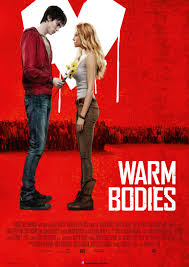
Warm Bodies (2013)

Mrs. Sharky wanted to watch a romantic comedy. Uh oh.

I said, “What’s in it for me?”

This is the type of give-and-take situation we domesticated adults must consider every single day, and believe me, it ain’t easy.

Fortunately, my painstaking research turned up Warm Bodies, a zesty Canadian zom-rom-com that actually checked all the boxes for both our discerning tastes.

What a find!

Written and directed by Jonathan Levine, and based on a novel by Seattle writer Isaac Marion, Warm Bodies is the story of R (Nicholas Hoult), an unusually thoughtful zombie who wanders around an airport with his fellow undead shufflers, after a plague or virus or something turns a majority of the population into brain-eating ghouls.

“What am I doing with my life?” he wonders in narration. “I’m so pale. I should get out more. I should eat better. My posture is terrible. I should stand up straighter. People would respect me more if I stood up straighter. What’s wrong with me? I just want to connect. Why can’t I connect with people? Oh, right, it’s because I’m dead.”

One fateful day, R impulsively rescues Julie (Teresa Palmer), an armed forager, from a pack of his hungry brethren and takes her to safety. This single act of compassion from a walking dead human changes everything we thought we knew about the entire zombie genre.

Indeed, it starts a movement of humanism among the dead, as long-deceased folks begin to feel—different. Something is stirring inside.

Warm Bodies could fit snugly inside AMC’s The Walking Dead universe as a diverting subplot. Julie, the daughter of General Grigio (John Malkovich), leader of the militaristic human resistance falls for R, the zombie who ate her boyfriend’s brain.

R and Julie? Try Romeo and Juliet. There’s even a balcony scene.

I’m as surprised as anyone that I dug Warm Bodies as much as I did. It’s funny, well-written, kinda scary, and uplifting as hell. That’s not just a difficult balancing act, it’s a rarely occurring cinematic event.

A horror movie that you can snuggle your honey through.

Alien: Covenant (2017)

Yech!

Even with Ridley Scott directing, Alien: Covenant is another flop from a franchise that needs fresh blood more than Dracula.

Maybe we should blame Michael Fassbinder who gets to chew twice as much scenery in the dual role of Walter (the helpful, supportive android) and David (the amoral narcissist android).

Ten years after the events of Prometheus, which was also terrible, a new crew of explorers and sleeping deep-space colonists get a fragmented distress signal from a nearby habitable planet.

Surprise! It’s a trap! Didn’t see that one coming, did you?

Though there is space allotted for character development, nobody in the crew stands out from the usual trope type, except perhaps for Tennessee (Danny McBride), a good ol’ boy pilot in a beat-up cowboy hat.

See also: Lisa Standing (Kimberly Scott) in James Cameron’s The Abyss (1989).

There’s Captain Oram (Billy Crudup), a nervous newbie destined for failure; his second-in-command, Daniels (Katherine Waterston), still grieving her recently deceased husband, and Walter (Fassbinder), the android science officer who does most of the work.

We also get a bunch of Shemps, including Callie Hernandez, with very little to do other than perish.

Alien: Covenant attempts to re-create that ol’ black magic, but writers John Logan and Dante Harper spend too much time constructing familiar-looking scenes that hopefully resonate with long-suffering fans of the series. Consequently, there isn’t much of a story to hang your hat on, other than David’s mad ambitions.

There are elements aplenty wrangled from the first two (best) Alien films, including face huggers, gory birth sequences, automatic weapons, and renegade robots, but these never coalesce into anything able to stand on its own.

There’s the crew. The ship. The planet. The androids. Once again, the xenomorphs become an afterthought. In the final analysis, there is too much android angst and not nearly enough creature chaos, though it is a better-looking film than Prometheus.

The Alien series is stuck in a deep-space rut and could definitely use a change of scenery. I’ll let you know if there’s any intelligent life onboard after Alien: Romulus.